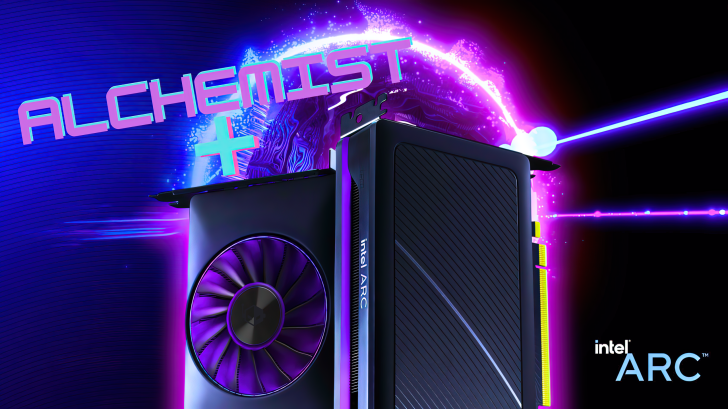
Intel’s Alchemist-based discrete GPUs and Meteor Lake integrated graphics are seeing a performance revolution in Linux, thanks to a series of patches recently integrated into Mesa 26.1. While the fixes were originally developed to resolve long-standing graphics corruption issues, they’ve inadvertently unlocked frame-rate gains as high as 260% in specific gaming scenarios.
The breakthrough comes from 18 patches submitted by Intel’s open-source graphics driver engineer, Francisco Jerez. These patches address HiZ-CCS (Hierarchical Z and Clear Color Surfaces) corruption by refining how the driver resolves depth buffers. Instead of processing the entire depth buffer, the updated driver now targets only the regions actively used by the workload—a change that significantly reduces memory traffic while maintaining stability.
The impact is most pronounced in games that frequently sample from multi-sample anti-aliased (MSAA) surfaces, such as NBA 2K23 running in DirectX 11 mode at 4K resolution with ultra settings. Here, the patchset delivered a 260% performance boost, though real-world results will likely vary depending on the game and workload. Other titles and graphical applications may see modest improvements, but the correction of underlying corruption issues remains the primary goal.
Development on these patches began in September 2024, reflecting the complexity of the problem. The changes are currently limited to Linux users, as Intel’s Windows drivers are not affected. Older Intel hardware may also benefit from similar optimizations, though the extent of those gains remains untested.
While the performance leap is extraordinary, it’s important to note that only a single game instance has been analyzed so far. Further testing is needed to determine how widely these improvements apply across different titles and use cases. For now, Linux users running Intel Alchemist GPUs or Meteor Lake iGPUs should expect smoother performance in supported workloads—assuming their distribution has updated to Mesa 26.1.