Micron has begun high-volume production of three critical products designed specifically for NVIDIA’s Vera Rubin platform: HBM4 stacks, SOCAMM2 memory modules, and PCIe Gen 6 SSDs. The move marks a major step forward in supporting the next generation of AI infrastructure, with each component addressing key performance bottlenecks.
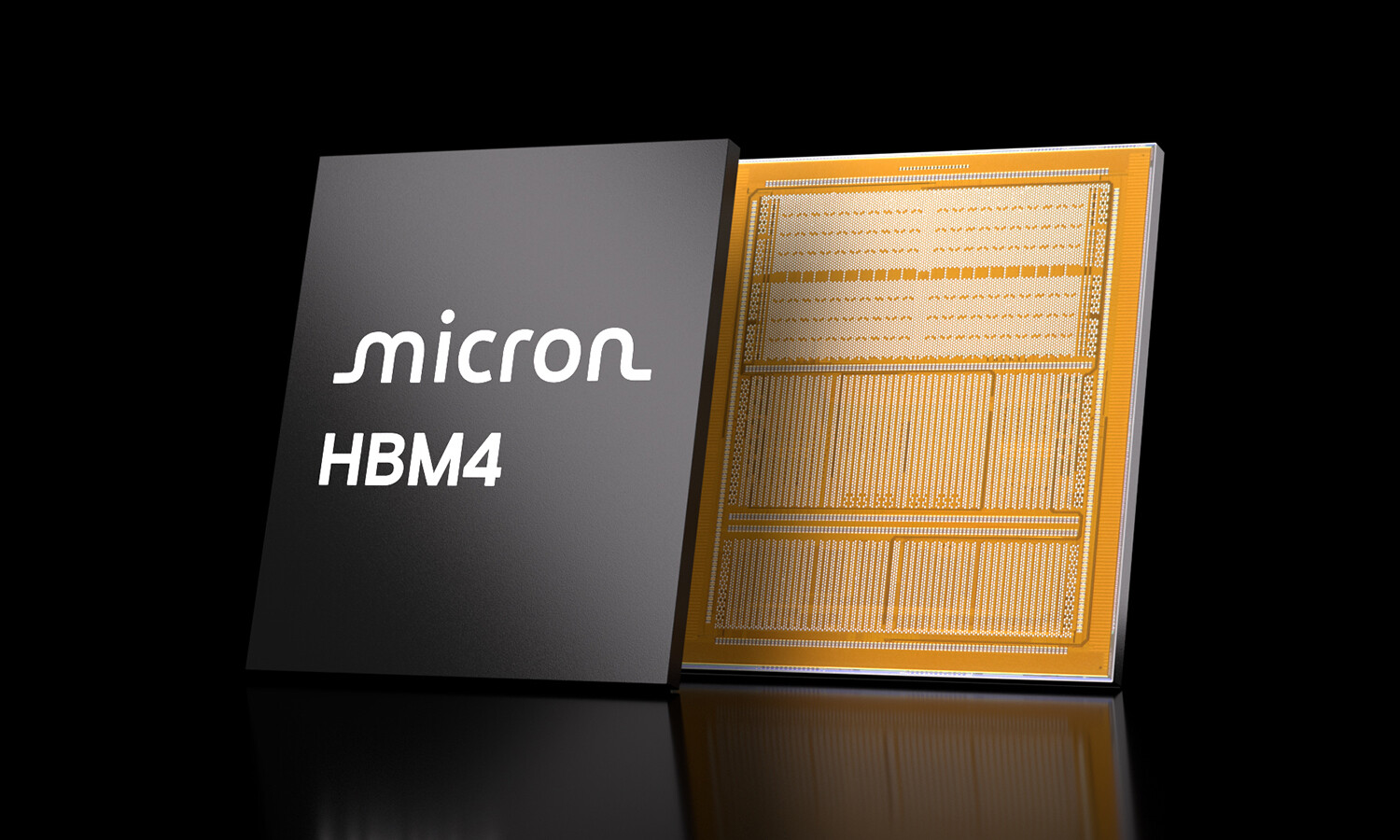
The 36 GB 12-high stack HBM4 module is now shipping in volume, delivering over 11 Gb/s pin speeds and more than 2.8 TB/s of bandwidth—nearly 2.3 times the throughput of its HBM3E predecessor. This version also improves power efficiency by over 20%, a critical factor for data center workloads where thermal management is increasingly challenging.
Key specs
- HBM4: 12-high stack, 36 GB capacity, 11 Gb/s pin speeds, 2.8 TB/s bandwidth, 20% better power efficiency than HBM3E.
- SOCAMM2: 192 GB modules now in mass production, supporting up to 2 TB of memory and 1.2 TB/s bandwidth per CPU. Variants range from 48 GB to 256 GB.
- PCIe Gen 6 SSD (Micron 9650): Sequential read speeds up to 28 GB/s, 5.5 million random read IOPS, twice the performance-per-watt of Gen 5.
The SOCAMM2 memory modules are designed for NVIDIA’s NVL72 systems and standalone Vera CPU platforms, offering a scalable approach to memory capacity that can handle demanding AI workloads. Early samples of a 16-high 48 GB HBM4 variant have also been shipped, representing a 33% increase in capacity per stack compared to the 12-high version.
Why it matters
The combination of these components addresses two major pain points for data center operators: bandwidth and power consumption. The HBM4 stacks provide the raw speed needed for high-performance computing, while the SOCAMM2 modules ensure that memory systems can scale efficiently without sacrificing performance. Meanwhile, the PCIe Gen 6 SSD delivers a significant leap in storage performance, nearly doubling read speeds while improving efficiency—a crucial factor as AI models grow larger and more resource-intensive.
For IT teams looking to future-proof their infrastructure, these products represent a tangible step toward more efficient and capable systems. The focus on power efficiency is particularly noteworthy, as thermal management becomes an increasingly complex challenge in high-density data centers. With NVIDIA’s Vera Rubin platform poised to dominate the AI landscape, Micron’s production ramp-up ensures that the necessary hardware will be available when demand peaks.