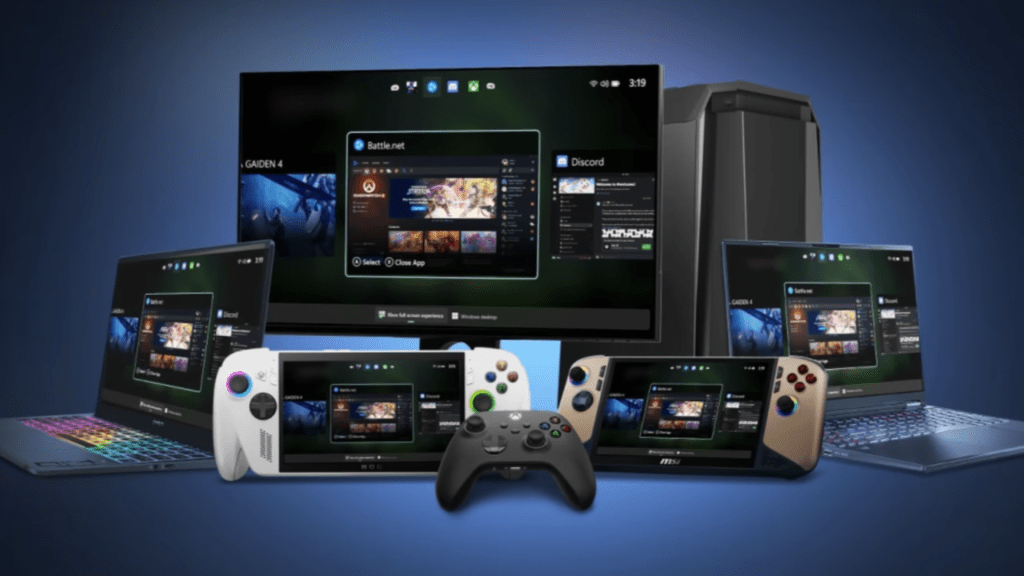
Microsoft’s Copilot+ PCs are no longer just about AI productivity—they’re now a full-fledged gaming platform. The shift marks a deliberate pivot to compete with SteamOS handhelds like the Steam Deck, leveraging hardware advancements and software tweaks to turn Windows into a more responsive, resource-efficient gaming OS.
The strategy hinges on two pillars: hardware that can handle modern games and software that prioritizes performance over frills. Intel’s Core Ultra 300 series, codenamed Panther Lake, is at the forefront, with some chips now delivering gaming capabilities previously reserved for dedicated GPUs. Meanwhile, Qualcomm’s Snapdragon X2 Elite—already a staple in Copilot+ devices—is seeing renewed focus on gaming workloads, according to leaked benchmarks.
But the real innovation lies in how Microsoft is using AI to automate gaming optimizations. A new ‘game mode’ could theoretically detect when a user launches a title, suppress background tasks, and allocate more CPU/GPU resources—mirroring the Steam Deck’s seamless fullscreen experience but with Windows’ flexibility. DirectStorage and AutoHDR are being emphasized as key differentiators, promising faster load times and richer visuals without requiring a dedicated gaming PC.
At a glance
- Core Ultra 300: Intel’s latest laptop chips, with select models now competitive in gaming benchmarks, though not all variants deliver equal performance.
- Snapdragon X2 Elite: Qualcomm’s AI-focused chip, now showing improved gaming capabilities in leaked tests, bridging the gap between productivity and play.
- AI-driven game mode: Microsoft’s plan to use NPUs to detect gaming sessions and optimize system resources automatically—similar to SteamOS’s fullscreen mode but built into Windows.
- DirectStorage + AutoHDR: Two DirectX features being pushed as Windows’ secret weapons, offering faster asset loading and higher dynamic range without GPU bottlenecks.
- Handheld focus: Intel’s rumored ‘G-series’ Panther Lake chips, tailored for devices like the Asus ROG Ally X, could directly challenge AMD’s Ryzen AI 400 Z-series in portable gaming.
- $10 gaming bundle: A recent promotion offering 1,300 games for a single USB drive underscores Microsoft’s push to make Windows gaming more accessible.
- Copilot+ as the future: Microsoft expects half of all PCs to be Copilot+ within a year, with the brand eventually fading as AI becomes a standard feature.
Why it matters
The gaming landscape is fragmenting. SteamOS handhelds have carved out a niche with Linux-based optimization, while Windows has long struggled with background processes and fragmented hardware support. Microsoft’s move isn’t just about keeping up—it’s about reclaiming the initiative. By integrating AI-driven performance tuning and hardware that rivals dedicated gaming rigs, Copilot+ PCs could redefine what a gaming machine looks like, whether it’s a $1,500 desktop or a $1,000 handheld.
Yet challenges remain. Not all Core Ultra 300 chips are created equal—some may still lag behind AMD’s Ryzen AI 400 in raw gaming performance. And while Snapdragon X2 Elite is improving, its gaming chops are still unproven in real-world scenarios. The real test will be whether Microsoft can execute on its software promises: Can AI truly understand ‘gaming intent’ well enough to silence notifications and boost FPS? The stakes are high, but the message is clear: Windows is doubling down on performance, and SteamOS just got a serious competitor.
The hardware behind the shift
Intel’s Core Ultra 300 series is the linchpin. While earlier Snapdragon-powered Copilot+ PCs focused on battery life and AI tasks, the 2026 lineup is splitting into two paths: one for productivity, another for gaming. The ‘G-series’ variant, rumored for handhelds, could include dedicated graphics cores to rival AMD’s Z-series chips, which already power devices like the Lenovo Legion Go. Qualcomm isn’t sitting idle—leaked benchmarks suggest the Snapdragon X2 Elite is now within striking distance of AMD’s Ryzen AI 400 in gaming workloads, a far cry from its original design as a productivity chip.
But hardware alone won’t win the war. Microsoft’s internal documents reveal a philosophy shift: ‘Copilot for Copilot’s sake’ is out. Performance is in. That means deprioritizing gimmicks in favor of under-the-hood tweaks like DirectStorage’s asset compression and AutoHDR’s dynamic contrast scaling. Even the NPU, once the centerpiece of Copilot+ marketing, is being repurposed—not as a standalone feature, but as a tool to enhance gaming. The goal? A system that ‘just works’ for gamers, without requiring manual tweaks.
What’s next?
Microsoft’s gaming gambit is still unfolding. The $10 bundle of 1,300 games is a bold move to lure players into the Windows ecosystem, but the real battle will be in how smoothly the Copilot+ experience integrates with modern titles. Early adopters of the Asus ROG Ally X and other handhelds will be the first to test whether AI-driven optimizations live up to the hype.
One thing is certain: SteamOS isn’t going away. But with Copilot+ PCs now blending the best of Windows’ flexibility with Linux-like performance tuning, Microsoft may have just leveled the playing field. The question isn’t whether Windows can compete—it’s whether it can do so before gamers get too comfortable with the competition.