A high-performance graphics card designed to shatter benchmarks met its match in the form of liquid nitrogen and an unrelenting quest for world records. The MSI GeForce RTX 5090 Lightning Z, already a powerhouse with out-of-the-box 800W and 1000W TDP profiles, was subjected to an extreme overclocking test that pushed it far beyond its intended operating range. The result? A GPU core that cracked under the strain, leaving behind a stark warning about the dangers of unchecked enthusiast modifications.
The experiment was conducted by overclocking enthusiast Alva Jonathan, who deployed liquid nitrogen cooling to maintain sub-zero temperatures while attempting to maximize clock speeds. Early success saw the GPU hitting 3.42 GHz—a full 1 GHz above the reference RTX 5090’s default boost clock—while consuming nearly 1000W and operating at 1.12V. Even under these extreme conditions, the GPU remained stable, with temperatures hovering just above 10°C. However, as clocks approached 3.5 GHz, stability became elusive, with the GPU struggling to maintain performance if temperatures rose above 20°C or dipped below 0°C.
Despite these challenges, the overclocker managed to achieve a 3.6 GHz clock speed in GPUPI Benchmark, setting a new world record for Geekbench 5 Compute with a score of 683,433 points at 3.5 GHz. But the real test came when the 2500W XOC BIOS was activated—a profile reserved for those willing to risk their hardware. This BIOS, designed for the Lightning Z’s extreme overclocking potential, delivered nearly 1.2V to the GPU core in its initial revision. The outcome was immediate and irreversible: the GPU core physically cracked under the stress.
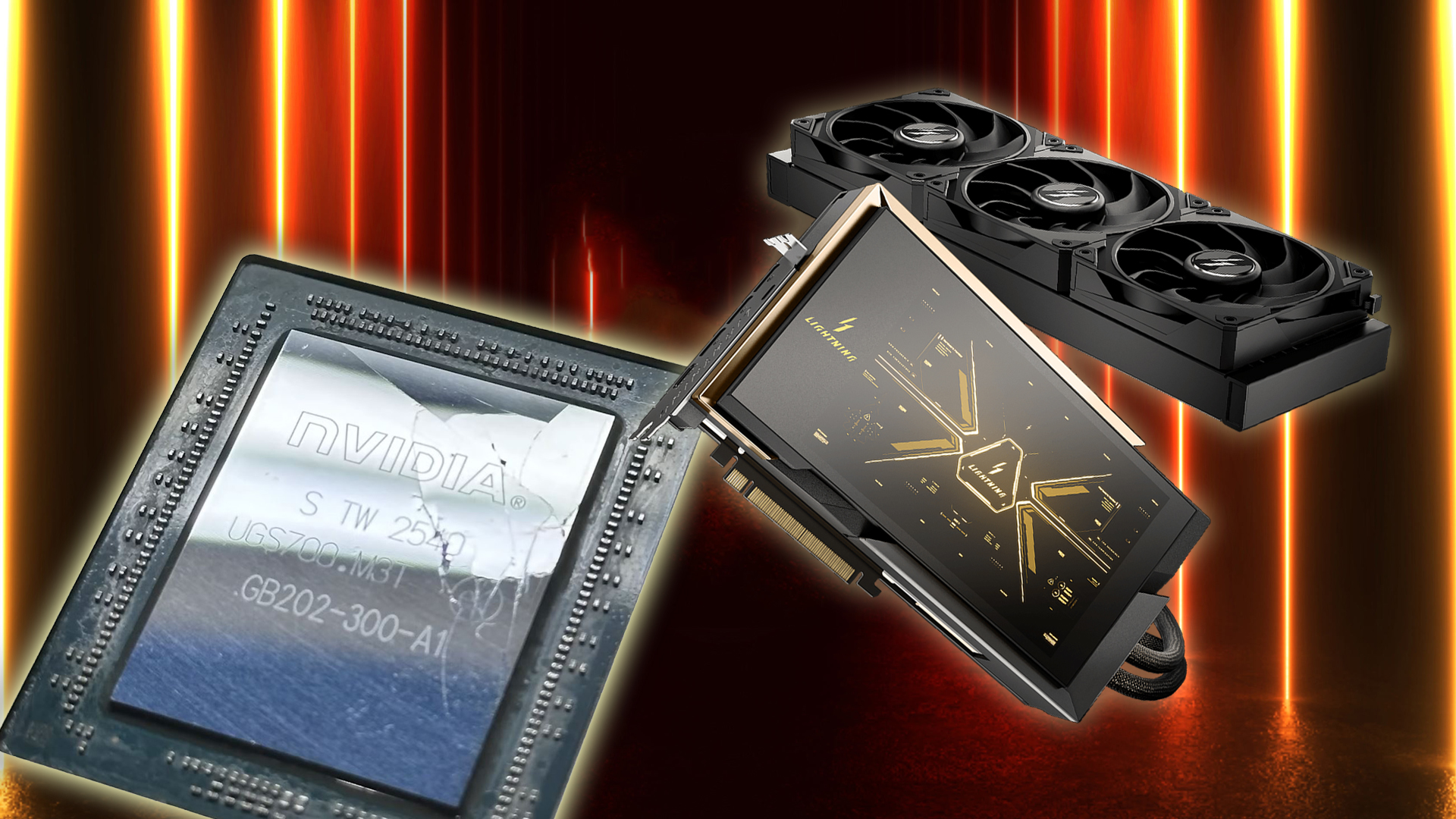
The damage is not just a cosmetic failure—it renders the card inoperable, with a replacement cost of $5,000 for the high-end model. Worse, unlocking the 2500W BIOS voids any remaining warranty coverage, leaving users to bear the full cost of their experimentation. The incident serves as a cautionary tale for those considering similar modifications on GPUs not originally designed to handle such extreme power draw. The reference RTX 5090 typically operates around 600W, making the 2500W profile a risky proposition for most systems.
Key specs of the MSI RTX 5090 Lightning Z
- Base Clock: 1.2 GHz
- Boost Clock: 2.3 GHz (reference), up to 3.6 GHz in extreme overclocking tests
- TDP Profiles: 800W, 1000W (stock), 2500W (XOC BIOS)
- Memory: 32GB GDDR6X
- Power Draw: Up to 2500W (XOC mode), 1000W (stock high-load)
- Voltage: Up to 1.2V (XOC BIOS)
- Price: $9,050 (MSI RTX 5090 Lightning Z)
- Cooling: Custom liquid nitrogen cooling required for extreme overclocking
The Lightning Z is built for enthusiasts who demand absolute performance, but even its robust design has limits. While the card excels in stock and moderately overclocked configurations, the experiment underscores that pushing hardware to its absolute physical limits carries significant risks. For most users, the 800W and 1000W profiles offer more than enough headroom for gaming and professional workloads without compromising longevity. Those seeking to break records, however, must weigh the potential rewards against the irreversible consequences.