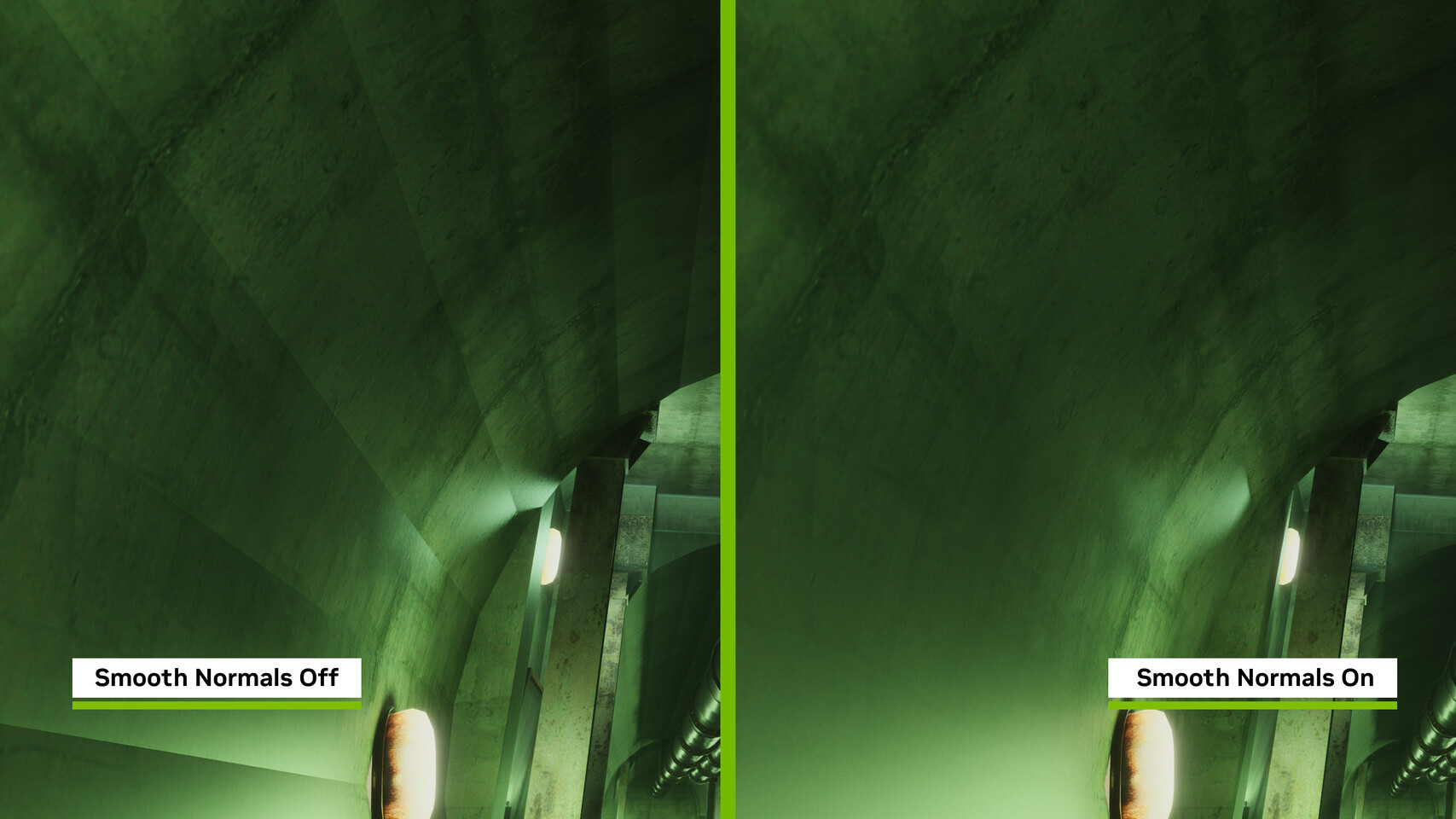
NVIDIA's latest Blackwell architecture isn't just about raw power—it's redefining how ray-traced games handle geometric complexity without sacrificing visual fidelity. The new RTX Mega Geometry feature, demonstrated at GDC, cuts memory footprint by hundreds of megabytes while improving performance in dense ray-traced scenes.
For small businesses and indie developers, this means more efficient asset creation and smoother real-time previews. A forest scene in 'The Witcher 4' demo showed thousands of trees with unique animations rendered at a fraction of the usual memory cost, thanks to nested triangle clusters—a technique that offloads some ray intersection work from the GPU while maintaining accuracy.
But the bigger story is how these optimizations trickle down. The RTX 5090 and RTX 5070, already built for Blackwell's hardware-level support, now handle Mega Geometry without extra software overhead. That matters when every millisecond of performance counts, especially in competitive or workflow-heavy titles.

Meanwhile, path tracing is leaving niche status behind. '007 First Light' will be one of the first mainstream games to use it for realistic shadows and reflections, while 'Control Resonant' continues to push boundaries with ray-traced effects at scale. The shift isn't just technical—it's practical, proving that advanced rendering can work without requiring bleeding-edge hardware.
The real implication? Smaller studios no longer need to choose between visual quality and performance. Mega Geometry and path tracing are becoming accessible tools, not just for AAA budgets but for anyone building high-fidelity experiences. That's the future NVIDIA is shaping today.