The RTX 3050 Ti was never meant to exist in the wild, yet its specifications have emerged online, revealing a GPU that balanced performance, power efficiency, and cost in ways that could have reshaped mid-tier gaming. With 3,328 CUDA cores, 16GB of GDDR6 memory, and a TDP of 150 watts, the card was positioned to sit between Nvidia's RTX 3050 and RTX 3060 Ti, but it vanished before hitting shelves. The timing of its appearance now—amidst supply constraints and shifting market demands—makes this a case study in engineering tradeoffs, missed opportunities, and the fragility of product roadmaps.
The GPU's design centered on Nvidia's GA106 die, a smaller sibling to the more powerful GA104 used in the RTX 3060 Ti. This choice allowed for a compact footprint while still delivering strong ray-tracing capabilities and DLSS support. However, the tradeoff was clear: it lacked the full feature set of higher-end cards, such as third-generation Tensor cores or advanced AV1 encoding, which would later become standard in Nvidia's lineup. The 16GB memory configuration also suggested a focus on gaming performance over content creation, a segment that has since grown in importance.
Key specs and what they mean
- Architecture: GA106 die with 3,328 CUDA cores, 52 RT cores, and second-generation Tensor cores (for DLSS). No third-gen Tensor cores or AV1 hardware encoding.
- Memory: 16GB GDDR6, 128-bit bus, 14 Gbps speed. Optimized for gaming, not video editing or streaming.
- Power: TDP of 150 watts, requiring a single 8-pin power connector. Designed for quiet operation but with thermal limits that could have constrained overclocking.
- Display Outputs: HDMI 2.1 (with 4K@120Hz support), DisplayPort 1.4a, and three additional DisplayPort outputs—standard for the time but now overshadowed by newer standards.
- Cooling: Likely a dual-fan or triple-fan design, similar to contemporary RTX 30-series cards, with a focus on passive cooling potential due to the lower TDP.
- Pricing: Estimated at around $299–$349, placing it in the sweet spot between budget and mid-range GPUs. This range is now dominated by AMD's RX 6500 XT and Intel's Arc A770, but with different tradeoffs.
The RTX 3050 Ti's specifications reflect a moment when Nvidia was still refining its approach to ray tracing and DLSS. The absence of third-gen Tensor cores—introduced in the RTX 40 series—suggests it was meant for a pre-RT era, where performance was prioritized over efficiency. Today, that choice feels like a misstep: the card would have struggled against AMD's more power-efficient RDNA 2 GPUs and Intel's emerging Arc lineup, which have pushed Nvidia to rethink its entire mid-range strategy.
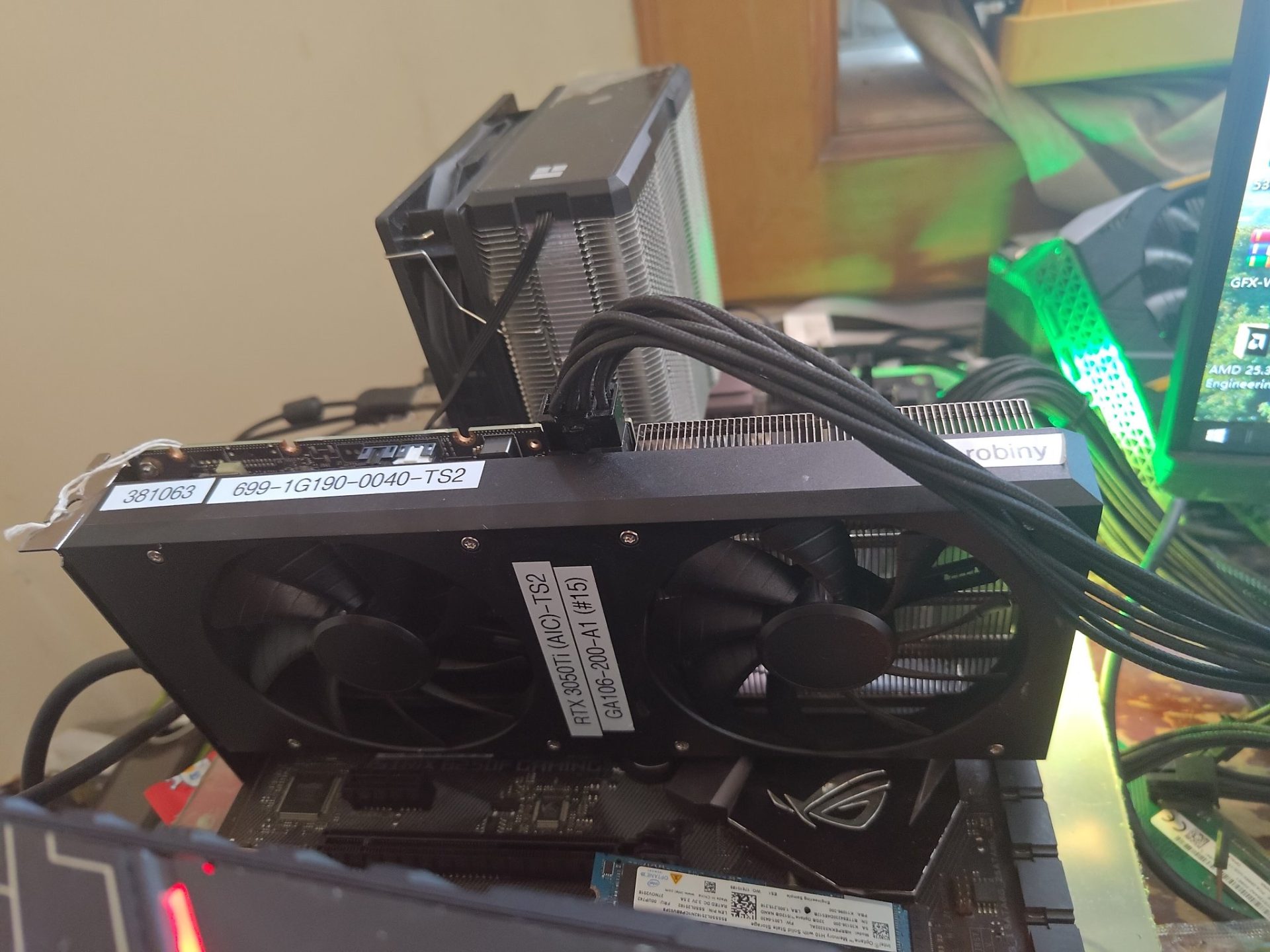
For IT teams evaluating hardware for gaming workstations or budget-conscious builds, this GPU serves as a cautionary tale. It highlights the risks of overcommitting to a specific architecture without accounting for market shifts—whether in competition, consumer demand, or technological evolution. The RTX 3050 Ti's design tradeoffs (lack of AV1 encoding, limited memory bandwidth) would have left it vulnerable in a segment where versatility is increasingly valued. Meanwhile, its power efficiency, while impressive on paper, may not have translated to real-world performance under the thermal constraints of modern cases.
Upgrade checklist: What the RTX 3050 Ti could have brought
- Improved ray-tracing performance with second-gen Tensor cores, though still behind high-end cards.
- 16GB GDDR6 memory for gaming workloads, but limited bandwidth compared to newer GPUs.
- HDMI 2.1 and DisplayPort 1.4a support, sufficient for 4K@120Hz but not future-proof.
- Lower power consumption (150W TDP) for quieter operation in compact builds.
The RTX 3050 Ti's potential shortcomings—such as the lack of AV1 encoding and third-gen Tensor cores—would have made it less versatile than competitors like AMD's RX 6500 XT, which balanced performance with efficiency. For mid-range gaming, this would have been a critical gap, especially as content creation and streaming become more integral to the segment.
Why it matters now
The RTX 3050 Ti's speculative existence underscores the challenges Nvidia faces in maintaining its dominance in the mid-range GPU market. The card was designed for a different era, one where raw performance mattered more than power efficiency or feature completeness. Today, that approach would likely leave it behind competitors like AMD and Intel, which have prioritized efficiency and versatility. For IT teams, this highlights the importance of evaluating GPUs not just on current specs but also on long-term adaptability—whether in ray tracing, content creation, or power consumption.
Wrap: A missed opportunity?
The RTX 3050 Ti may never have seen the light of day, but its specifications serve as a reminder of how quickly market dynamics can change. Nvidia's focus on high-end GPUs in recent years has left a gap in the mid-range segment, one that competitors are now filling with more efficient and versatile designs. Whether Nvidia revisits this architecture or introduces something new remains to be seen, but the RTX 3050 Ti's story is a cautionary tale about the risks of overcommitting to a single vision without accounting for market evolution.