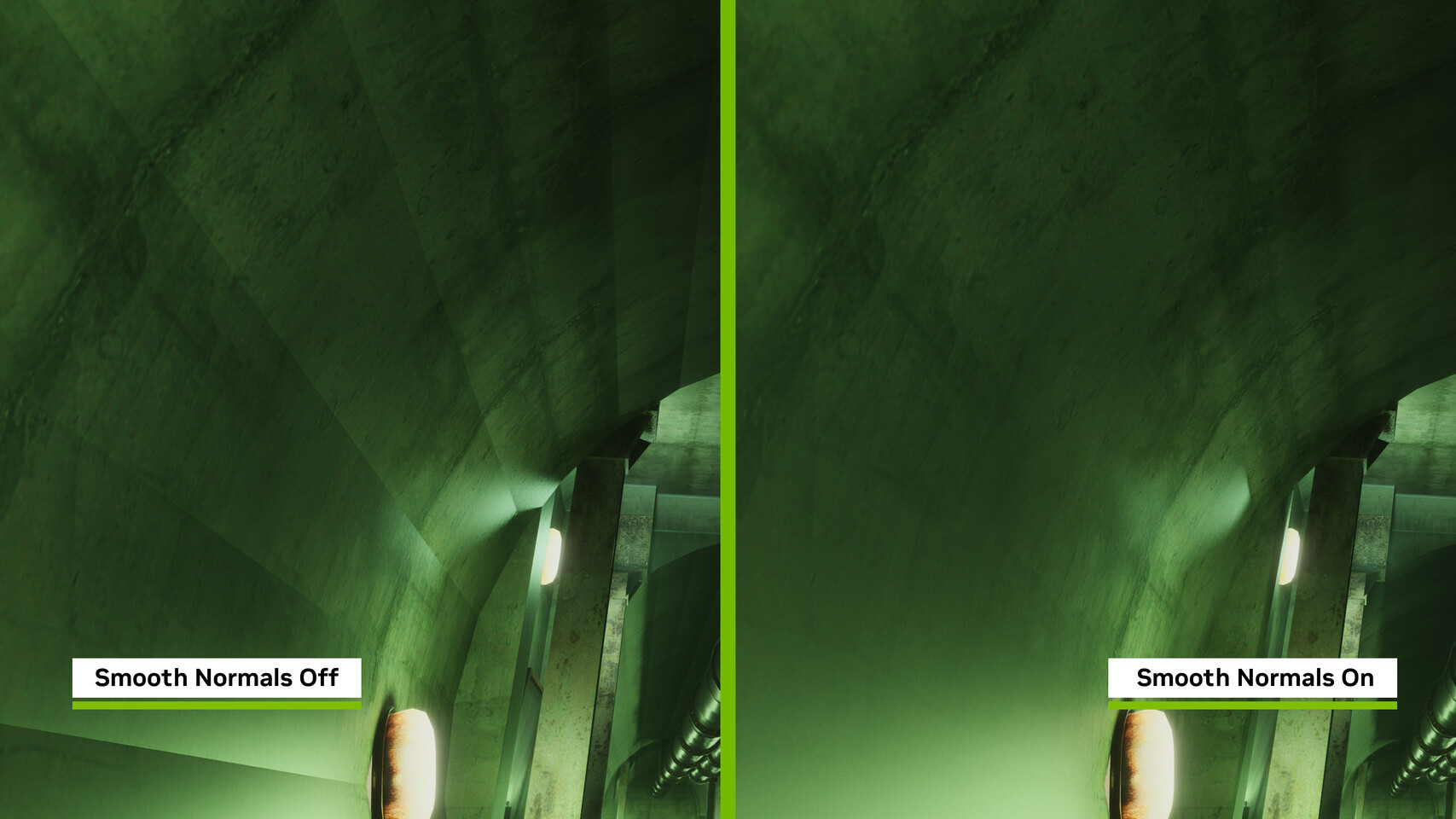
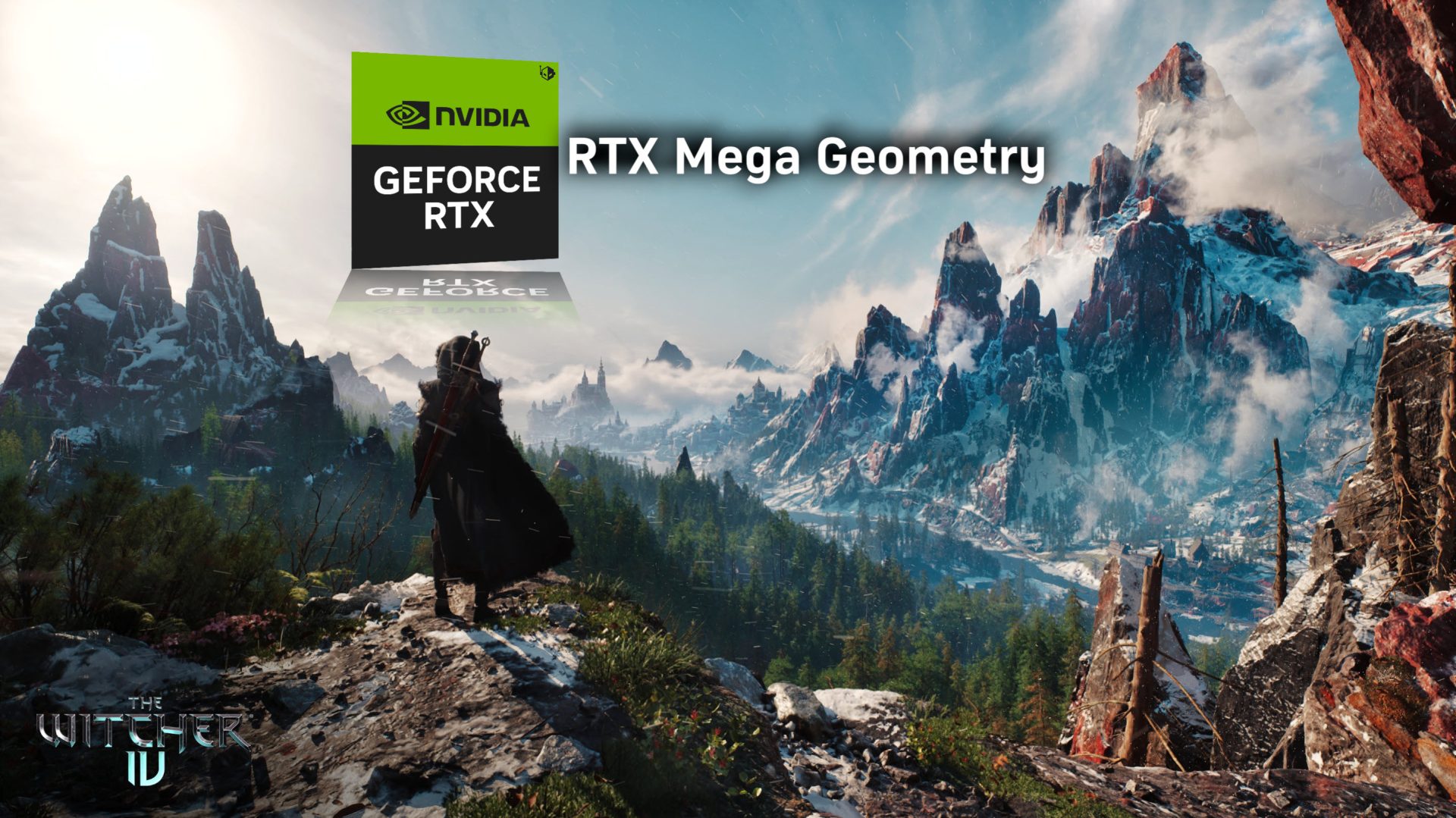
NVIDIA’s latest iteration of RTX Mega Geometry is set to redefine path-traced visuals in open-world games. The technology, now being integrated into CDProjektRed’s upcoming title The Witcher 4, will cluster and cache millions of triangles across scenes—including dense foliage—to deliver high-fidelity rendering without the usual performance trade-offs.
Unlike traditional solutions that simplify geometry to improve ray-tracing speed, this approach preserves full mesh detail while leveraging selective frame updates. Early demos suggest the system can handle extreme ranges and distances with minimal VRAM overhead, a first for games of this scale.
The Challenge: Path-Tracing Lush Forests
Foliage has always been a bottleneck in ray-traced environments due to its geometric complexity. Previous methods relied on reducing detail to maintain performance, but The Witcher 4 is taking a different route. The game’s new foliage system combines RTX Mega Geometry with Opacity Micromaps, which streamline ray tracing through complex objects like leaves. This dual approach allows for accurate lighting and shadowing even at broad distances—a feat previously considered impractical.
A Closer Look: Performance Gains
- 5–20% FPS boost in dense scenes (based on Alan Wake 2 benchmarks).
- Up to 300 MB VRAM savings by compressing and reusing geometry clusters.
- Optimized for NVIDIA’s RTX 50 GPUs, which feature Blackwell architecture acceleration.
The technology isn’t limited to The Witcher 4. Remedy Entertainment is also adopting it in Control Resonant, which supports DLSS 4.5 and path tracing. However, the scale of The Witcher 4—with its vast, path-traced forests—pushes these optimizations further than any previous implementation.
What This Means for Upgrades
If you’re eyeing an RTX 50 GPU (such as the RTX 5050, RTX 5070, or RTX 5090), this update reinforces why waiting could pay off. The Blackwell architecture, paired with GDDR7 memory (as seen in the upcoming RTX 5050 9 GB model), is designed to handle these advanced techniques efficiently. Meanwhile, users on older GPUs may see modest gains, but the full potential will only be unlocked by next-gen hardware.
The Witcher 4’s release timeline remains unclear, but with this technology in place, it could set a new benchmark for open-world ray tracing. For now, creators and performance-focused players should monitor driver updates—NVIDIA has already shown how hotfixes (like the recent 595.76) can push boundaries further.