Raijintek’s latest hardware lineup for 2026 introduces a bold vision for AI workstations, combining aggressive cooling aesthetics with power delivery that matches the demands of next-gen GPUs. The centerpiece is a 3000 W modular power supply, designed to handle sustained loads without sacrificing efficiency—a critical factor for long rendering sessions or AI training cycles.
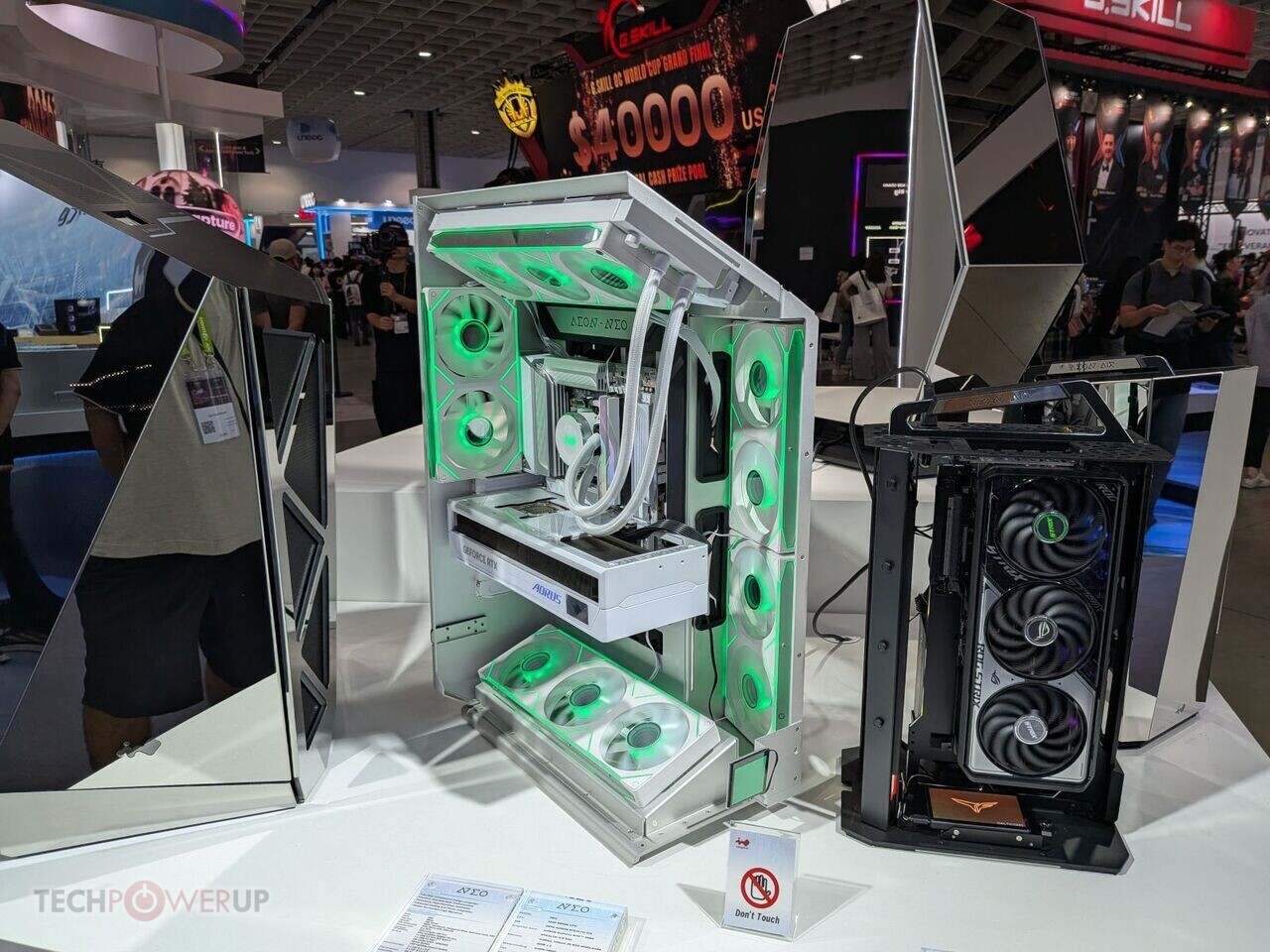
The Mesta MS and its black variant stand out as the flagship ATX cases in this lineup, engineered with extreme GPU clearance in mind. Both models support dual 360 mm radiators while maintaining a compact form factor, making them ideal for high-end builds where thermal management is non-negotiable. The smaller Opora M5 series offers a more compact alternative, still accommodating 380 mm graphics cards but with a tighter footprint that fits mid-tower builds without compromising on cooling capacity.
- Key Specs:
- Mesta MS/Black: Dimensions 475 x 235 x 473 mm, supports 7 PCI slots and GPUs up to 400 mm in length. Features dual 120 mm fans and front/top 360 mm radiator support.
- Opora M5: Slightly smaller at 410 x 210 x 450 mm, supports 7 PCI slots and GPUs up to 380 mm. Includes four 120 mm fans with front/top 280 mm radiator support and a rear 120 mm fan.
- Agos SCN: E-ATX to Mini-ITX compatibility in a 470 x 225 x 480 mm chassis, with dual 360 mm radiators (top/front) and an integrated 5.99-inch TFT LCD display on the front panel.
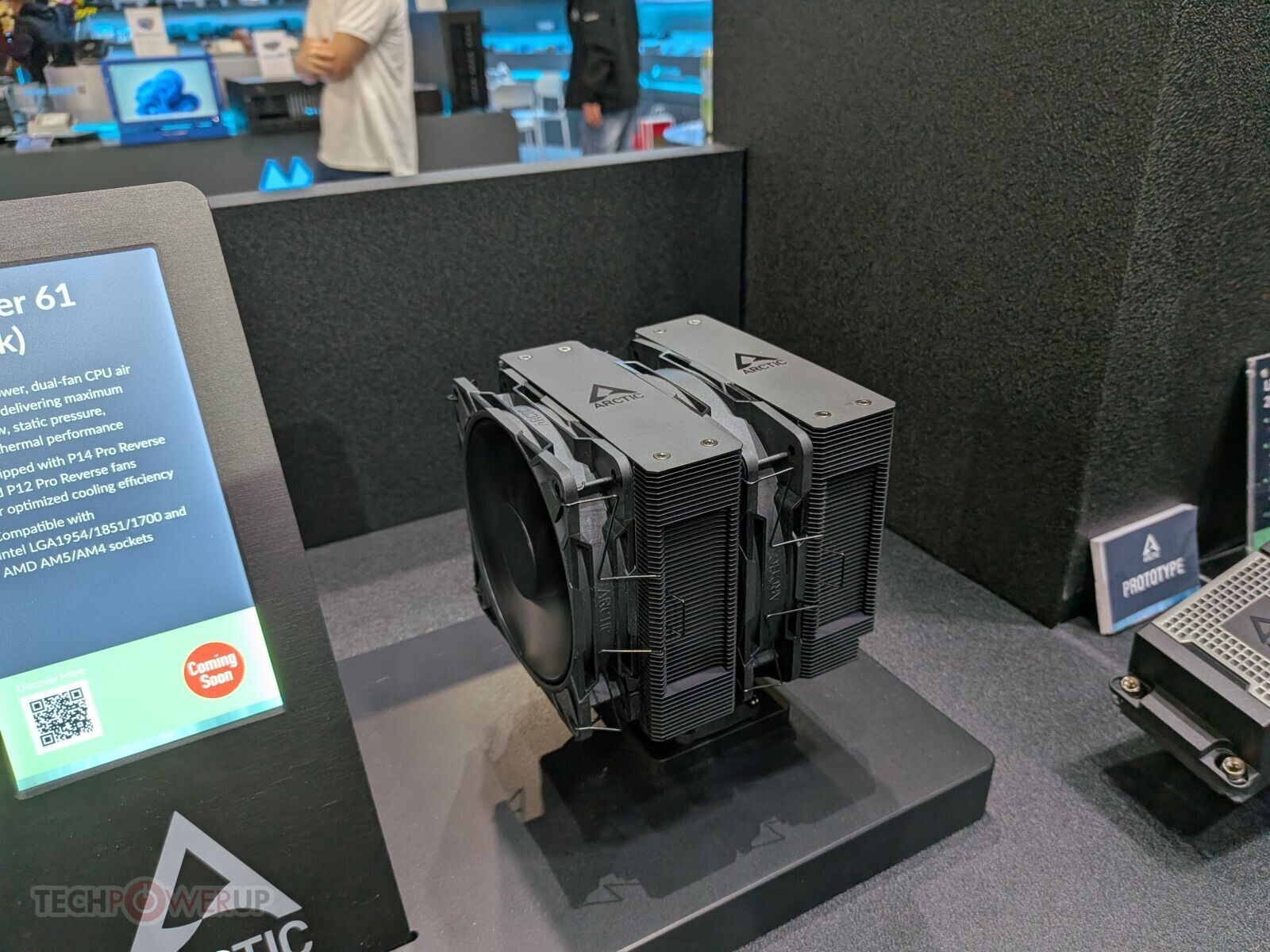
The Nestos 360 EVO liquid AIO series pushes the boundaries of cooling aesthetics with a curved 6.67-inch OLED display, while also offering a more traditional flat 5-inch TFT variant. The OLED version adds visual appeal but raises questions about longevity under sustained use. Air cooling is addressed by the Tisis II SCN, a dual-tower design featuring copper bases, six heat pipes, and two 120 mm fans capable of moving up to 72 CFM at noise levels as low as 22 dBA.
Power delivery sees the most significant advancements with Raijintek’s Ampere Ultra series, which includes models rated for 1350 W, 1500 W, and 1650 W—all 80 Plus Platinum certified. These units are designed to maintain efficiency even under prolonged high-wattage loads, a critical consideration for AI workstations where power draw can fluctuate dramatically. The Moros 850 W offers fully modular cable management with 80 Plus Titanium certification, catering to builds that prioritize both efficiency and organization.
- Power Supply Highlights:
- Ampere Ultra series: 1350 W, 1500 W, and 1650 W (80 Plus Platinum).
- Moros 850 W: Fully modular, 80 Plus Titanium.
- Creios SF1000: 1000 W in an ultra-compact SFX form factor, 80 Plus Gold.
The Creios SF1000 stands out for its space-saving design, but its smaller footprint may limit its appeal for high-end systems where power demands are more substantial. The Athos 550B/650B/750B models offer budget-friendly options with 80 Plus compliance, though they lack the advanced features that may become necessary as power requirements continue to rise.
While Raijintek’s innovations bring undeniable visual and technical advancements, real-world performance hinges on how well these components balance cooling efficacy, noise levels, and operational costs. The OLED displays on liquid coolers add a premium aesthetic but may not justify the price premium over TFT alternatives in terms of longevity or clarity under different lighting conditions. Similarly, the 3000 W power supply is a flex for extreme builds, but its efficiency under fluctuating loads remains untested—a critical factor for users running prolonged rendering sessions or AI workloads.
Market adoption will ultimately depend on pricing tiers and how these features translate to tangible performance gains. Creators and workstation users should weigh the visual and technical advancements against operational costs, especially if cooling noise or power draw becomes a bottleneck during intensive tasks.