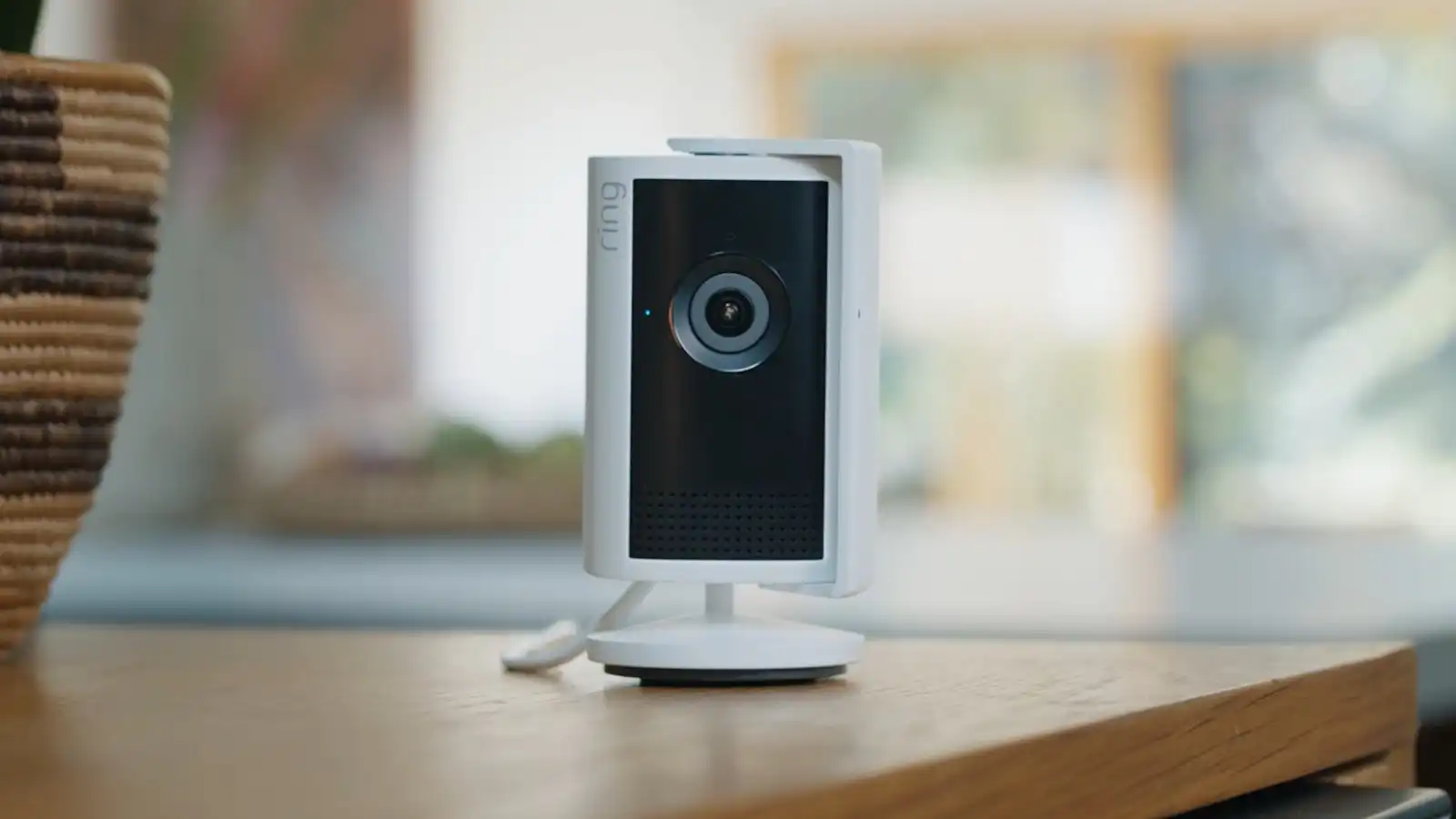
The Ring Indoor Cam Plus has disrupted the smart home surveillance market with its $35 price point, a figure that redefines what consumers should expect from an indoor camera. This aggressive pricing strategy is not just about cost savings; it’s also accompanied by a hardware refresh that bridges the gap between budget and premium offerings in meaningful ways.
At this price, the Indoor Cam Plus delivers 2K resolution, which has become a standard across Ring’s lineup. However, its true value lies in the improvements over previous models. The night vision, for example, is described as ‘crisp even in complete darkness,’ a claim that suggests it can rival more expensive cameras in low-light conditions. Additionally, the camera’s compact form factor makes it one of the most unobtrusive options on the market without sacrificing functionality.
For buyers looking to balance cost and performance, the Indoor Cam Plus presents an attractive option. It retains Ring’s signature two-way audio, motion detection, and cloud storage options—features that are typically reserved for higher-priced models. The built-in siren, a feature often found in premium cameras, is also included at this price point, adding another layer of security without inflating the cost.
However, the camera’s limitations become apparent when compared to more advanced alternatives. While it offers strong integration with Ring’s broader ecosystem—including doorbells and outdoor cameras—it lacks some of the advanced AI-driven features found in higher-tier models. Person detection, detailed activity logging, and other sophisticated analytics are noticeably absent, which may limit its appeal for users with more complex security needs.
Another consideration is the camera’s reliance on Ring’s cloud infrastructure. While this allows for seamless integration across multiple devices, it also introduces potential scalability challenges for large-scale deployments. For organizations or environments where local storage and advanced analytics are critical, the Indoor Cam Plus may fall short of expectations.
When evaluating its place in the market, the Indoor Cam Plus stands out as a strong contender for budget-conscious buyers. It is particularly well-suited for small-to-medium deployments, such as shared offices, dormitories, or retail spaces where monitoring foot traffic is the primary need. However, its lack of advanced features and limited local storage options means it may not be the best fit for enterprise-grade applications.
The $35 price tag positions the Indoor Cam Plus as a compelling option for those prioritizing cost efficiency without compromising core functionality. It offers a clear path forward for environments where basic surveillance is sufficient, but buyers should weigh the trade-offs carefully. For now, it remains best suited for settings where integration with Ring’s ecosystem is a priority, rather than cutting-edge security analytics.