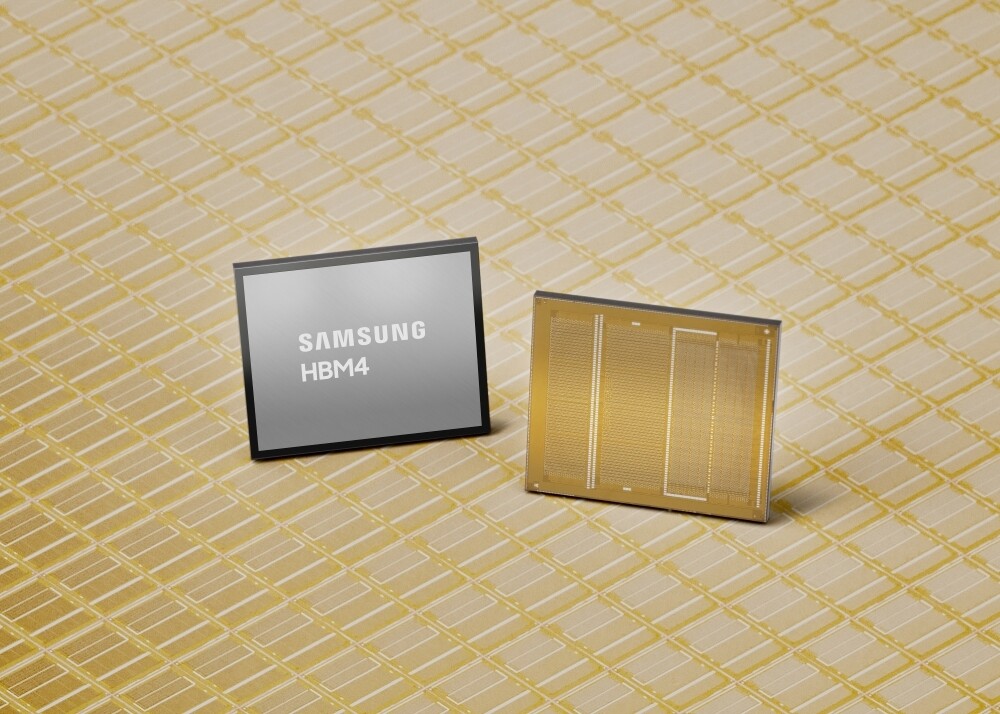
Samsung has announced the end of its long-standing 2D NAND flash production, marking a decisive shift in its memory manufacturing strategy. The company will repurpose its Hwaseong Line 12 facility—currently dedicated to 2D NAND—into a production line for HBM4, a critical component for AI and high-performance computing workloads. This transition reflects the broader industry trend away from planar NAND toward stacked, high-density architectures.
The Hwaseong site, which previously handled up to 100,000 12-inch wafers monthly for 2D NAND, will now focus on metallization for DRAM, a process essential for connecting memory cells in advanced DRAM modules. Samsung’s 6th-generation 10 nm-class 1c DRAM, optimized for HBM4, will be the primary output, with monthly wafer capacity expected to reach 200,000 by mid-2026. The repurposed facility will operate alongside Pyeongtaek’s Line 3 and Line 4, consolidating production for next-generation memory.
Why the Shift?
2D NAND, introduced in the late 1990s, has been gradually phased out by competitors and Samsung itself due to its limitations in capacity and performance compared to 3D NAND. The technology’s obsolescence is accelerating as AI and data centers demand higher bandwidth and density. , Samsung will cease 2D NAND production entirely, clearing the way for 3D NAND and HBM4, which offer superior scalability, reliability, and speed—qualities essential for GPUs like NVIDIA’s upcoming RTX 5090, rumored to cost up to $5000 due to AI-driven supply constraints.
Industry Ripple Effects
The move underscores the memory shortage’s lingering impact, with DRAM and NAND prices remaining volatile. Samsung’s reallocation aligns with reports of NVIDIA’s reliance on HBM4 from SK Hynix and Samsung for its next-gen GPUs, further tightening supply chains. While the transition may ease storage bottlenecks, the broader market faces persistent pressure from AI workloads, where memory demands continue to outpace traditional scaling efforts.
For Samsung, the repurposing of Line 12 is not just a cost-saving measure but a strategic pivot. By leveraging existing infrastructure for high-bandwidth memory, the company positions itself to meet the explosive growth in AI infrastructure, where HBM4’s performance advantages are non-negotiable.