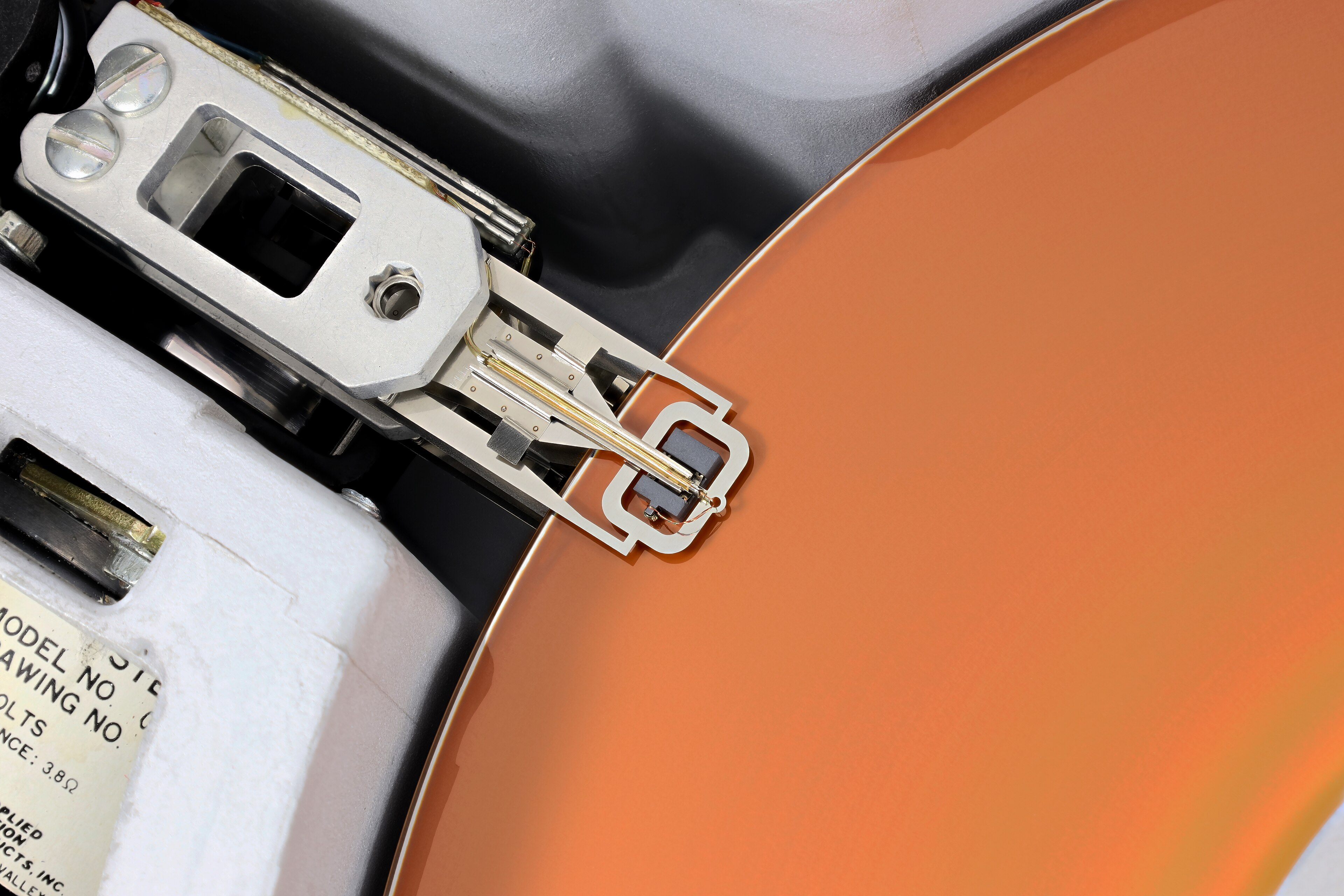
Seagate’s fiscal second quarter results underscore a pivotal moment for the storage industry: the company’s **Heat-Assisted Magnetic Recording (HAMR)** technology isn’t just an incremental upgrade—it’s a cornerstone for the next generation of data centers. As artificial intelligence applications generate exponential data growth, traditional hard drives are struggling to keep pace. Seagate’s **Mozaic HAMR-based drives** now offer a solution, combining **6.9TB per platter** density (as demonstrated in its 55TB prototype) with the cost efficiency that hyperscale operators demand.
The numbers tell the story: Seagate reported **$723 million in operational cash flow** and **$607 million in free cash flow** for the quarter, retiring **$500 million in debt** while returning **$154 million to shareholders** via dividends. Gross and operating margins hit new records, a direct result of HAMR’s ability to **double storage capacity without increasing physical footprint**—a critical advantage in AI workloads where data volumes scale with model complexity.
The AI Storage Imperative
Seagate’s strategy pivots on a simple but transformative idea: **data centers need storage that grows as fast as AI’s appetite for data**. Traditional **Conventional Magnetic Recording (CMR)** drives max out at **20TB per platter**; HAMR’s **6.9TB/platter leap** (and the **32TB CMR Exos drives** it recently shipped) address a glaring bottleneck. The company’s **$2.9 billion revenue guidance** for the next quarter reflects confidence in this transition, though it carries a **±$100 million range**—a nod to global tariff uncertainties that could disrupt supply chains.
For enterprises, the tradeoff is clear: **pay more upfront for HAMR drives today to avoid exorbitant data center expansions tomorrow**. Seagate’s **Mozaic family** (including **SkyHawk AI** and **IronWolf** series) is already seeing traction in cloud providers and research labs, where **exabyte-scale storage** is no longer a futuristic need but an operational reality.
Financial Fortitude Meets Market Realities
Behind the record margins lies a balance sheet built for resilience. Seagate ended the quarter with **$1 billion in cash reserves**, a war chest that funded debt retirement and dividends—including a **$0.74 per-share payout** set for April. Yet, the company’s **non-GAAP EPS guidance of $3.40 (±$0.20)** excludes volatile factors like **debt transactions and tariff impacts**, signaling caution. While HAMR’s ramp is accelerating, the **$500 million debt repayment** and **$154 million dividend** reflect a dual focus: rewarding shareholders while maintaining financial flexibility.
Investors will watch whether **Mozaic adoption** outpaces **CMR legacy systems**, particularly as **32TB CMR drives** (like the Exos series) compete with HAMR’s higher density. Seagate’s **fiscal third-quarter outlook** assumes minimal tariff disruption, but geopolitical risks remain a wild card—one that could delay deployments or inflate costs.
Who Stands to Gain?
- Cloud Providers: Hyperscalers like AWS and Google Cloud will benefit most from HAMR’s **density gains**, reducing the need for additional racks while supporting AI training clusters.
- Research Labs: Organizations running large-language models or generative AI will see **lower storage costs per terabyte**, a critical factor as datasets balloon.
- Enterprise IT: Companies migrating from **SSD-heavy architectures** to hybrid storage (HDD + NVMe) will find HAMR drives a cost-effective bridge.
- Shareholders: Dividends and debt reduction signal financial health, though EPS volatility tied to **tariffs and debt adjustments** could test patience.
The bigger picture? Seagate’s HAMR push isn’t just about selling more drives—it’s about **redefining the economics of data storage** in an AI-first world. If the company’s roadmap holds, the **exabyte-scale demand** it forecasts could relegate CMR to niche roles, cementing HAMR as the default for the next decade.
With **$1 billion in cash** and a clear path to **$3.40 non-GAAP EPS**, Seagate’s challenge isn’t profitability—it’s execution. Can its Mozaic products scale fast enough to meet AI’s relentless data hunger? The answer may determine whether storage becomes an afterthought—or a strategic advantage.