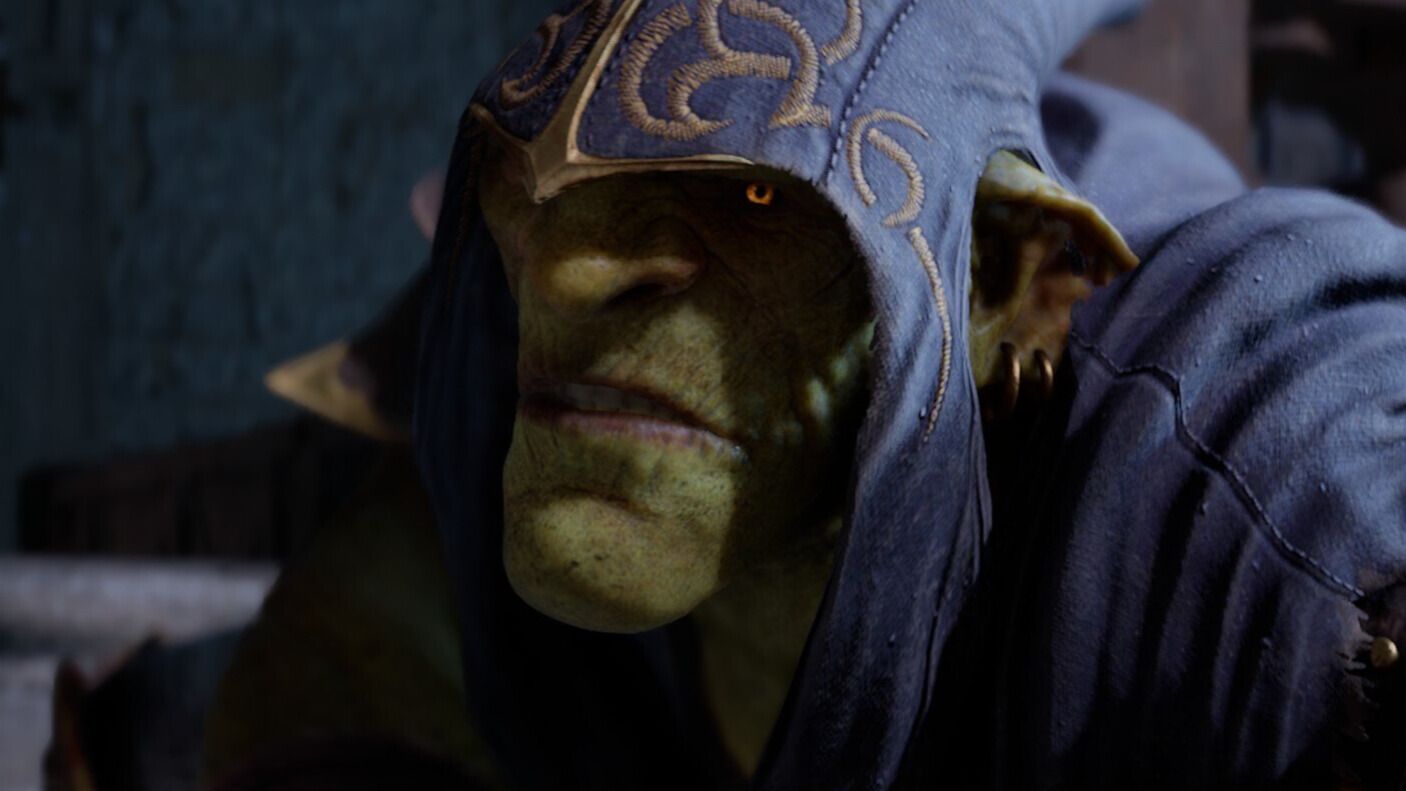
Few stealth games demand the same brutal precision as Styx. The series has always thrived on its punishing, third-person sneaking—where one misstep means instant death—and its loathsome goblin protagonist, whose foul-mouthed antics clash with the game’s otherwise immersive world. Yet Styx: Blades of Greed, the long-awaited sequel, manages something remarkable: it refines the formula without losing its core identity, even as it expands into a semi-open world where vertical exploration becomes the defining mechanic.
Nine years after Styx: Master of Shadows, the new entry trades linear levels for three sprawling, vertically stacked maps—each a labyrinth of interconnected chambers, rooftops, and sheer drops that make Dark Souls’* Blighttown feel flat by comparison. The key innovation? Metroidvania-style progression. A hookshot lets players reach otherwise inaccessible heights, while a parachute transforms wind currents into elevators or emergency brakes. These tools aren’t just conveniences; they’re essential for unlocking hidden paths and revisiting old areas with fresh perspectives.
But the real genius lies in how Blades of Greed turns exploration into a stealth puzzle. The maps aren’t just tall—they’re designed like honeycombs, with crawlspaces, rooftops, and hidden ledges connecting every chamber. When guards spot you, the game rewards creative escapes: crawl up a chimney, swing down a rope, leap through a window, and slit a throat from behind. By the fifth hour, the thrill isn’t just avoiding detection—it’s the fluidity of movement, the way the world responds to your presence.
What’s changed—and what hasn’t
The shift to a semi-open world doesn’t fundamentally alter Styx’s DNA. Instead, it amplifies its strengths. Missions still revolve around stealth, assassination, and the occasional direct combat (though engaging enemies directly is often a death sentence for a goblin). The open-ended structure means players can approach objectives in multiple ways—climbing a wall instead of taking guarded stairs, or solving environmental puzzles before resorting to brute force.
Yet for all its ambition, Blades of Greed retains the series’ signature brutality. Enemies aren’t just humans; they include giant insects with hyper-sensitive hearing, explosive feral dogs, and toxic plants that drain health on contact. These threats add tension, but they occasionally undercut immersion—creeping past wildlife feels less like a murderous assassin and more like a bug-zapping game. Most encounters, however, stay true to the series’ roots, with semi-intelligent foes that react dynamically to noise and movement.
A world built for verticality
The game’s three primary maps are each a masterclass in vertical design. The Wall is a crumbling, multi-tiered city clinging to a viaduct’s arches, where shadows and height create natural cover. Turquoise Dawn is a swampy expanse dominated by monolithic trees and towering orc strongholds, while Akenash—a ruin from the first game—feels like a ghost of its former self. Each location is packed with puzzles, optional upgrades (like temporary invisibility or time-slowing abilities), and Quartz deposits that serve as both objectives and loot. These searches, which might seem repetitive at first, become mini-stealth narratives in their own right.
Performance on an RTX 3060 laptop was stable but not flawless. Framerate drops occurred in dense, bug-infested interiors rather than open areas—a quirk that didn’t detract from the experience, though it’s a reminder that even mid-range hardware can struggle with Styx’s meticulous attention to detail. The game’s visuals are stunning, even at medium settings, with a color palette and tone that evoke classic dark fantasy—think The Dark Crystal meets Return to Oz.
Flaws beneath the surface
Not everything is perfect. Some puzzles feel artificially obstructive—like the hour spent fiddling with irrelevant switches before realizing a direct climb was the solution. Bugs occasionally surface: keys that vanish mid-pickup, invisible barriers, and a quick-save system that fails roughly 5% of the time. These issues are minor but noticeable, particularly in a game where precision is paramount.
Yet despite its imperfections, Blades of Greed succeeds where earlier entries stumbled. The goblin protagonist, once insufferable, feels more rounded thanks to interactions with a diverse cast of adventurers between missions. The world, once a series of isolated stealth sequences, now breathes with life—every climb, every escape, every assassination feels like part of a larger narrative. It’s not a perfect game, but it’s the closest Styx has come to capturing the magic of its 1980s dark fantasy inspirations.
Fans of Dishonored, Hitman, or Dark Souls will find much to love here. Blades of Greed demands patience, precision, and a willingness to embrace its vertical challenges. It’s not for players who prefer linear stealth or forgiving gameplay—this is a game that punishes mistakes but rewards creativity. If you’ve ever wanted to test your skills against a world that feels alive in every sense, this is the sequel the series needed.
Release and availability
Styx: Blades of Greed* launches on February 19, 2026, for $40. Steam Deck support is unconfirmed.