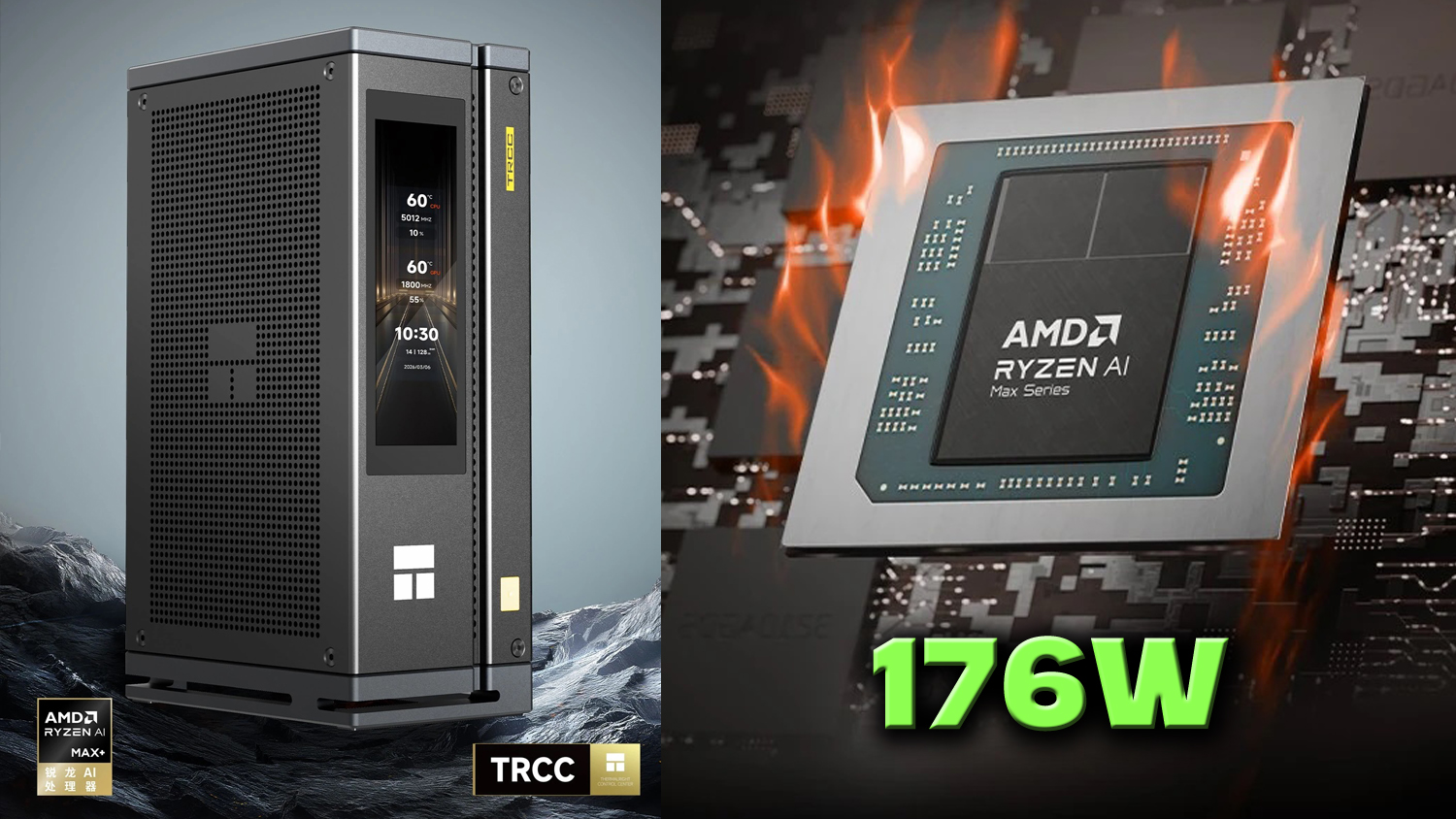
A user setting up an AI development environment needs a machine that can handle demanding workloads while staying cool under pressure. Thermalright’s new AI HydroNous R1 mini PC delivers exactly that, with a water-cooled Ryzen AI Max+ 395 processor at its core.
The AI HydroNous R1 is built around the Ryzen AI Max+ 395, which integrates advanced cooling through a water-block system. This isn’t just about performance—it’s about longevity and reliability in AI workloads where sustained power is critical. The mini PC comes with 64GB of DDR5 RAM and 2TB of SSD storage, providing ample capacity for AI models, datasets, and development tools.
Key Specifications
- Processor: Ryzen AI Max+ 395 (water-cooled)
- Memory: 64GB DDR5 RAM
- Storage: 2TB SSD
- Cooling: Water-block system for sustained performance
The water-cooled design is a standout feature, addressing the thermal challenges of AI workloads. While the exact clock speeds and power draw aren’t detailed yet, the focus is clearly on keeping temperatures in check during prolonged compute sessions. This is particularly important for AI development, where overclocking and sustained load are common.
Why It Matters
The AI HydroNous R1 isn’t just a mini PC—it’s a platform designed for AI developers who need both power and stability. The water-cooled Ryzen AI Max+ 395 suggests Thermalright is aiming to position this as a high-end solution, but the lack of detailed specs leaves some questions unanswered. Is this a true AI-optimized chip, or is it repurposed from gaming hardware? Without more information, it’s hard to say.
For gamers and AI enthusiasts alike, the risk lies in platform compatibility. If this mini PC doesn’t play well with existing AI frameworks or lacks future-proofing, its long-term value could be limited. The water-cooled design is a positive, but it’s only one piece of the puzzle.
The most significant change here isn’t just the hardware—it’s the shift toward water-cooled mini PCs for AI workloads. This could set a new standard for thermal management in compact form factors, but whether it catches on remains to be seen.