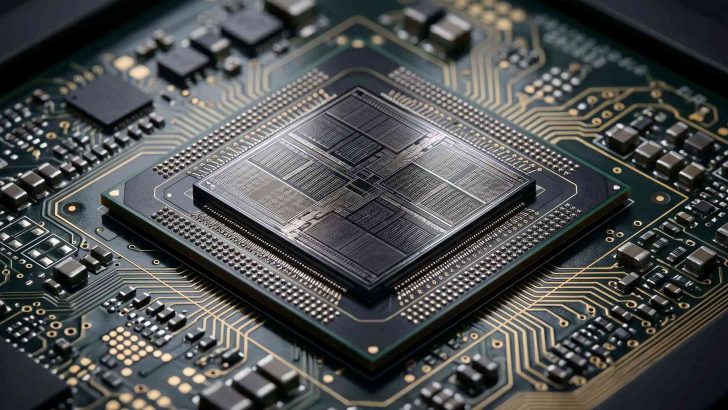
TSMC's latest innovation in packaging technology replaces the conventional organic substrates used in Chip-on-Wafer-on-Substrate (CoWoS) designs with glass. This change is not merely incremental—it represents a fundamental shift in how heat is managed in high-performance devices, potentially unlocking new capabilities for advanced computing but also introducing complexities that could delay widespread use.
The primary motivation behind this transition is thermal efficiency. Organic substrates, while cost-effective and widely used, struggle to match the thermal properties of silicon. Under sustained load, these materials can expand differently than silicon, leading to reliability issues over time. Glass, with its lower coefficient of thermal expansion, aligns more closely with silicon, reducing the risk of delamination or other heat-related failures. This could be particularly valuable for applications where thermal stability is paramount, such as AI training or high-performance GPUs.
Performance vs. Practicality: A Delicate Balance
The advantages of glass substrates are undeniable in theoretical terms. By mimicking silicon's thermal behavior more accurately, they could enable devices to operate at higher clock speeds for longer periods without compromising reliability. However, the transition is not without its drawbacks. Glass is inherently more expensive than organic materials, and its use introduces new manufacturing challenges. Handling glass substrates requires precision that current production lines may not be fully equipped for, potentially leading to lower yields or increased costs in the short term.
For businesses investing in high-performance hardware, this raises a critical question: Is the performance edge worth the premium? In markets where thermal management is a non-negotiable factor—such as data center AI chips or scientific supercomputing—the answer may well be yes. But for less demanding applications, the added cost of glass CoWoS could prove prohibitive, leaving organic substrates as the more practical choice for now.
Who Benefits—and Who Waits?
- High-performance computing (HPC) sectors, where sustained thermal stability is essential for maintaining performance under heavy workloads.
- Advanced GPUs and data center chips, which rely on high clock speeds and power efficiency to deliver cutting-edge results.
On the other hand, mid-range or consumer-grade devices may not see immediate benefits from this shift. The thermal demands of these products are typically lower, making organic substrates a more cost-effective solution. For businesses evaluating hardware for specific use cases, the decision will come down to whether the performance gains justify the investment—or if they can afford to wait for manufacturing processes to mature and costs to stabilize.
Market Outlook: A Long-Term Play with Near-Term Caution
The adoption of glass CoWoS is unlikely to be a rapid or universal shift. TSMC's focus on high-end applications suggests this technology will first appear in specialized markets where thermal performance is critical. Over time, as manufacturing processes become more refined and economies of scale kick in, the potential for broader adoption could emerge—but it remains a long-term prospect rather than an immediate reality.
For small businesses and enterprises alike, the key takeaway is to approach this technology with measured optimism. Early adopters may gain a competitive edge in performance-driven fields, but those in less demanding segments should proceed cautiously. The full potential of glass CoWoS hinges on overcoming manufacturing challenges, making it a story worth watching rather than an overnight transformation.
The question for the industry is whether TSMC can navigate these hurdles without losing momentum. If successful, this could set a new benchmark for thermal efficiency in high-performance computing. But if manufacturing complexities or cost concerns slow progress, the technology may remain a niche solution for years to come.