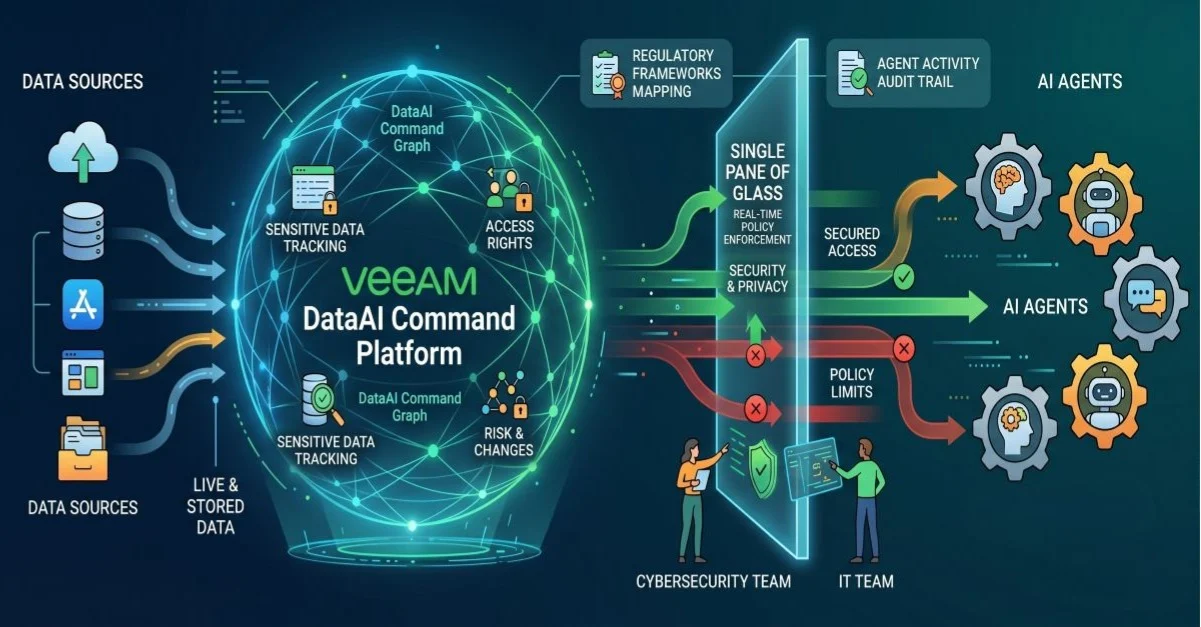
Enterprises are increasingly turning to AI to streamline complex workflows, but the same intelligence now underpins data protection strategies. Veeam’s new DataAI Command Platform and v13.1 updates mark a significant evolution in backup and recovery solutions, merging automation with governance to address modern challenges like ransomware and regulatory scrutiny.
The platform introduces an AI-driven trust framework designed to validate data integrity across hybrid environments while simplifying compliance reporting—a critical need for organizations navigating strict industry regulations. This shift from reactive to proactive resilience suggests a rethinking of traditional backup architectures, where manual oversight is no longer sustainable at scale.
Specs and Capabilities: What’s New in v13.1
- DataAI Command Platform: A unified interface for managing data protection tasks across on-premises, cloud, and SaaS environments. It consolidates backup, recovery, and monitoring into a single dashboard, reducing operational friction.
- AI Trust Framework: Uses machine learning to assess data trustworthiness in real time, flagging anomalies that could indicate corruption or tampering before they impact production systems.
- Automated Compliance Reporting: Generates audit-ready reports with minimal manual input, addressing requirements from frameworks like GDPR and HIPAA. This feature is particularly valuable for highly regulated sectors such as healthcare and finance.
The update also includes performance improvements for large-scale deployments, with support for up to 200 terabytes of backup data per server instance—a notable jump from previous versions. For organizations running mixed workloads (e.g., databases alongside unstructured data), this scalability is a practical necessity.
Implications: When Should Enterprises Upgrade?
The real value of these updates lies in their ability to address two growing pain points: the complexity of hybrid data environments and the pressure to demonstrate compliance without overburdening IT teams. Traditional backup solutions often require significant manual effort to maintain consistency across cloud and on-premises storage, while compliance audits can become a bottleneck during high-stakes regulatory reviews.
For creators and IT administrators, this platform offers a more intelligent approach to data governance. The AI Trust Framework, for example, doesn’t just detect issues—it provides context, reducing the time spent triaging false positives. This is especially relevant in scenarios where data integrity is non-negotiable, such as development environments or production pipelines where errors can cascade into costly downtime.
However, the transition to an AI-augmented workflow isn’t immediate. Organizations with legacy systems may face integration hurdles, and the learning curve for adopting a centralized command platform could delay adoption in some cases. The best candidates for this upgrade are those already operating hybrid or multi-cloud setups, where manual oversight is becoming unsustainable at scale.
Looking ahead, the focus on AI-driven trust signals a broader trend: data resilience is no longer just about recovery—it’s about continuous validation and proactive governance. Enterprises that adopt these tools now will be better positioned to handle the increasing complexity of modern workloads without sacrificing agility or compliance readiness.