Warhammer 40K fans are about to experience a golden era for strategy games. Within the next few years, two major titles will redefine how players engage with the grimdark universe: Dawn of War 4, a real-time tactics title, and Total War: Warhammer 40K, a turn-based grand strategy epic. While some speculate these releases might cannibalize each other’s audience, the developers behind Dawn of War 4* see it differently.
Elliot Verbiest, Senior Game Designer, and Jan Theysen, Game Director, emphasize that despite both games sharing the Warhammer 40K setting, their core mechanics and design philosophies are worlds apart. Verbiest, who has connections with the Total War team at Creative Assembly, expressed excitement rather than concern, calling the situation a rare opportunity for the franchise.
Two Games, Two Genres
Dawn of War 4 continues the tradition of its predecessors as a real-time strategy game focused on tactical combat, squad management, and large-scale battles. Its closest historical comparison might be Dawn of War: Dark Crusade, which introduced a turn-based overworld map—a feature that set it apart from the series’ core identity. Meanwhile, Total War: Warhammer 40K retains the signature blend of turn-based campaign strategy and real-time battles that define the Total War series, offering a broader scope that includes empire-building, diplomacy, and large-scale warfare.
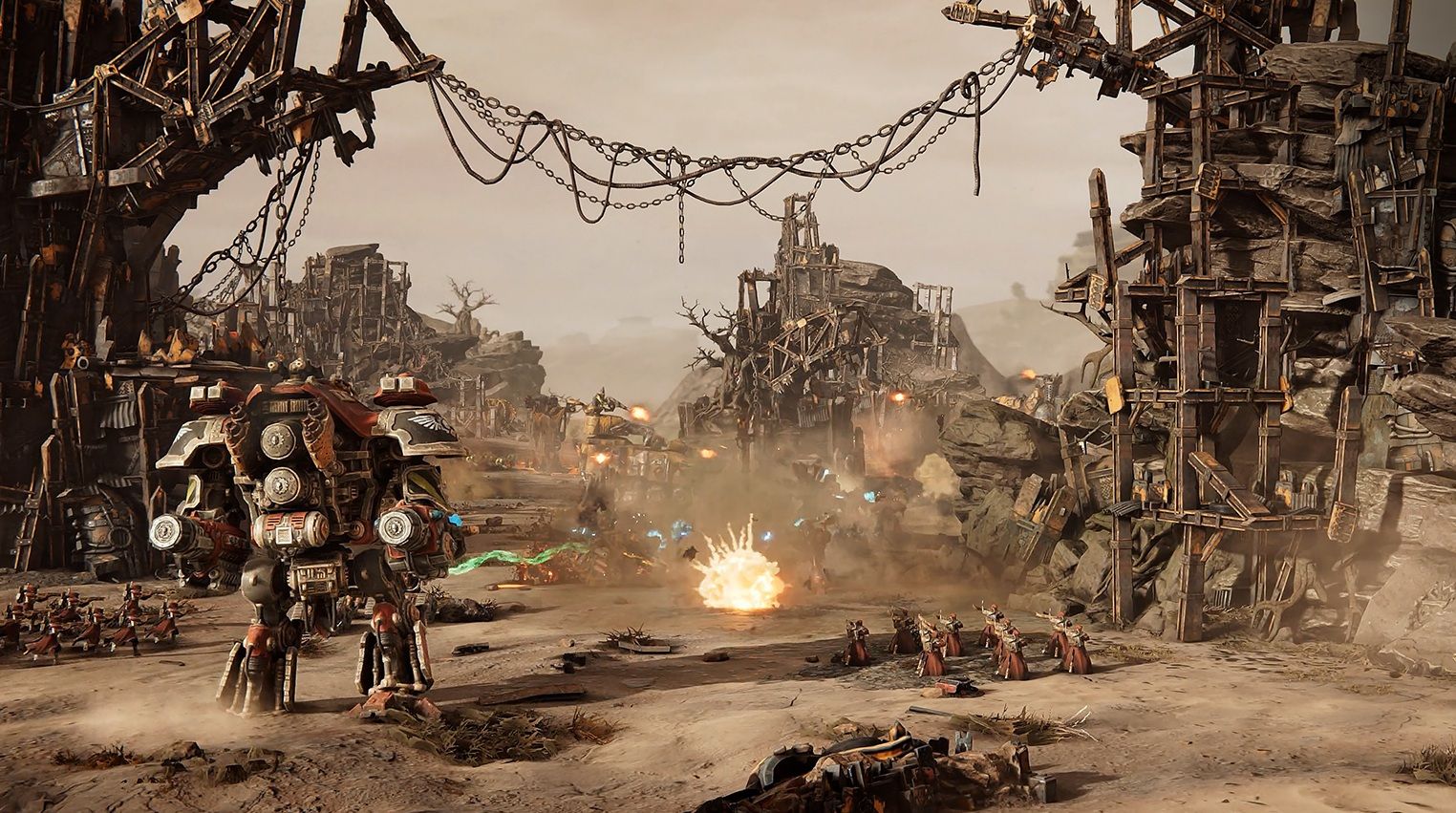
Verbiest argues that comparing the two games is like pitting Dawn of War against StarCraft or Total War—each serves a distinct purpose. For fans of Total War, the campaign-driven experience remains unmatched, while Dawn of War delivers deep tactical gameplay with a focus on unit customization and real-time decision-making.
A Timeline of Anticipation
Dawn of War 4 is currently targeting a 2026 release, placing it ahead of Total War: Warhammer 40K, which is expected to arrive in 2027 or later. This staggered release ensures that both titles can carve out their own space without immediate competition. Additionally, Mechanicus 2—a spin-off focused on the cult of the Machine God—is set to launch this year, further enriching the 40K gaming landscape.
The developers’ optimism reflects a broader trend in gaming, where franchises increasingly support multiple entries across different genres. For Warhammer 40K enthusiasts, this means a diverse lineup of games that cater to varied playstyles, from large-scale strategy to intimate tactical engagements.
With Dawn of War 4 still in development and Total War: Warhammer 40K* remaining unannounced, fans can look forward to a future where the Warhammer 40K universe is more vibrant than ever.