Grand Theft Auto 4 was never just a crime spree—it was a study in alienation. Niko Bellic arrives in Liberty City as a refugee, disillusioned and broke, and the game’s world reflects that mood. The streets are bathed in the same grimy light as Edward Hopper’s paintings, where neon signs flicker against a sky thick with subway smoke. The driving feels weighty, the physics unforgiving, and the city itself seems to push back against the player’s every move.
Yet beneath the grit, GTA 4 balanced its bleakness with something rare: a sense of lived-in routine. Between heists and shootouts, players could bowl, date, or just sit in a diner while Niko’s friends called, complaining about his life choices. These minigames weren’t filler—they were the game’s emotional core, revealing how a man trapped in a story he didn’t choose still tries to find normalcy.
Any remake would need to preserve this duality. The driving must remain a test of skill, not just spectacle. The hangouts must stay messy and unpredictable, with NPCs who remember your failures. And the story—Niko’s slow realization that he’s as much a prisoner of his past as the city’s underworld—shouldn’t be sanitized. The game’s genius was in making crime feel like a dead end, and a remake that softens that edge would miss the point entirely.
The Outsider’s Lens
Rockstar has always favored protagonists who don’t belong. CJ in San Andreas was a misfit, but Niko was something different: a man who’d seen war, who’d lost everything, and who arrived in America with only his cousin’s empty promises. The game’s world—Liberty City—was a perfect reflection of his disorientation. The skyscrapers loomed, the subway trains rattled overhead, and the Ferris wheel of Firefly Island spun against a sky that felt permanently overcast.
This wasn’t just aesthetic choice. It was a mood. The game’s visuals borrowed from Walter Hill’s gritty ‘70s films, where urban decay and neon violence collided. But GTA 4 went further, using its world to isolate Niko. The driving physics—so punishing that players still flinch at the memory—weren’t just a gameplay gimmick. They were a metaphor. Niko was trying to turn his life around, but the car (and the city) kept pulling him toward the wall.
Hangouts as Resistance
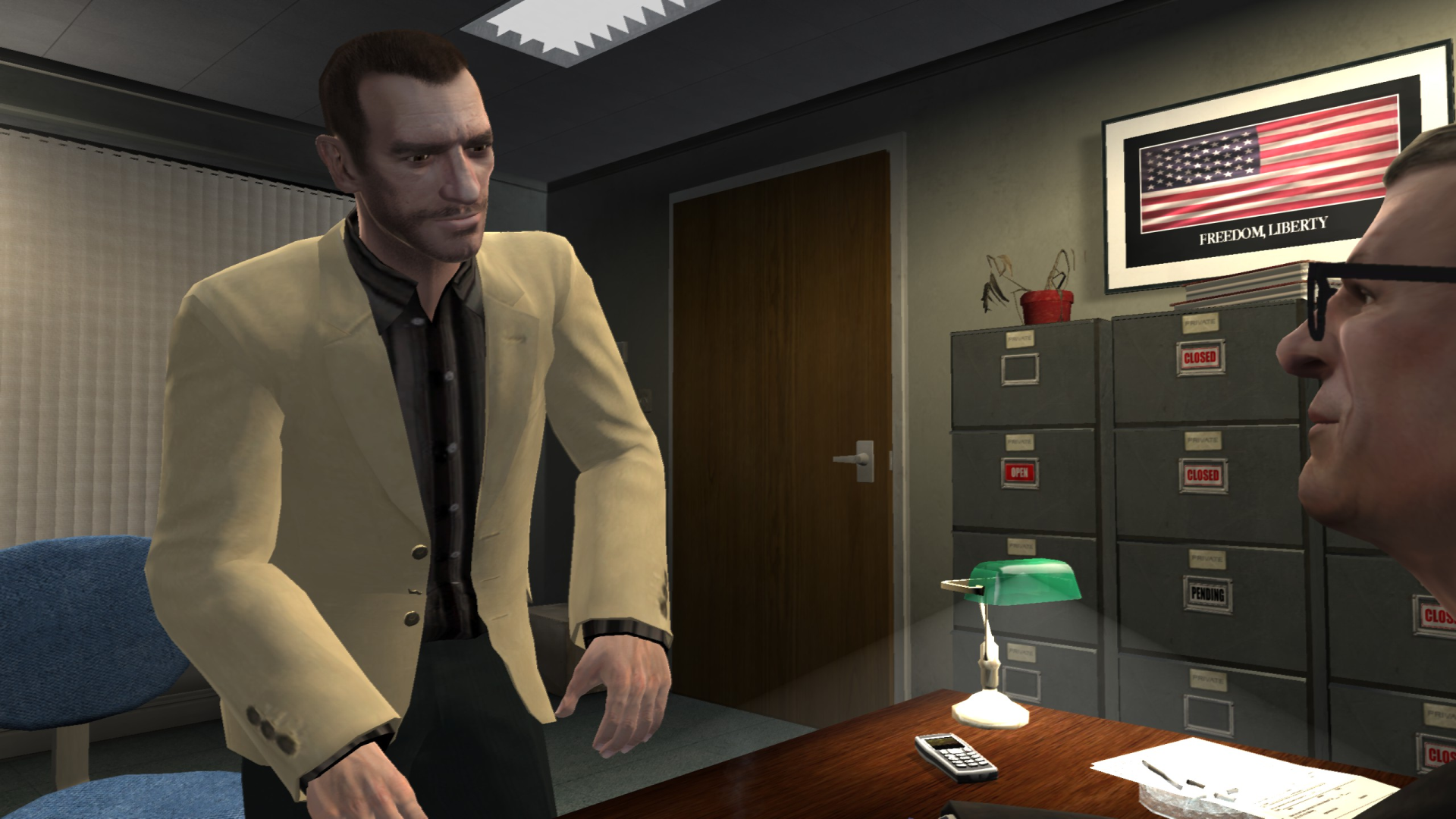
Between missions, Niko’s life wasn’t just about crime. It was about the small, futile attempts to feel human. Bowling with friends, debating fashion with dates, or just sitting in a bar while Roman called with another bad idea—these weren’t distractions. They were the game’s quiet rebellion against its own narrative.
Take Michelle, Niko’s first date. She seemed harmless at first—chatty, a little neurotic, the kind of person who labels her furniture. But by the time you’d taken her to enough fast-food joints and pool halls, she’d become part of the routine. Then, in a twist that still stings, she revealed herself as an undercover agent. The betrayal wasn’t just shocking—it was personal. Niko had spent the entire game lying to her about who he was, and she’d known all along.
These moments weren’t just plot points. They were proof that GTA 4 understood something few games do: that even in a world of crime and chaos, people still try to connect. And a remake that erased these hangouts—these fleeting, fragile human moments—would lose its soul.
A Remake’s Impossible Task
Modern games have moved on from Niko’s world. Open-world titles now prioritize seamless transitions, polished mechanics, and stories that feel inevitable. But GTA 4 thrived on its imperfections. The driving was jarring, the NPCs were often frustrating, and the story was a slow descent into despair. That’s why it felt real.
A remake would face an impossible choice: smooth out the edges and lose the game’s raw power, or preserve its flaws and risk alienating players who’ve grown accustomed to flawless execution. The minigames, the brutal physics, the hangouts—these weren’t just mechanics. They were the game’s identity. And without them, GTA 4 wouldn’t just be a remake. It would be a ghost of itself.
The original was a masterpiece because it refused to let Niko—or the player—escape the consequences of his choices. Any remake worth playing would have to do the same.