The balance between CPUs and GPUs in high-performance computing is tilting—toward the processor.
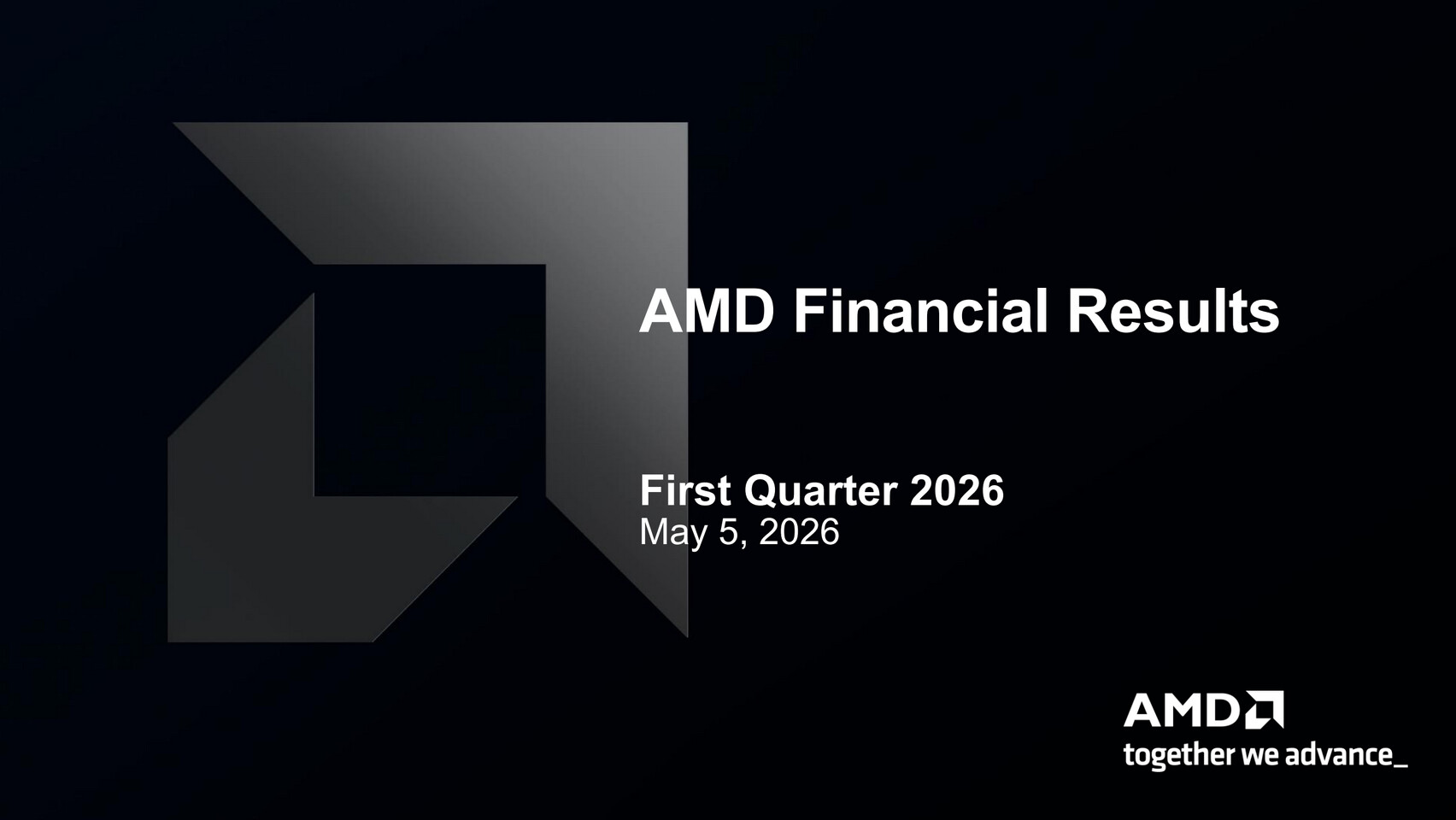
AMD’s recent financial update revealed a notable trend: agentic AI is driving CPU utilization to levels where compute nodes may soon require more central processing units than graphics processors. This marks a departure from traditional configurations, where one CPU often managed multiple GPUs in a 1-to-4 or 1-to-8 ratio. The shift suggests a fundamental rethinking of how AI workloads are distributed across hardware.
Agentic AI—where autonomous agents within large language models handle tasks like code review, bug fixing, and orchestration—demands significant CPU involvement. Unlike conventional AI training or inference, which primarily relies on GPUs for heavy parallel processing, agentic systems require constant CPU coordination. This has led to a scenario where CPUs are not just hosts but active participants in the compute pipeline.
Key Specs and Implications
- CPU-to-GPU Ratio: Moving from 1:4 or 1:8 toward 1:1, with potential for more CPUs than GPUs in dense agentic workloads.
- Workload Demand: CPUs now handle orchestration, continuous updates, and task delegation—roles previously minimal compared to GPU-centric AI training.
- Market Impact: AMD reports selling out of CPUs to AI labs and hyperscalers, reflecting the immediate pressure on supply chains.
The implication is clear: agentic AI isn’t just another use case for GPUs. It’s redefining the hardware landscape. For creators and data center operators, this means evaluating CPU performance as critically as GPU throughput—especially when dealing with autonomous workflows that demand real-time decision-making.
What’s Next?
While the trend is confirmed, details on specific architectures or roadmaps remain unclear. AMD’s focus on CPU scalability suggests a push toward more integrated, high-efficiency designs—likely leveraging advancements in chiplet-based systems and process nodes like 2 nm for compute clusters (CCDs) and 3 nm for I/O dies (IOD). However, without concrete product announcements, the full extent of this shift remains speculative.
The bottom line: AI is no longer just a GPU story. The CPU’s role has expanded, and those building or scaling compute infrastructure must account for this new dynamic—whether in cloud nodes, edge devices, or on-prem setups. For now, the message is simple: expect CPUs to be as critical as GPUs in the next generation of AI hardware.