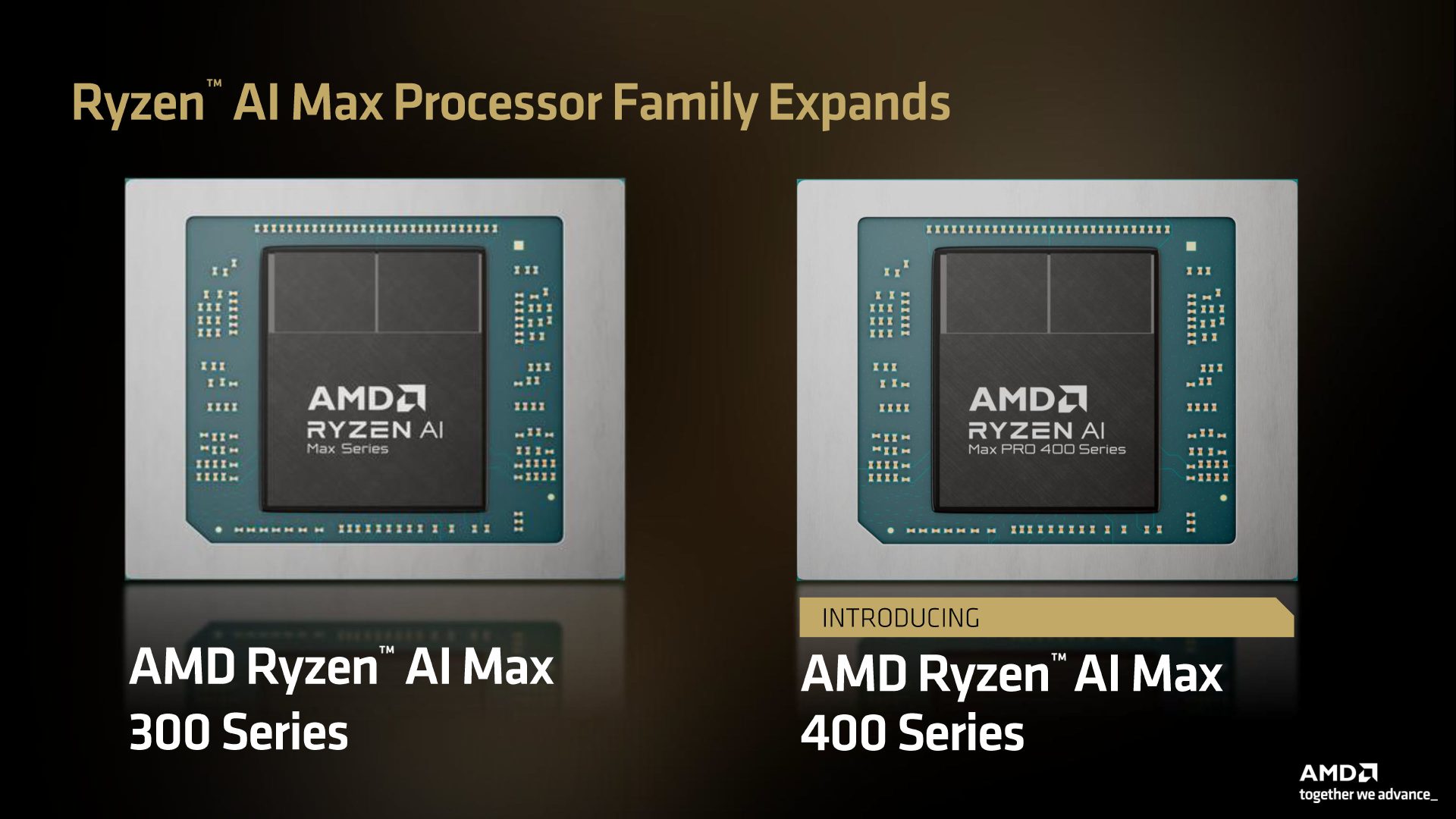
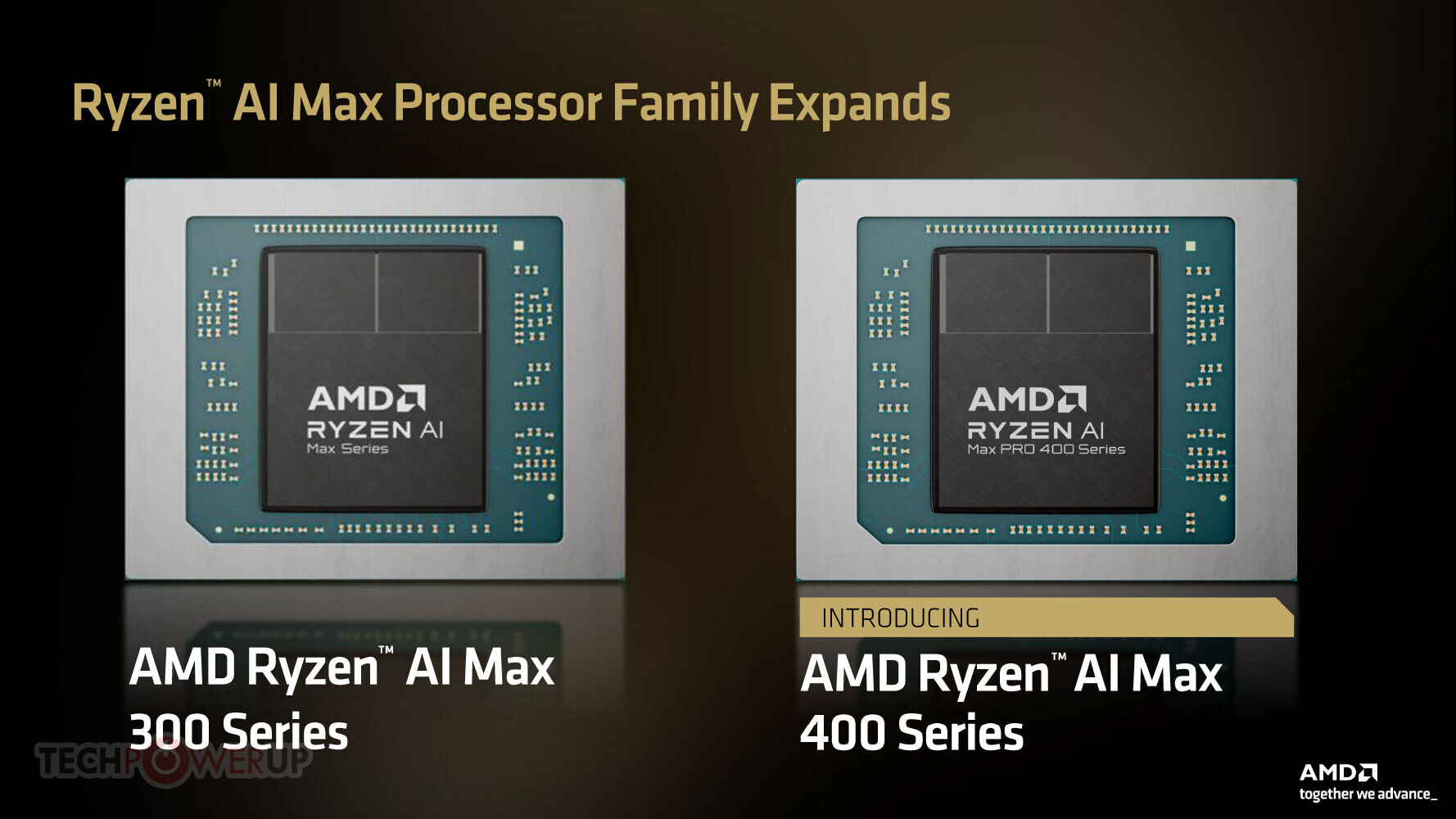
AMD has introduced the Ryzen AI Max 400 series processors, marking a significant update to its AI-focused lineup. The new chips are designed for high-performance AI development, featuring up to 16 Zen 5 CPU cores, an RDNA 3.5-based iGPU with 40 compute units, and a 55 TOPS-class NPU. The most notable change is the expanded memory support, now reaching 192 GB of LPDDR5X, up from 128 GB in the previous generation.
This increase allows for more flexible memory partitioning between the system and the iGPU, with the GPU able to access up to 160 GB. The update also brings higher clock speeds: the CPU cores now boost up to 5.2 GHz, while the iGPU sees a bump from 2.9 GHz to 3.0 GHz. The NPU has received a 10% performance improvement, reaching 55 TOPS.
The series includes three models: the Ryzen AI Max+ PRO 495, the Ryzen AI Max PRO 490, and the Ryzen AI Max PRO 485. The top-tier model, the 495, features a 16-core/32-thread CPU with boost frequencies up to 5.2 GHz, all 40 compute units enabled in the iGPU, and the full 55 TOPS NPU. The mid-range 490 offers a 12-core/24-thread CPU boosting up to 5.0 GHz, 32 compute units in the iGPU, and a 50 TOPS NPU. The entry-level 485 shares the same CPU and GPU configuration as the 490 but with an 8-core/16-thread design.
AMD is also planning to launch an updated Ryzen AI Halo machine based on the Ryzen AI Max+ PRO 495 and 192 GB of memory. This suggests a continued focus on high-end AI development platforms, though the exact timeline remains unclear.
Key Specs
- CPU: Up to 16 Zen 5 cores (Ryzen AI Max+ PRO 495)
- GPU: RDNA 3.5-based iGPU with up to 40 compute units, boost clocks up to 3.0 GHz
- Memory: Up to 192 GB LPDDR5X (partitionable, with GPU access up to 160 GB)
- NPU: 55 TOPS performance (up from 50 TOPS in previous generation)
- CPU Boost Clocks: Up to 5.2 GHz (Ryzen AI Max+ PRO 495), up from 5.1 GHz
The expanded memory capacity is a notable advancement, particularly for AI workloads that require large parameter models. However, the real-world impact of this increase remains to be seen, especially given the current market dynamics and the competition from other platforms. The boosted clock speeds and NPU performance are also welcome improvements, but they may not be enough to justify an immediate upgrade for all users.
That’s the upside—here’s the catch: while the Ryzen AI Max 400 series brings significant enhancements, there are still unanswered questions about long-term platform support. The previous generation already faced compatibility risks with certain software and development tools, and the same could apply here. Additionally, the lack of consumer versions in this refresh suggests that AMD is primarily targeting enterprise and professional users for now.
For PC builders looking to integrate these chips into custom AI development platforms, the expanded memory and performance are compelling. However, they should weigh these benefits against potential compatibility risks and the need for future-proofing. The updated Ryzen AI Halo machine could provide a reference point, but its availability is still uncertain.
Where things stand now: AMD has delivered a substantial update to its AI-focused processor lineup with the Ryzen AI Max 400 series. The increased memory capacity and performance improvements are notable, but buyers should proceed with caution, considering the potential risks of platform compatibility and the long-term roadmap for these chips.