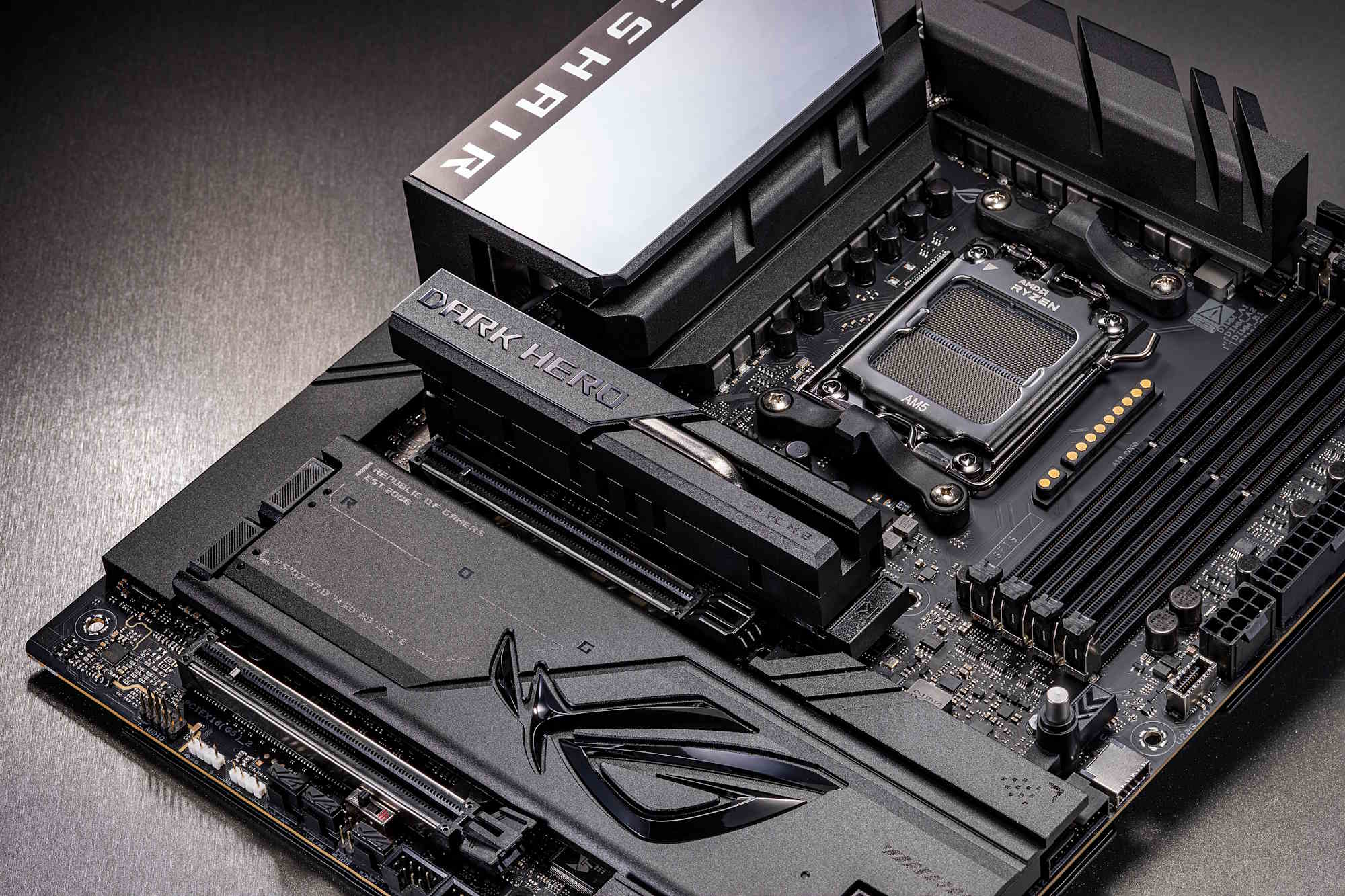
AMD’s Ryzen 7 9800X3D, the crown jewel of its Ryzen 9000 lineup, is facing a troubling trend: reports of sudden failures when paired with ASUS’s high-end AM5 motherboards, particularly the X870E and X870 models. The issue has escalated to the point where ASUS has initiated an internal review, urging users to update BIOS versions and contact support if affected. But the root cause remains elusive—is this a manufacturing defect, a compatibility gap, or something more sinister?
For now, the evidence is stark. Users on forums and social media have documented Ryzen 7 9800X3D CPUs that appear to have died mid-operation, leaving behind visible burn marks on the AM5 socket. Some have even captured photos of the underside of the CPU, showing a pronounced bulge—a telltale sign of internal damage. This isn’t the first time AMD’s 3D V-Cache processors have faced scrutiny; similar reports emerged with the Ryzen 7 7800X3D on ASUS 600-series boards, where SoC voltage spikes were initially blamed.
ASUS’s response is measured but direct. The company has advised all users to flash the latest BIOS via EZ Flash or BIOS Flashback, a step that may mitigate instability in some cases. For those already affected, ASUS’s customer service is standing by to assist with replacements or further diagnostics. The message is clear: while the investigation is ongoing, proactive measures are being taken to contain the problem.
Yet questions linger. If BIOS updates are the solution, why haven’t they resolved the issue for everyone? Some users suspect lingering voltage regulation flaws, while others point to potential thermal throttling under sustained loads—especially in high-end configurations where cooling solutions may not keep pace with the 9800X3D’s power demands. The failure rate, while alarming, remains lower than Intel’s recent 13th and 14th Gen CPUs, which have faced their own set of reliability concerns. Still, the visual evidence—burned sockets, damaged dies—is hard to ignore.
Who is most at risk? Early reports suggest that overclocking or pushing the CPU beyond stock settings may exacerbate the problem, though ASUS has not confirmed this. For now, the safest course of action is to ensure motherboards are running the latest firmware and to monitor temperatures under heavy workloads, such as gaming or content creation. AMD’s warranty process for affected CPUs is reportedly smooth, with quick replacements available for verified cases.
The broader industry is watching closely. ASRock, another major motherboard vendor, has faced similar reports with its 800-series lineup, adding to the sense of urgency. While no single cause has been identified, the pattern—high-end CPUs, premium motherboards, and sudden failures—demands answers. Until then, users pairing a Ryzen 7 9800X3D with an ASUS 800-series board should proceed with caution, stay updated on BIOS revisions, and remain vigilant for any signs of instability.
Key Specs: Ryzen 7 9800X3D
- Architecture: Zen 4 (3D V-Cache)
- Cores/Threads: 8/16
- Base Clock: 4.1 GHz
- Boost Clock: Up to 5.0 GHz
- L3 Cache: 32MB (3D V-Cache)
- TDP: 170W
- Socket: AM5
- Compatibility: DDR5, PCIe 5.0
The Ryzen 7 9800X3D is a powerhouse for gaming and productivity, but its reliability hinges on stable platform support. The current BIOS updates may help, but without a definitive explanation for the failures, users should treat this as a cautionary tale—one that underscores the importance of staying informed and proactive when building high-performance systems.