The MI450 Instinct GPU from AMD has emerged as a game-changer in the AI hardware landscape, offering substantial improvements in performance and efficiency that could redefine how enterprises approach AI workloads. Its architecture, optimized for high-throughput computing, suggests a shift toward more streamlined AI infrastructure, but potential buyers must weigh long-term platform commitments against immediate gains.
At the heart of the MI450 is a focus on efficiency, with specifications that position it as a strong contender in the AI acceleration market. It features 128 compute units, each capable of handling complex AI tasks with lower power consumption compared to previous generations. This translates to faster training cycles and reduced operational costs—a critical factor for large-scale deployments.
- Performance: Up to 40 TFLOPS of FP64 performance, making it one of the most powerful GPUs in its class for AI workloads.
- Memory: 128 GB of HBM3 memory, designed to minimize latency and maximize bandwidth for high-speed data processing.
- Power Efficiency: Optimized power draw ensures that the GPU delivers strong performance without excessive energy consumption, a key consideration in data centers.
The MI450’s design also introduces features that address some of the challenges faced by AI hardware today. For instance, its memory architecture is tailored to reduce bottlenecks in data transfer, which is often a limiting factor in high-performance computing. However, this efficiency comes with trade-offs, particularly in terms of platform lock-in. The MI450 is built on AMD’s CDNA architecture, which means that users adopting this hardware may find it harder to transition to alternative solutions in the future.
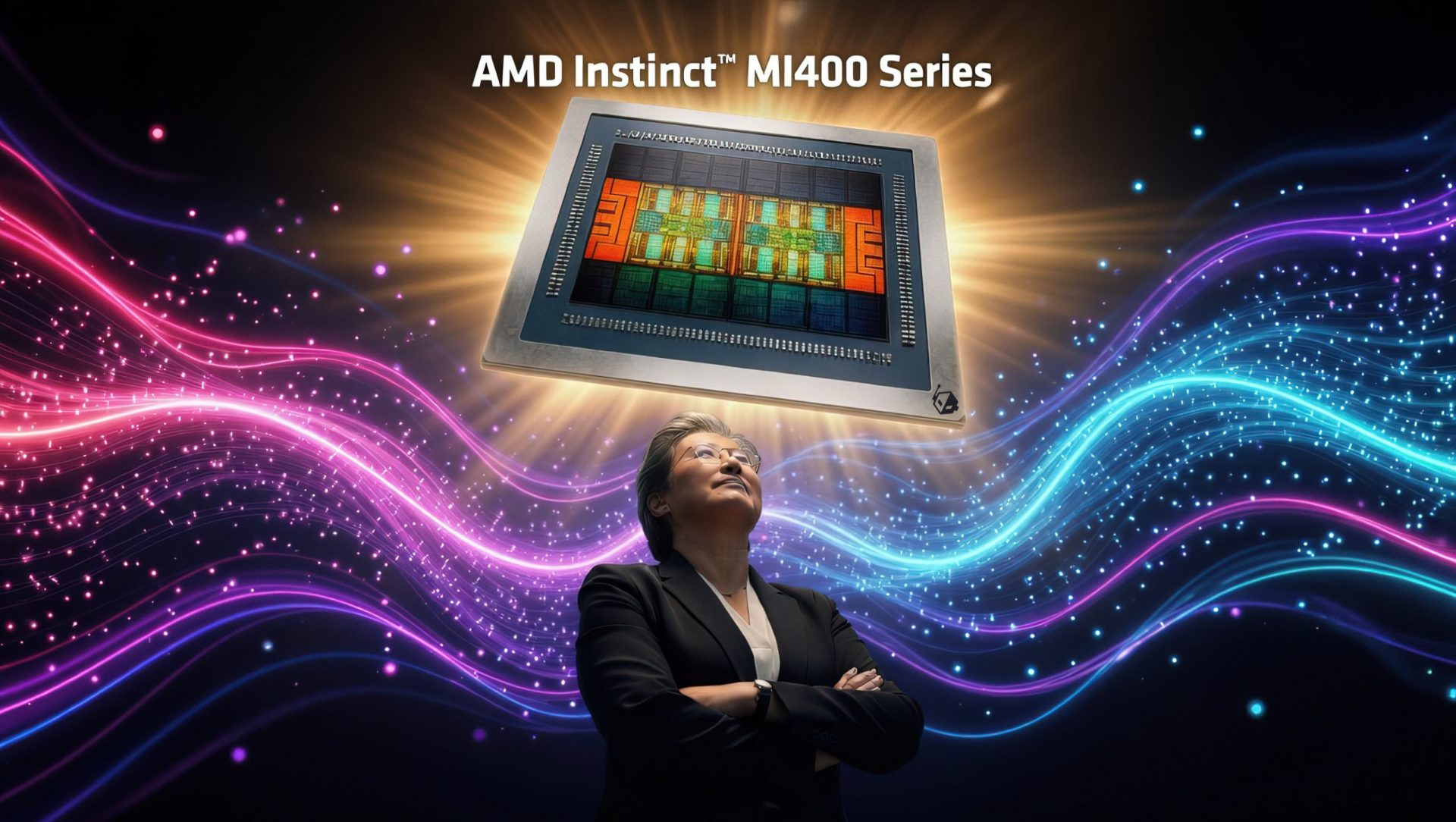
For enterprises evaluating AI infrastructure, the MI450 represents a compelling option, but its long-term viability will depend on how well AMD supports its ecosystem. The GPU’s performance metrics suggest it could be a dominant player in the AI market, but buyers must also consider the broader implications of committing to a specific platform. This includes software compatibility, future-proofing, and the potential for vendor lock-in—a risk that has become increasingly relevant as AI workloads grow more complex.
Looking ahead, the MI450’s success could hinge on how effectively AMD addresses these concerns while maintaining its performance edge. If it delivers on its promise of efficiency without sacrificing flexibility, it may set a new standard for AI hardware. However, the market will be closely watching whether other manufacturers can match or surpass its capabilities, particularly in areas like memory bandwidth and power consumption.