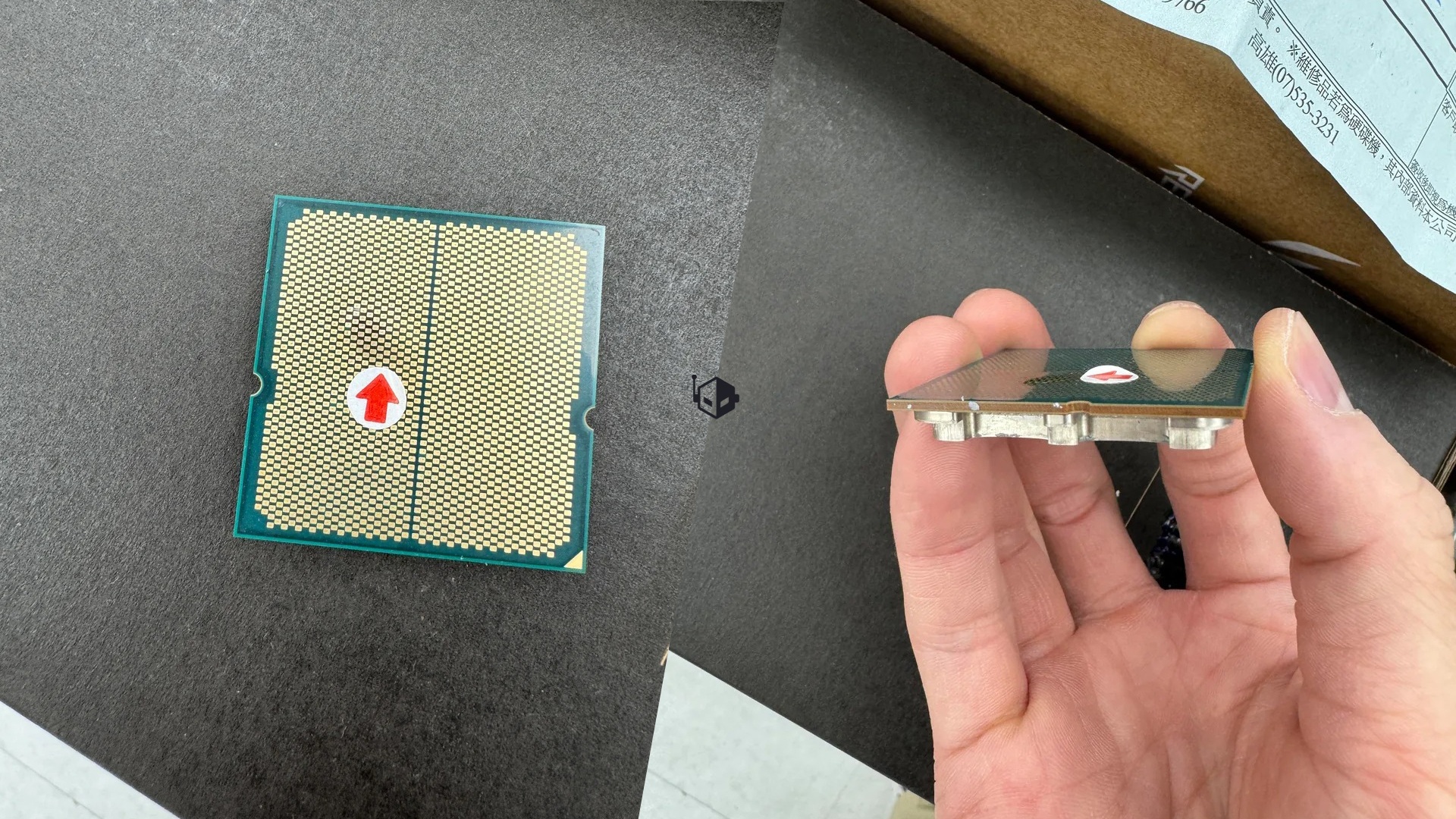
The rejection of a warranty claim for a Ryzen 9 7950X3D processor due to substrate swelling highlights an emerging challenge in semiconductor reliability. While the processor is celebrated for its cutting-edge 3D V-Cache architecture, which delivers exceptional multi-threaded performance, the incident suggests that material degradation may pose risks under prolonged or extreme operating conditions.
Substrate swelling occurs when moisture absorption causes internal layers to expand, potentially disrupting electrical connections and thermal management. This issue is not limited to AMD's high-end models but has been documented in other premium processors, indicating a broader industry concern. For users relying on the 7950X3D for demanding workloads—such as content creation or data processing—the discovery of such vulnerabilities complicates the balance between performance and durability.
Key Technical Details
- Processor Model: Ryzen 9 7950X3D (16 cores, 32 threads)
- Cache Configuration: 80MB L3 cache with 3D V-Cache technology
- Thermal Design Power (TDP): 120W
- Socket Compatibility: AM5
The 7950X3D's 3D V-Cache design, while revolutionary for enhancing single-threaded performance through stacked cache layers, introduces complexities in material stability. The swelling issue suggests that even state-of-the-art manufacturing processes may struggle with the long-term effects of moisture exposure or thermal cycling. This is particularly relevant for data center operators and professional users who prioritize both raw power and sustained uptime.
Industry-Wide Implications
The case also reflects a trend where warranty disputes increasingly revolve around material failures rather than traditional mechanical defects. As processors push the boundaries of miniaturization, the integrity of substrates, packaging, and cooling solutions becomes critical. Manufacturers are likely investing in research to address these challenges, but users may need to adopt proactive measures—such as controlled environmental conditions or load balancing—to mitigate risks.
Practical Considerations for Users
- High-performance processors like the 7950X3D offer unparalleled speed but may require careful monitoring of thermal and operational stress.
- Warranty claims involving material degradation often demand thorough diagnostics, including thermal imaging or long-term stability tests.
- Developers should evaluate whether advanced features—such as 3D V-Cache—are justified by their specific use cases, weighing performance gains against potential longevity trade-offs.
Despite the risks, the Ryzen 9 7950X3D remains a benchmark for multi-threaded computing. The incident serves as a reminder that innovation in semiconductor design must be accompanied by rigorous testing for real-world durability. As the industry continues to advance, material science will play an increasingly pivotal role in ensuring both performance and reliability in next-generation hardware.