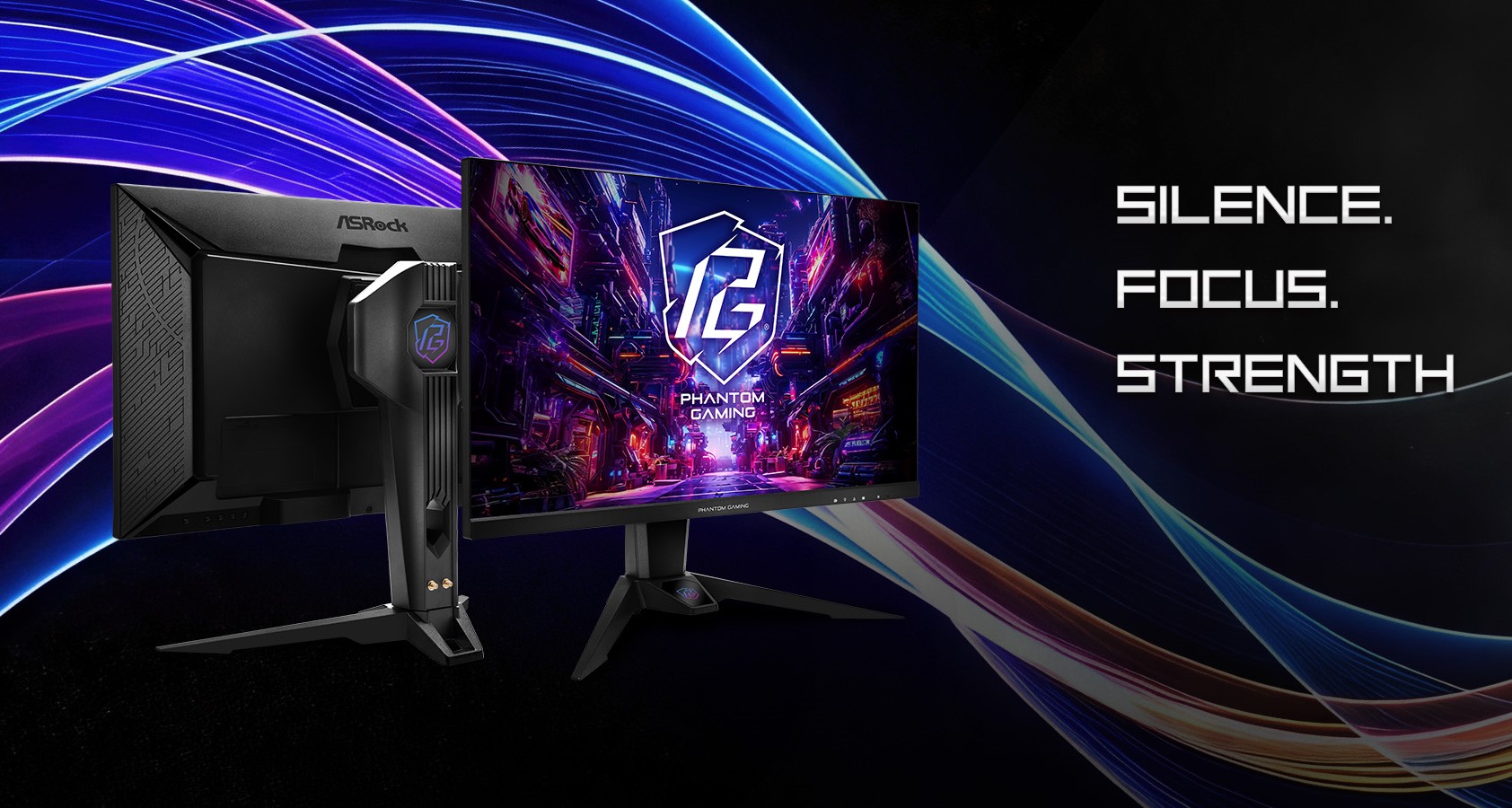
Gaming monitors have long been defined by their refresh rates, but hitting 400 Hz introduces a set of engineering challenges that redefine what’s possible—and practical. ASRock’s latest entry, the PG27QFW2A, achieves this milestone with a 27-inch display, but the tradeoffs in power consumption, thermal management, and image quality suggest this isn’t just about raw numbers.
The monitor’s core specification is striking: 400 Hz over a 1080p resolution, paired with a 1 ms gray-to-gray response time. These figures are designed to appeal to competitive gamers who demand split-second responsiveness, but the underlying technology—likely a high-refresh IPS panel with advanced overclocking—comes at a cost. The power draw, for instance, is estimated to reach around 250 watts during peak performance, far exceeding typical 144 Hz or 240 Hz monitors. This raises questions about thermal stability and long-term reliability in high-intensity gaming sessions.
Specs and Workload-Specific Considerations
- Display: 27-inch, 1080p resolution (2560x1440)
- Refresh Rate: 400 Hz (adaptive sync with G-Sync compatible)
- Response Time: 1 ms gray-to-gray
- HDR: 350 nits peak brightness, 800:1 contrast ratio
- Connectivity: DisplayPort 1.4 (120 Hz), HDMI 2.1 (18 Gbps)
The PG27QFW2A’s design prioritizes high-frequency performance, but this comes with limitations in image quality. The HDR specification, for example, is modest by current standards—350 nits peak brightness and an 800:1 contrast ratio—suggesting it may not excel in content creation or mixed workloads where color accuracy matters as much as speed.
Context: The Race to Higher Refresh Rates
The push toward higher refresh rates has been a constant in the gaming monitor market, but 400 Hz represents a new frontier. Most competitive gamers still operate within the 240 Hz range, and the practical benefits of jumping to 400 Hz remain debated. The PG27QFW2A’s engineering approach—likely leveraging overclocked panels and aggressive thermal management—hints at a product tailored for extreme use cases rather than general gaming.
Implications: Value vs. Practicality
For data/AI workloads, the PG27QFW2A’s strengths lie in its ability to handle rapid frame updates, but its limitations in HDR and color accuracy could make it less versatile. The high power consumption also adds complexity for users running multiple displays or in environments where thermal management is critical. Whether this monitor justifies its premium positioning depends on how narrowly its performance is targeted.
Reality Check: What’s Confirmed vs. Unknown
While ASRock has confirmed the 400 Hz specification and key features like adaptive sync, details about long-term stability under sustained loads remain untested. The power draw figures are estimates based on similar high-refresh monitors, but actual performance may vary depending on the GPU used.
The PG27QFW2A is a technical achievement, but its real-world impact will depend on whether gamers can translate raw refresh rates into tangible competitive advantages without sacrificing other aspects of display quality. For now, it stands as a benchmark—one that challenges the industry to rethink how we measure value in high-end gaming hardware.