ASUS has entered the high-end gaming monitor market with two distinct offerings: the Strix OLED XG34WCDMS and the Strix XG129C. The former is a compact, 34-inch WQHD+ display designed for competitive gamers, while the latter is a massive, 129-inch commercial-grade monitor built for professional setups.
Both monitors share key performance metrics that set them apart from previous generations. The XG34WCDMS delivers a 2560x1440 resolution with a peak brightness of 800 nits, thanks to its OLED panel. It supports a refresh rate of up to 170 Hz and features a 1 ms (MPRT) gray-to-gray transition time, ensuring smooth visuals even in fast-paced games. The XG129C, on the other hand, boasts a 5120x1440 resolution with Mini-LED backlighting that achieves up to 800 nits of brightness and a contrast ratio of 3000:1. It also supports a 75 Hz refresh rate, making it suitable for both gaming and professional applications.
One notable feature of the XG34WCDMS is its built-in cooling system, which helps maintain performance during extended gaming sessions. The XG129C, meanwhile, comes with a robust build designed to withstand daily wear and tear, making it ideal for environments where monitors are frequently adjusted or moved.
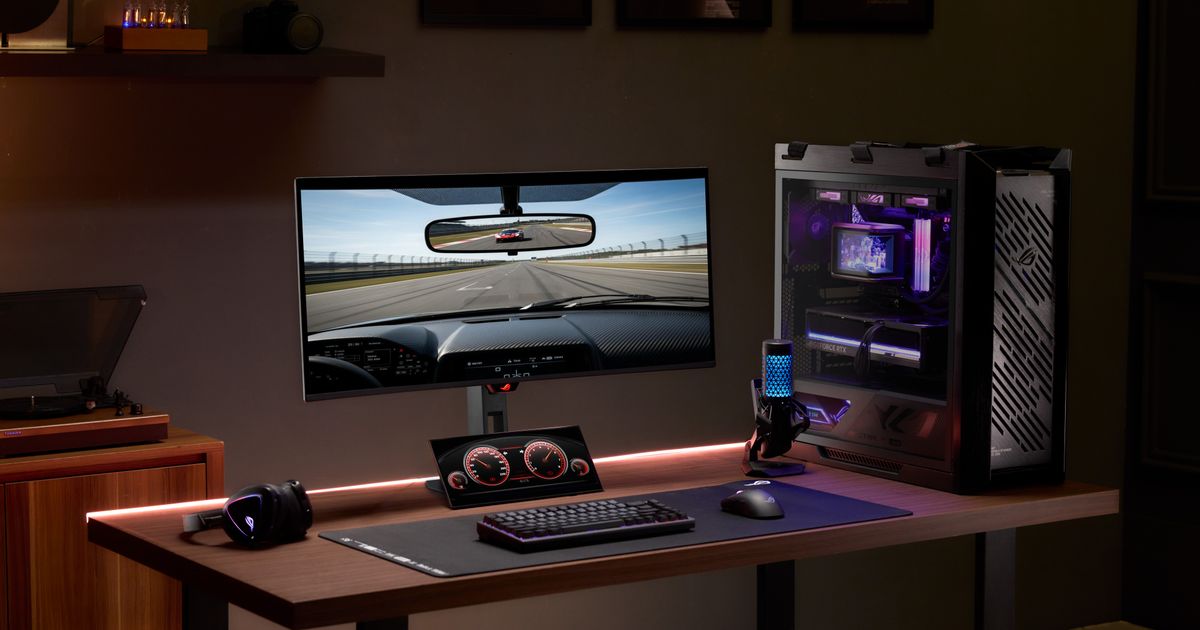
Both monitors come equipped with advanced connectivity options, including HDMI 2.0 and DisplayPort 1.4, ensuring compatibility with the latest gaming consoles and PCs. They also feature low input lag, a critical factor for competitive gamers, as well as adaptive sync technologies like G-Sync and FreeSync Premium to minimize screen tearing.
While the XG34WCDMS is positioned as a premium personal gaming monitor, the XG129C is tailored for professional setups, such as digital signage or large-scale gaming arenas. This dual approach allows ASUS to cater to both individual gamers and commercial users, addressing a broader range of needs in the market.
The pricing for these monitors has not been officially announced, but they are expected to be positioned at the higher end of the spectrum, reflecting their advanced features and performance capabilities. For now, the focus remains on what ASUS is delivering in terms of technology and design, setting a new benchmark for high-end gaming displays.