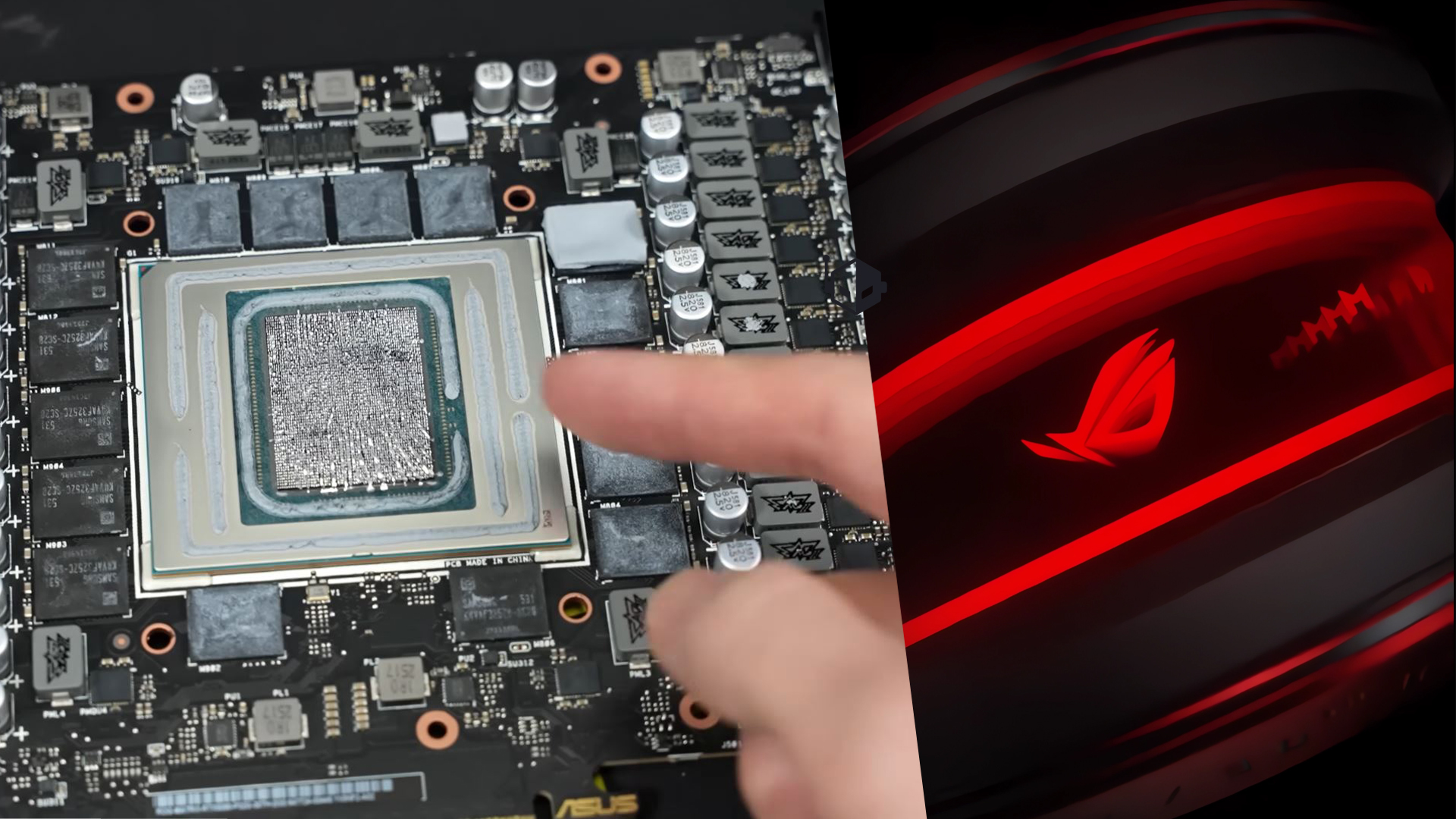
ASUS' flagship ROG Matrix RTX 5090 has undergone a quiet but meaningful evolution in its thermal design. Recent observations indicate that the application of liquid metal and thermal paste on the GPU's substrate has been refined, moving away from earlier methods where liquid metal could spread unpredictably beyond the IHS. The new approach appears more deliberate, with thermal paste acting as a barrier to contain the liquid metal while still allowing for efficient heat transfer.
This adjustment isn't just about aesthetics; it reflects a deeper focus on performance and reliability. During testing, the updated GPU was observed pulling nearly 800W under full load, with power distribution across its connectors reaching around 350-450W each. This balanced load suggests that the refinements have stabilized power delivery, reducing thermal stress on individual components. The GPU temperature, measured at approximately 70-72°C in these conditions, shows a slight but noticeable improvement over previous samples, which had maintained temperatures in the 67-69°C range under similar loads.
The change also hints at a broader trend in ASUS' approach to high-end GPUs. By containing the liquid metal more effectively, the company may be addressing earlier concerns about thermal consistency and long-term stability. This isn't just a tweak; it's a step toward refining how heat is managed at the most critical point of contact between the GPU die and the heatsink.
While this refinement doesn't alter the RTX 5090's already impressive specifications—such as its core clock speeds, memory configuration, or raw performance metrics—it underscores ASUS' commitment to pushing the boundaries of thermal engineering. The result is a GPU that not only delivers exceptional performance but does so with greater efficiency and reliability.
The implications extend beyond just temperature management. A more controlled application of liquid metal could also mean reduced wear on critical components over time, potentially extending the lifespan of these high-power GPUs in demanding workloads. This is particularly relevant for users who push their hardware to its limits, whether in gaming, content creation, or professional rendering.
Looking ahead, this kind of iterative improvement suggests that ASUS may continue to refine its thermal engineering without making major announcements. For consumers, it means that even after the initial excitement of a product's launch, there's often more to come—smaller changes that add up to significant advancements in performance and longevity.