A research facility in Barcelona has achieved what few European labs have managed: a fully functional RISC-V chip fabricated on Intel’s cutting-edge 3nm node. The Barcelona Zettascale Lab (BZL) has unveiled its TC1 chip, a prototype designed to explore ‘sovereign supercomputing’—a term that underscores Europe’s push for independence from global chip dependencies. While the project is experimental, its success signals a shift in how specialized hardware might be developed for niche, high-performance applications.
The TC1 isn’t just another RISC-V implementation. It adopts a radical ‘tenary’ architecture, diverging from the binary core distributions common in traditional processors. Instead of pairing performance and efficiency cores, BZL’s design integrates three distinct microarchitectures on a single die: Sargantana, Lagarto Ka, and Lagarto Ox. Each core targets a specific workload—efficiency, vector processing, and scalar tasks, respectively—allowing for finer-grained performance tuning than mainstream solutions.
Why a 1.25 GHz Chip Matters
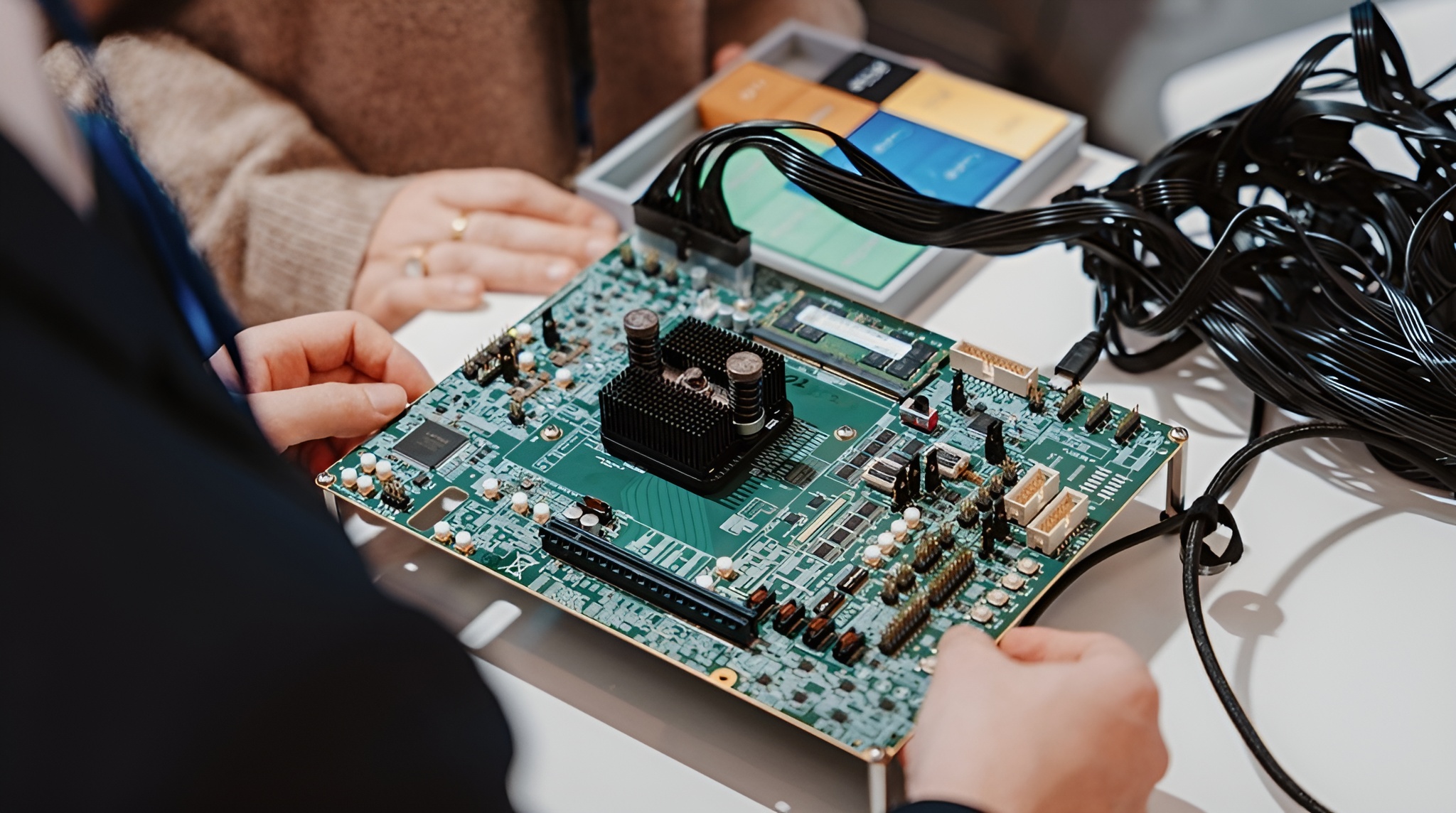
The TC1’s operating frequency of 1.25 GHz may seem modest compared to high-end GPUs or CPUs, but its significance lies in validation. The chip has successfully booted Linux in stable tests, a critical milestone that confirms the design’s robustness. BZL’s engineers also cross-verified the chip’s RTL (register-transfer level) code with TSMC’s 7nm node, ensuring its feasibility across different manufacturing processes—a rare achievement for an early-stage prototype.
A Partnership with Intel and a Glimpse of Europe’s Ambitions
Developing a chip isn’t just about silicon; it’s about partnerships. BZL collaborated with Intel to fabricate the TC1 on its 3nm process, a choice that reflects both technological ambition and strategic necessity. Europe’s semiconductor ecosystem has long lagged behind the U.S. and Asia, but projects like this suggest a growing determination to close the gap. The TC1’s heterogeneous approach could pave the way for chips optimized for AI inference, scientific computing, or even edge devices—areas where Europe currently relies on foreign suppliers.
Yet, the TC1 remains a long way from commercialization. Its three-core design is highly specialized, and scaling production would require overcoming manufacturing challenges. For now, the focus is on proving the concept: that Europe can design, test, and refine its own high-performance architectures without relying on established giants like Arm or Nvidia.
What We Know So Far
- The TC1 chip features a ‘tenary’ architecture with three RISC-V cores: Sargantana (efficiency), Lagarto Ka (vector workloads), and Lagarto Ox (scalar processing).
- It operates at 1.25 GHz and has been tested on both Intel’s 3nm and TSMC’s 7nm nodes.
- BZL’s lab successfully booted Linux on the chip, validating its stability.
- The project is part of Europe’s broader push for ‘sovereign infrastructure’—reducing reliance on non-European chip suppliers.
- While not yet production-ready, the TC1 demonstrates a viable path for custom, workload-specific processors.
The TC1’s journey from prototype to potential product is far from over. But for Europe’s tech ecosystem, every stable boot and verified frequency is a step forward—a reminder that innovation doesn’t always require the loudest voices, just the most determined engineers.