High on Life 2 thrives on contradictions: a zoo where animals plot against visitors, a protagonist who communicates through gunfire, and puzzles that feel like inside jokes for anyone who’s played the first game. The Human Exhibit, a seemingly impenetrable chamber deep in the game’s surreal world, distills this chaos into two deceptively simple challenges. The entry and exit both hinge on the same player: a sentient, squirming blob named Lugblob. But the real genius lies in how the game turns this blob—once a minor annoyance—into the linchpin of progression.
The exhibit’s design is a study in misdirection. The door won’t budge unless the blob is electrocuted on a pressure plate, but the blob refuses to leave its cage. The solution isn’t hidden; it’s a matter of exploiting the game’s own rules. By stabbing the blob with Knifey’s primary function, players force it into a predictable behavior: it flees its cage and latches onto the nearest goop patch, setting up the first puzzle’s resolution.
At a glance
- The entry requires stabbing the Lugblob in its cage to make it respawn outside, then dropping it onto an electrified plate to unlock the door.
- Inside, Griffith the captive becomes a red herring—players must ignore his charm and focus on vacuuming the blob off a high platform using Gus’s secondary function.
- Both puzzles rely on the blob’s aversion to confinement and attraction to goop or electricity, a pattern repeated throughout the game.
- No inventory management or complex sequences are needed—just two guns and an understanding of the blob’s quirks.
- The exit puzzle inverts the entry: where the first demands placing the blob on a plate, the second requires removing it from one.
- Griffith’s presence adds levity, but the game’s design ensures players prioritize the blob over interaction.
- The solution is consistent with High on Life 2*’s philosophy: absurdity as a tool, not an obstacle.
Why the Human Exhibit Puzzle Works
The exhibit’s brilliance lies in its economy. The game never over-explains the blob’s behavior—players who’ve encountered it before will recognize its patterns immediately. Those who haven’t are guided by environmental clues: the goop patches it seeks, the cages it avoids, and the electrical triggers it craves. There’s no hand-holding, but there’s also no frustration. The puzzles feel earned because they reward observation over trial-and-error.
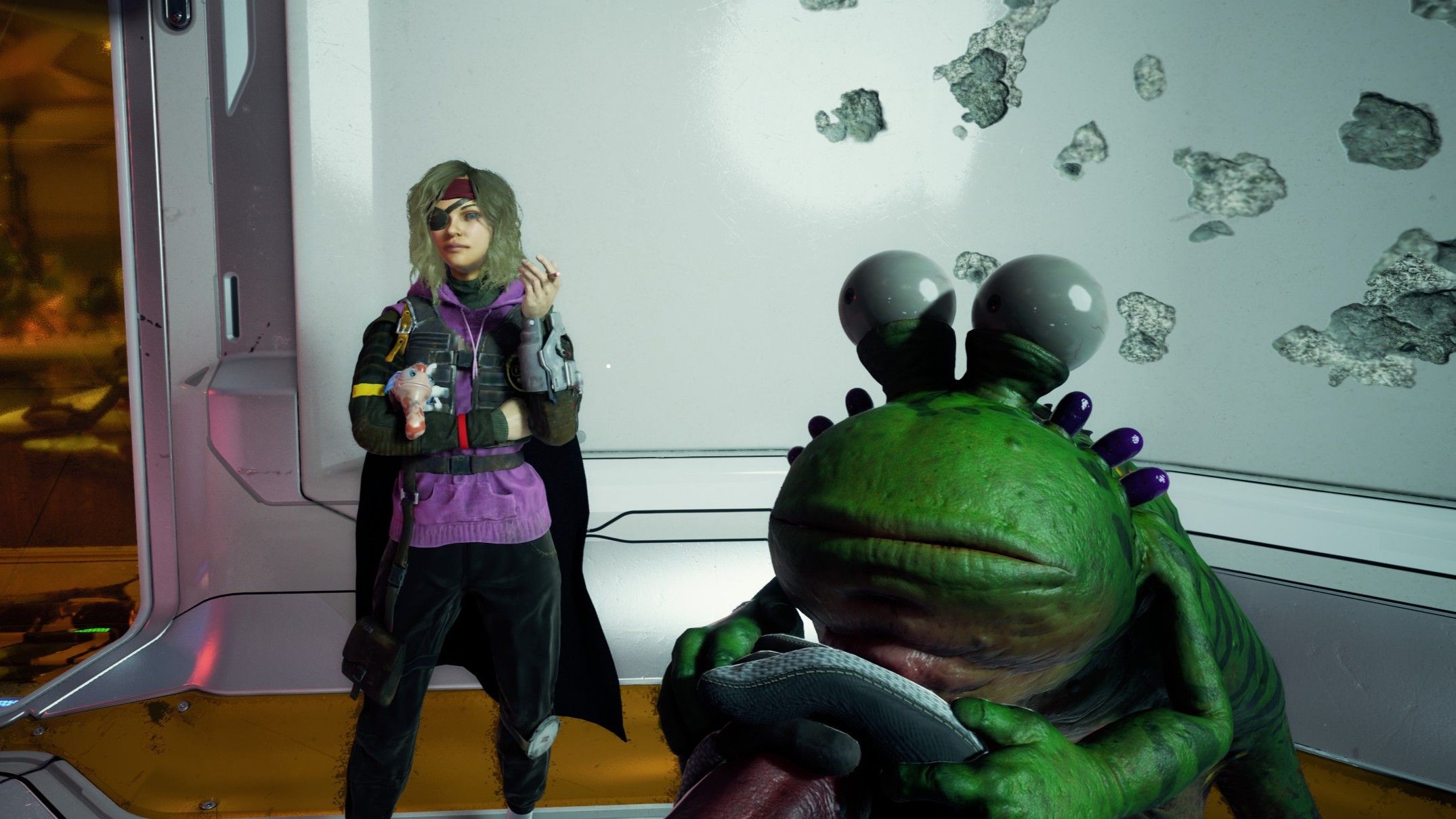
What makes it stand out is how it reframes the blob’s role. Earlier in the game, it’s a minor annoyance, a splatter hazard that cleans itself with a vacuum. Here, it becomes the key to progression—a shift that underscores *High on Life 2*’s themes of repurposing the mundane. The exhibit isn’t just a locked room; it’s a commentary on how the game itself works: take what you already have (Knifey, Gus, the blob) and use it in unexpected ways.
The Exit: A Reversed Mirror
The second puzzle inside the exhibit is a deliberate echo of the first, but with the stakes flipped. Where the entry demanded *freeing the blob from confinement, the exit requires relocating it from a high platform. Switching to Gus and using his vacuum function lets players guide the blob toward a second pressure pad, but the real challenge is precision. The blob must be coaxed off the platform without falling into the abyss below—a risk that adds tension to an otherwise silly scenario.
Griffith, the exhibit’s resident captive, serves as a distraction. His friendly demeanor and the option to pet him feel like a reward for players who’ve solved the puzzle, but the game’s design ensures the blob remains the focus. The exit isn’t about interaction; it’s about control. Players who’ve been using Gus’s vacuum to clean up messes earlier in the game will recognize its utility here, but the context is fresh. The blob, once a nuisance, is now a tool—and the exhibit’s door won’t open until it’s moved.
A Puzzle That Pays Off
The Human Exhibit puzzles are more than just obstacles; they’re a showcase for *High on Life 2*’s design philosophy. They’re simple enough to understand on first glance but rich enough to reward replay. The blob’s behavior is consistent, but its role shifts from annoyance to asset, proving that even the game’s most absurd elements can serve a purpose. For players who’ve been paying attention, the solution is obvious. For those who haven’t, it’s a reminder that the game’s quirks are its greatest strength.
Once the exit door opens, the exhibit’s true purpose becomes clear: it’s not just a locked room, but a stepping stone. The clues inside push Lizzie’s mission forward, and the puzzles that guard it ensure players engage with the world. In *High on Life 2*, nothing is wasted—not even a blob.