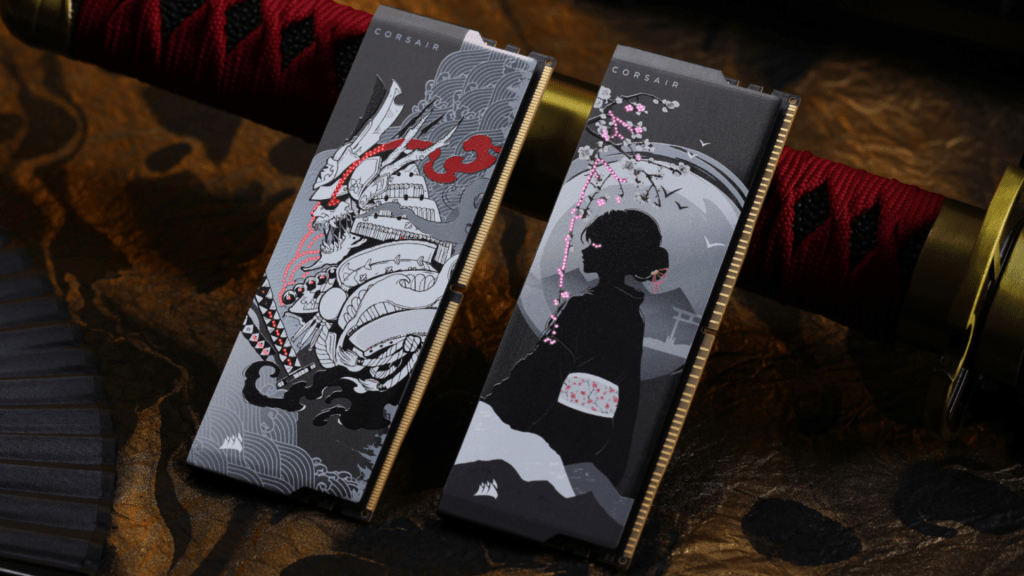
Corsair has taken a bold step with its newest RAM offerings, merging technical precision with artistic expression. The company's Vengeance RGB and Dominator Platinum DDR5 kits now include dummy modules and miniature samurai paintings, blurring the line between performance hardware and collector's items. For enthusiasts, this shift could redefine how memory is perceived—less as a functional component and more as an integral part of system identity.
These kits join Corsair's lineup with 32 GB configurations priced at $169 for Vengeance RGB and $189 for Dominator Platinum. Both feature 16 GB modules running at 5,600 MHz timings (CL40). The dummy modules, designed to fit single-channel slots while maintaining a full-height profile, are a nod to both practicality and aesthetics. However, their inclusion may not resonate with all users, particularly those prioritizing raw performance in compact builds.
The samurai art, printed on thin, flexible material, adheres to the heat spreader of each module. While visually striking, its durability remains untested under prolonged thermal stress—a potential concern for overclockers running sustained workloads. The design choice also adds complexity: users must decide whether the artistic element justifies the slight premium over standard kits.
For developers and system builders, this update introduces a new layer of decision-making. Dummy modules can simplify single-channel builds, but their effectiveness in real-world scenarios—where dual-channel setups dominate—is questionable. The aesthetic appeal, while impressive, may not offset the functional tradeoffs for those focused on benchmarks or thermal performance.
- 32 GB kits with 16 GB modules (5,600 MHz CL40)
- $169 (Vengeance RGB), $189 (Dominator Platinum)
- Dummy modules for single-channel compatibility
- Samurai art on heat spreader (durability unconfirmed)
The broader implications are worth considering. Corsair is not the first to experiment with artistic hardware, but its scale and reputation suggest this trend could influence other manufacturers. For mainstream users, the appeal may be limited; the kits cater more to those who view PC components as both tools and statements. The question remains: will the market follow suit, or will practicality remain the top priority in memory selection?