NVIDIA’s expansion of its AI factory architectures now includes the FlashBlade//EXA storage system, creating a tighter coupling between data storage and AI workloads. This development could influence how organizations prioritize performance against vendor lock-in, particularly as AI training demands increase.
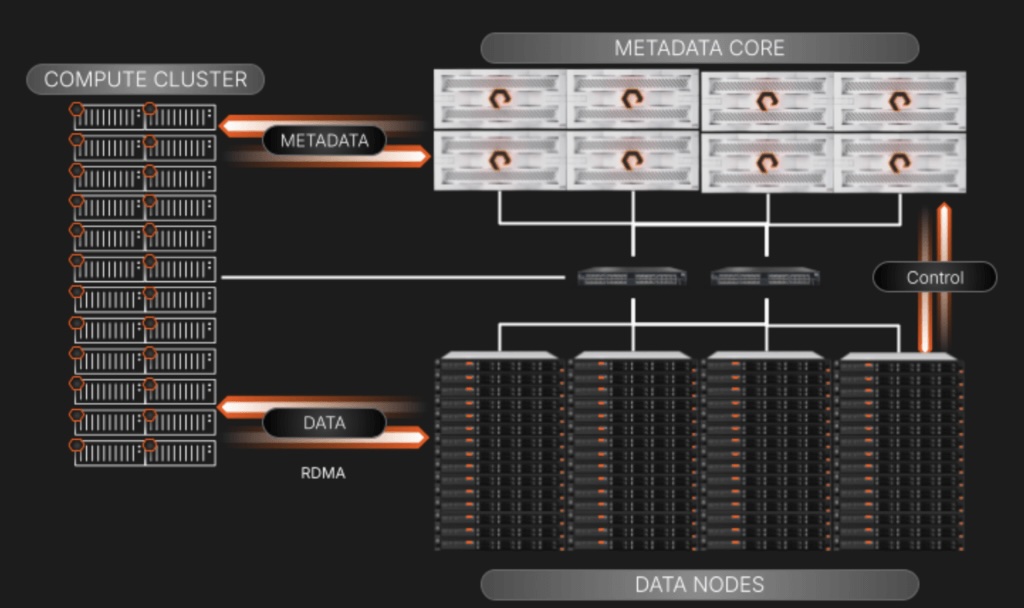
The FlashBlade//EXA, part of Pure Storage’s offerings, is engineered for high-scale AI operations with specifications that include up to 1 exabyte of raw capacity in a single cluster. Its all-NVMe architecture delivers per-drive performance of 7 million IOPS, while support for NVIDIA BlueField-3 DPUs offloads network and storage tasks from GPUs. Direct integration with NVIDIA AI Enterprise software ensures seamless compatibility with frameworks like TensorFlow and PyTorch.
- Single-cluster capacity: Up to 1 exabyte (EB).
- Per-drive performance: 7 million IOPS.
- NVIDIA BlueField-3 DPU support for offloaded network/storage tasks.
- Full compatibility with NVIDIA AI Enterprise software stack.
The partnership extends beyond hardware, introducing a unified data pipeline that optimizes workflows from ingestion to deployment. This is particularly impactful for large-scale AI training, where data movement bottlenecks can hinder performance. Early testing indicates that data streaming between FlashBlade//EXA and DGX H100 systems can reduce latency by up to 40% compared to traditional setups.
For organizations evaluating upgrade paths, this integration introduces a strategic dilemma. While NVIDIA’s dominance in AI hardware has already established its ecosystem as the standard, the FlashBlade//EXA now ties storage performance even more closely to NVIDIA’s software stack. Buyers must assess whether the efficiency benefits justify potential long-term dependency on a single vendor’s roadmap.
Although the integration is currently in preview, the implications are clear: NVIDIA is pushing toward a fully integrated AI platform, while Pure Storage strengthens its position in AI infrastructure. Organizations should closely monitor how this partnership evolves, particularly regarding interoperability with other vendors. The balance between performance gains and vendor flexibility will likely shape upgrade decisions in the coming year.