There’s something quietly thrilling about watching a community take an idea and twist it into something entirely unexpected. Peak*’s Scouts—those chunky, foam-headed climbers with their limited facial expressions and stark color palettes—weren’t designed to be cosplay icons. Yet, against all odds, they’ve become one.
The transformation starts with the costumes themselves. Each cosplayer in the group behind the Reddit post treated the Scouts’ simplicity as a blank canvas. The spherical heads, for instance, aren’t just foam spheres—they’re meticulously crafted EVA foam domes, their surfaces textured to mimic the game’s matte finish. Inside, 3D-printed facial features snap into place, their hollow eyes lined with mesh for visibility. Hot glue secures foam inserts for comfort, while layers of caulk, sandpaper, and primer ensure the final paint job adheres flawlessly. The result? A wearable replica so precise it could step straight into *Peak*’s pixelated world.
But the details don’t stop at the head. The sashes, embroidered with the game’s badges, hang like digital trophies from the cosplayers’ shoulders. Backpacks, stitched from the same durable fabric as the game’s climbing gear, carry props like hand-stitched Bing Bong plushies and miniature first-aid kits—each accessory a nod to the in-game items that make the Scouts feel alive. Even the marshmallows, those tiny orange orbs from the game’s campfire scenes, are recreated with foam and paint, their fluffy texture a playful contrast to the costumes’ otherwise utilitarian design.
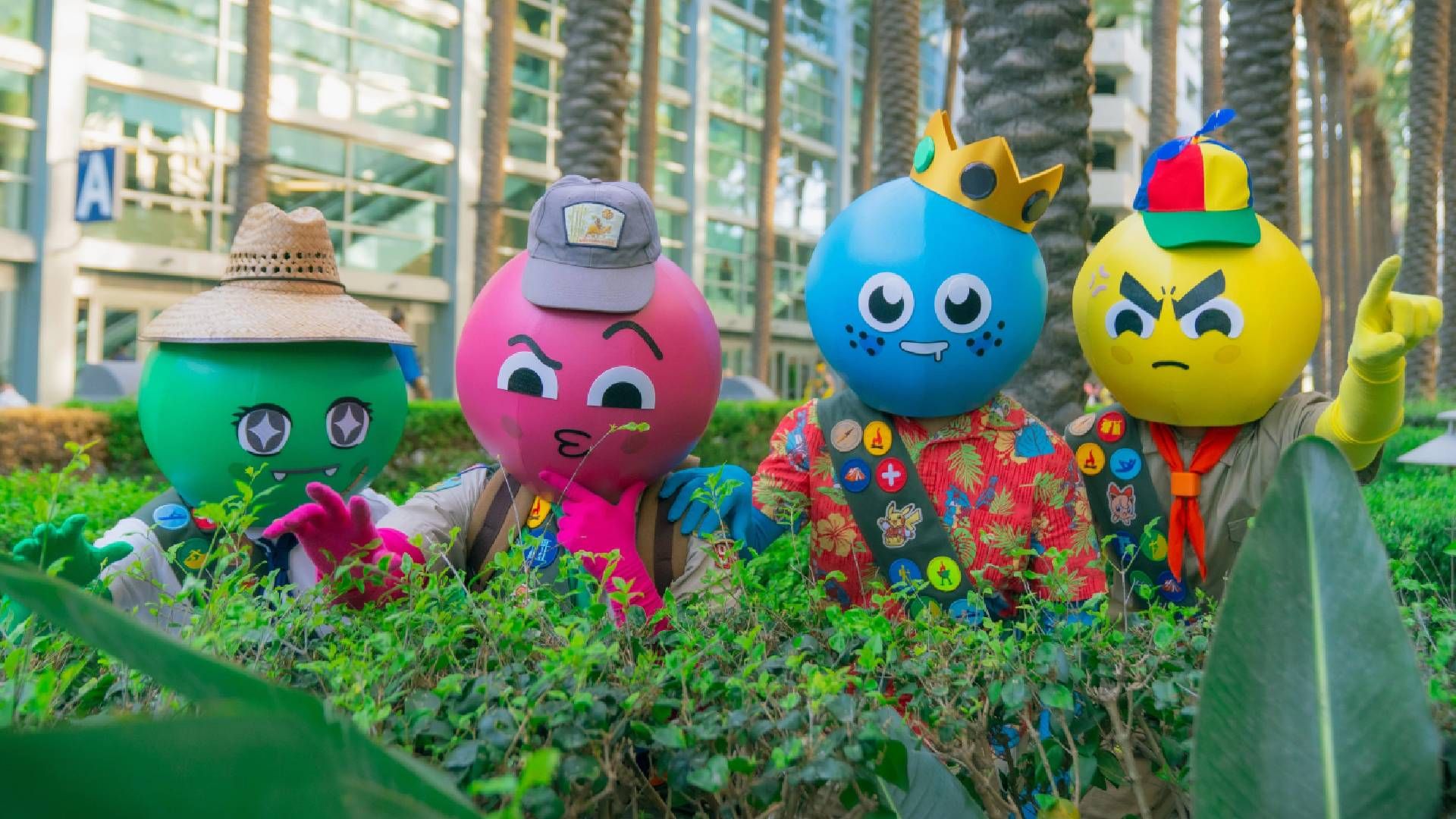
The beauty of these cosplays lies in their authenticity. Unlike elaborate fantasy costumes that demand hours of crafting and specialized materials, the Scouts’ designs rely on accessible tools: foam, glue, and a steady hand. The spherical heads, while challenging, are achievable with basic 3D-printing skills or even hand-sculpting techniques. Tutorials shared across forums and social media break down the process step-by-step, inviting others to join the movement. For a game that thrives on accessibility—where climbing a virtual peak is as rewarding as reaching the top of a real one—this DIY ethos feels natural.
What’s remarkable is how these cosplays capture the essence of *Peak without overcomplicating it. The game’s charm lies in its simplicity: a shared experience where players climb together, their characters little more than silhouettes against a backdrop of misty mountains. Yet, in the hands of cosplayers, those silhouettes become vibrant, three-dimensional figures—each one a testament to the joy of playing a game that values camaraderie over spectacle.
The trend isn’t limited to one group, either. Across platforms, cosplayers are experimenting with variations: some opt for the Ironmouse wig, its silver strands catching the light like a climber’s gear; others don the gnome costume, its oversized hat and cheerful expression a playful departure from the Scouts’ usual stoicism. The creativity isn’t just in the costumes but in how they’re worn—whether as a nod to a favorite in-game moment or a celebration of the game’s growing community.
There’s a lesson here for game designers and players alike. Cosplay, at its core, is about connection—between players, between games, and between the digital and the real. *Peak*’s Scouts prove that even the most unassuming characters can inspire that connection. They remind us that sometimes, the most extraordinary creations begin with the simplest ideas—and a little bit of foam.