Gigabyte has launched two new Z890 motherboards—one premium, one mid-range—that are set to accompany Intel’s upcoming Core Ultra 5 250K Plus and Core Ultra 7 270K Plus processors. The boards arrive with full support for the new Arrow Lake-S chips, but they also introduce a deliberate shift in connectivity that could reshape how enthusiasts approach high-end builds.
The Z890 AORUS Elite WiFi7 Plus and Z890 Eagle WiFi7 Plus are designed to balance performance with practicality. Both feature Gigabyte’s Ultra Turbo Mode, which automatically adjusts frequency and voltage offsets on unlocked ‘K’ and ‘KF’ processors, but they also make a notable omission: a single 40 Gbps USB4 port instead of the dual Thunderbolt 4 ports typically found on Z890 boards. This change is framed as a cost-cutting measure, though it may leave some users wondering about future-proofing.
The AORUS Elite WiFi7 Plus positions itself as the higher-end option with a 16+1+2 phase CPU VRM rated for 60A, while the Eagle WiFi7 Plus offers a slightly scaled-down 14+1+2 phase configuration. Both boards deliver on wireless capabilities with Intel’s Wi-Fi 7 and Bluetooth 5.4 modules, though they differ in speed—320 MHz for the AORUS Elite versus 160 MHz for the Eagle. The Elite model also includes a 5 GbE Realtek controller, whereas the Eagle sticks to 2.5 GbE.
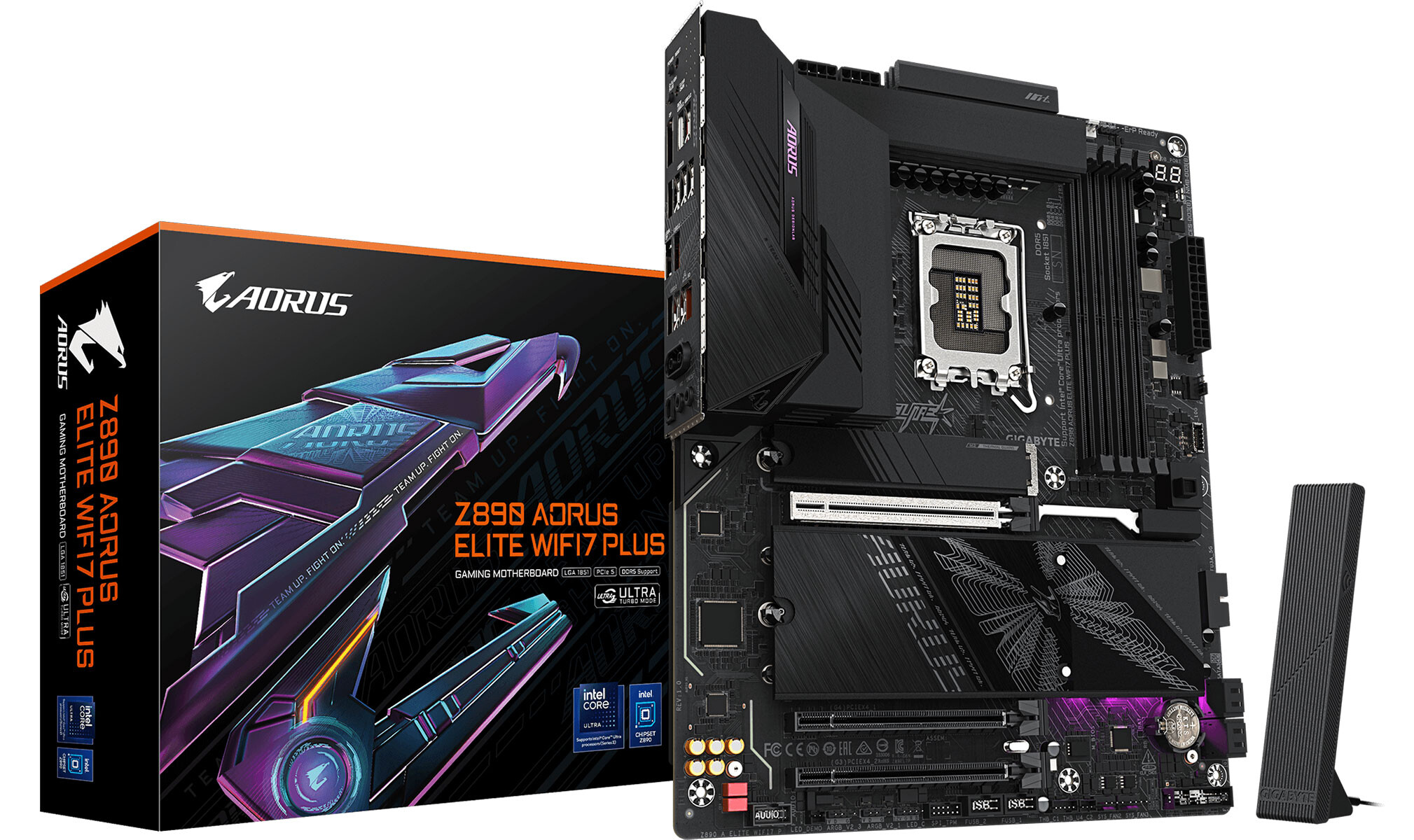
Onboard audio is handled by a Realtek ALC1220 HDA codec paired with WIMA capacitors, ensuring a solid audio experience without unnecessary upsells. Both boards also include SMD buttons on the rear I/O shield for power, reset, CMOS clear, and USB BIOS flashback—a practical touch that simplifies troubleshooting.
Pricing is expected to land around $250, placing these boards in a competitive sweet spot for users who want Arrow Lake compatibility without overpaying. For gamers and content creators, the trade-off between cost and connectivity will be a key consideration as they weigh whether the single USB4 port is sufficient for their workflows.
The launch of these motherboards coincides with Intel’s push for its Core Ultra 250K Plus and 270K Plus chips later this month. While the omission of Thunderbolt 4 may raise eyebrows, it underscores a broader industry trend toward balancing feature sets with operational costs—a shift that could redefine what users expect from high-end motherboards.