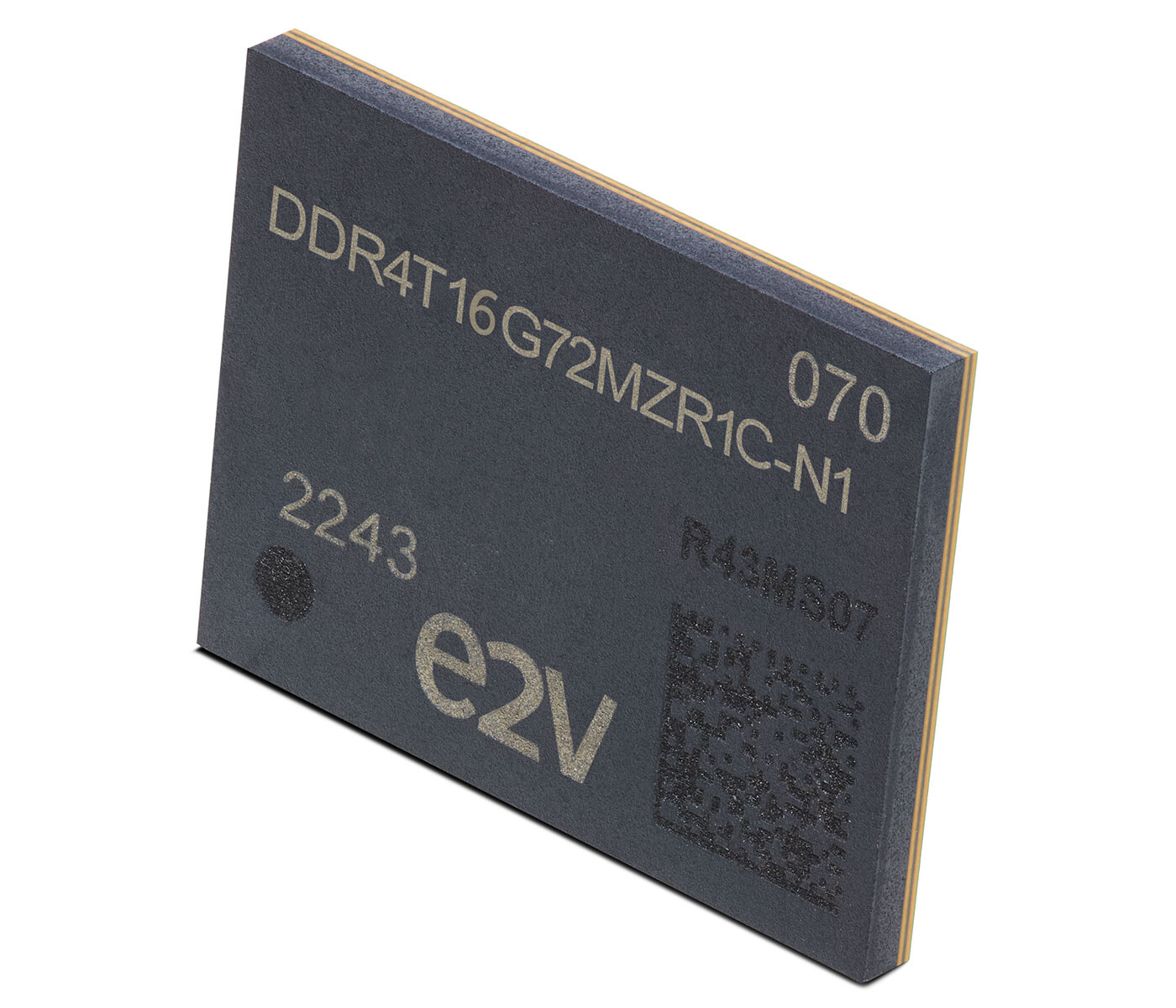
A new milestone in space-grade memory technology has been reached with the start of full-scale production for 16 GB DDR4-X1 Flight Model units. These modules, engineered to withstand extreme radiation and high-performance demands, are poised to support next-generation satellite computing tasks—from AI inference to optical communications.
What sets this iteration apart is not just its capacity but its balance of density, resilience, and compatibility. The 16 GB module maintains the same physical footprint (15 × 20 × 1.92 mm) as lower-density variants in the DDR4 family, ensuring seamless integration into existing satellite hardware without requiring board redesigns. This pin-to-pin compatibility is a critical advantage for mission planners, allowing them to scale memory capacity incrementally while adhering to strict form-factor constraints.
Performance metrics are equally impressive: the module supports data rates up to 2400 MT/s—a benchmark that aligns it with high-end commercial DDR4 standards—while delivering radiation tolerance rated at 35 krad TID and single-event latch-up immunity exceeding 43 MeV·cm²/mg. These specifications are essential for long-duration missions, where even minor errors can have catastrophic consequences.
Why This Matters for Space Workloads
The push toward AI-enabled satellites is driving a surge in demand for onboard processing power. Traditional memory solutions often fall short in both capacity and reliability under the harsh conditions of space. This new 16 GB module addresses those gaps by combining high-density storage with radiation-hardened circuitry, making it suitable for applications like broadband internet-from-space, direct-to-device communications, and optical inter-satellite links.
That’s the upside—here’s the catch: while the module is now in full production, its adoption will depend on mission-specific requirements. For example, missions with shorter lifespans or less demanding workloads might opt for the 8 GB Flight Model variants already available, or even NASA Level 1-certified 16 GB versions slated for Q3 2026. The portfolio’s flexibility allows satellite designers to tailor memory solutions to their exact needs without sacrificing performance.
Looking Ahead
The timeline for availability is clear: initial samples were delivered in October 2025, with full production now underway. Pricing remains proprietary, but the focus is on ensuring compatibility across multiple space programs while maintaining rigorous quality standards. For developers and integrators, this module represents a significant step forward in balancing power efficiency, thermal management, and radiation resilience—key considerations for any mission operating in low Earth orbit or beyond.
What to watch: The rollout of NASA Level 1 variants later this year could further expand the use cases, particularly for geostationary and long-duration missions. Meanwhile, the integration of these modules into Teledyne e2v’s Qormino QLS1046 computing modules—already deployed in AI inference and sensor fusion tasks—hints at broader ecosystem developments on the horizon.