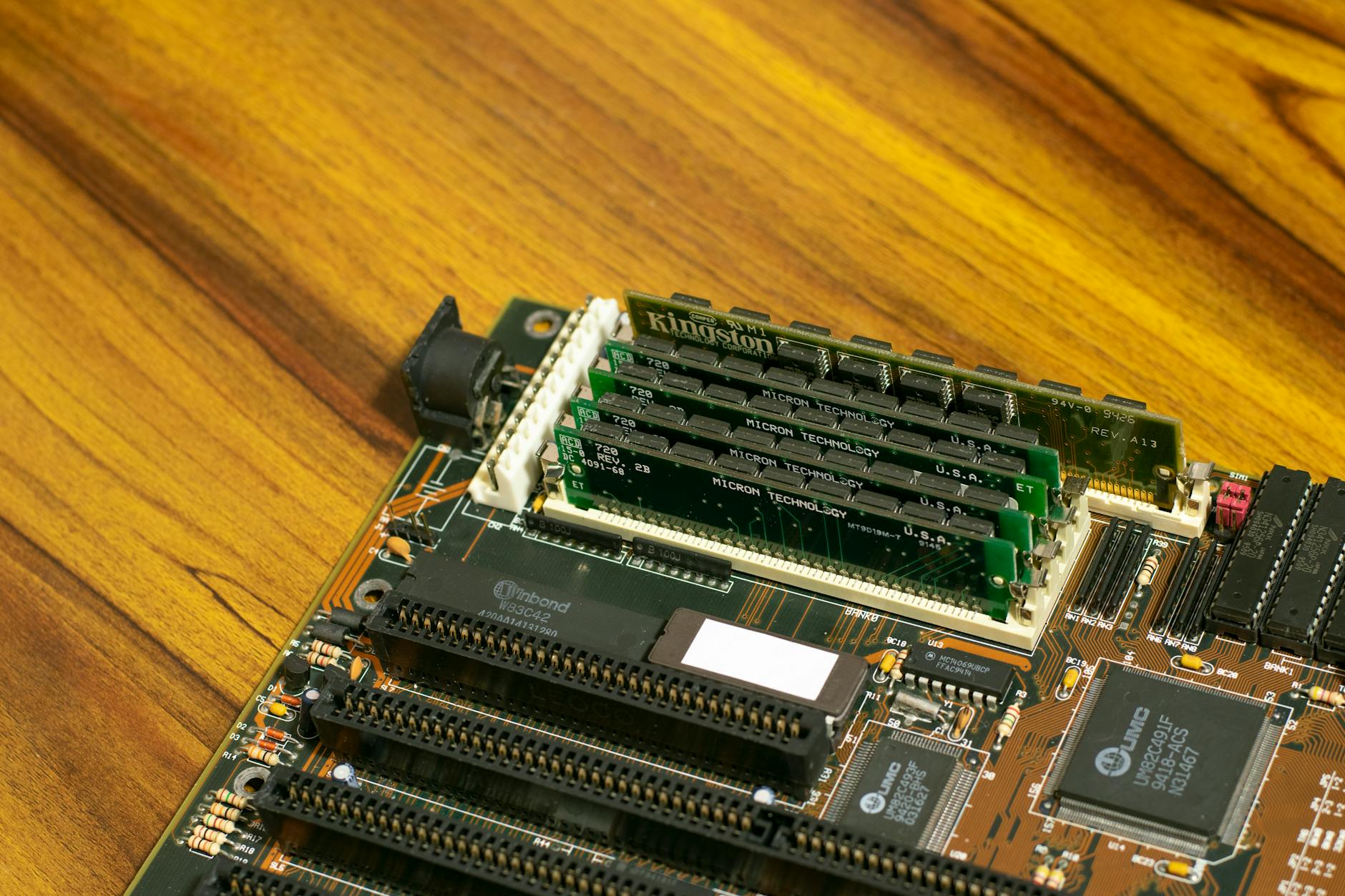
Hewlett Packard Enterprise has entered the market with what is arguably the most capable memory server available today. The HPE Compute Scale-up Server 3250, designed to handle extreme-scale in-memory computing, arrives at a time when businesses are increasingly turning to consolidated architectures for performance-critical applications. Unlike distributed systems that spread data across multiple nodes, this server adopts a vertical scaling approach, allowing organizations to deploy up to 64 TB of DDR5 memory—a capacity that far exceeds anything currently on the market.
The integration with Intel Xeon 6 processors is central to its performance, enabling workloads such as real-time analytics and high-velocity transactions to run at speeds previously considered theoretical. The server’s architecture also includes a dedicated external node controller, which HPE claims delivers connectivity performance 100 times faster than traditional scale-out deployments using standard Ethernet. This level of efficiency is particularly valuable in environments where latency can directly impact revenue or operational integrity.
Security and reliability are embedded throughout the design, with HPE’s Integrated Lights Out (iLO) system providing a silicon root of trust that incorporates post-quantum cryptography. Memory error detection and correction mechanisms ensure fault tolerance, which is essential for systems where downtime is not an option. The server also supports configurations ranging from four to sixteen sockets, offering flexibility without sacrificing performance consistency.
This is HPE’s first server in this category to support Intel Xeon 6 processors, positioning it at the forefront of a shift toward more dense compute solutions capable of handling both traditional enterprise applications and emerging AI workloads. The modular design allows for easy adaptation to different business needs, while its benchmark performance—particularly in SAP BW Edition HANA environments—has already set new industry standards.
The server is available immediately through HPE’s 90/9 Advantage program, which offers deferred payments with low-interest terms, potentially lowering the financial barrier for organizations seeking high-performance infrastructure. While the current model relies on DDR5 memory, questions remain about its long-term compatibility as DDR6 approaches in 2027. Whether it will remain the benchmark or if competitors will quickly match its capabilities is unclear, but one thing is certain: HPE has pushed the boundaries of what is possible in enterprise-scale memory servers.