Portability often comes at the cost of authenticity, but two new handheld gaming consoles are attempting to bridge that gap by delivering the experience of classic 80s home computers in a compact, modern package. THEC64 and The Spectrum Handheld promise to bring the iconic C64 and ZX Spectrum platforms into the palm of your hand, though whether they can strike the right balance between retro charm and practical usability remains to be seen.
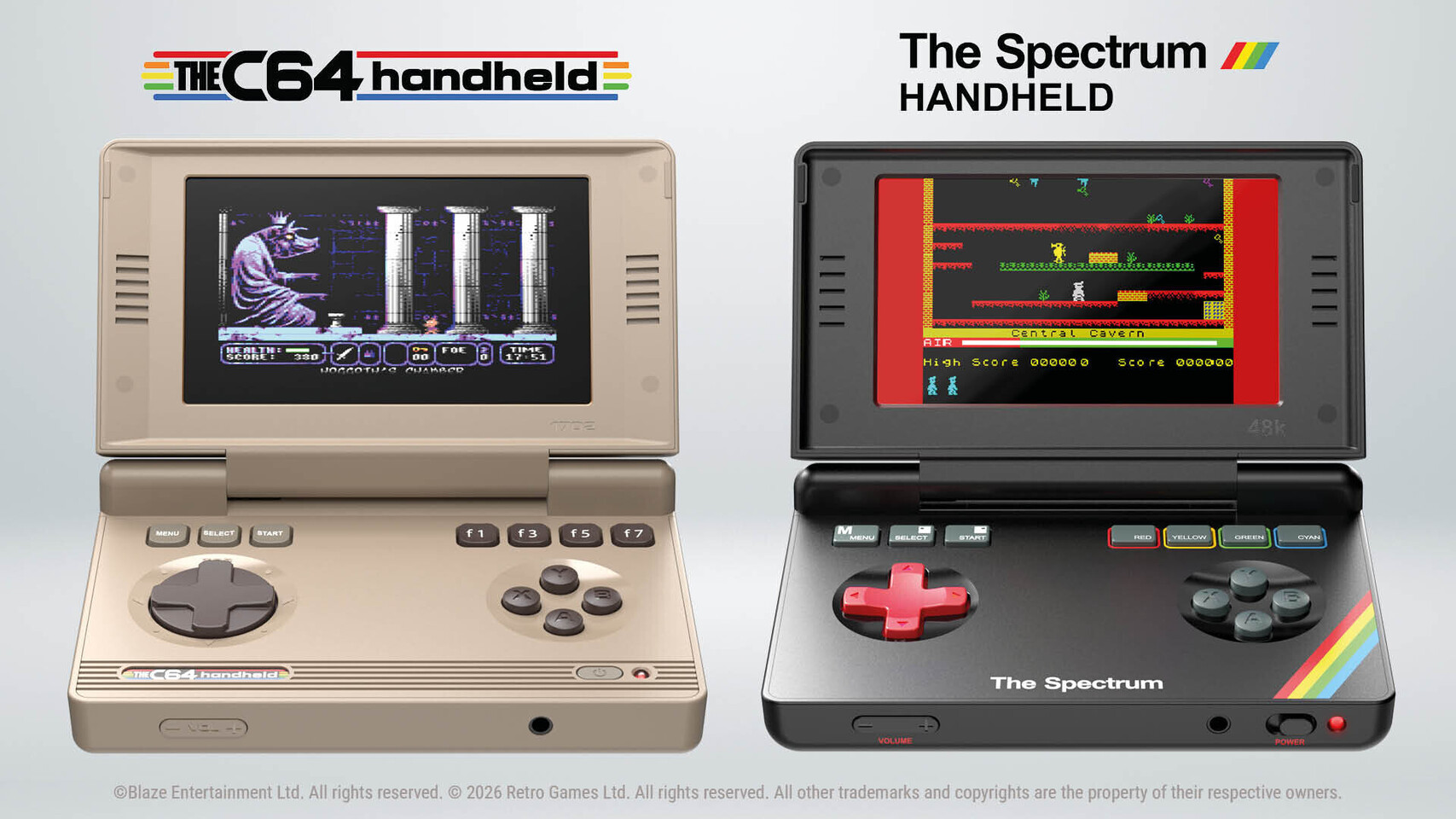
The clamshell design of these devices is a nod to both the handheld gaming consoles of the past and the palmtop computers that defined the 1980s. The THEC64 Handheld sports a retro beige color scheme, while The Spectrum Handheld leans into classic black, evoking the aesthetic of their respective original systems. This attention to detail extends beyond just the exterior; the tactile plastic buttons on the C64 model and rubberized controls on the Spectrum version are designed to mimic the feel of the original keyboards, adding a layer of immersion that goes beyond mere emulation.
Hardware and Features: A Mix of Nostalgia and Modern Convenience
The core of these handhelds lies in their ability to emulate multiple variants of the C64 and Spectrum platforms. THEC64 can switch between C64 PAL/NTSC, C64C, C64SX, PET64, and even the C64 GS, offering a deep dive into different iterations of the system. Similarly, The Spectrum Handheld supports various models, including the 48K, 128K, +2, +2A, +3, +3e, and 16K, with options for under- or overclocking the CPU to tweak performance.
- Display: 4.3-inch IPS screen at 800×480 resolution
- Processor: Quad-core 1.2 GHz (unspecified architecture, likely ARM-based)
- Memory: 256 MB DDR RAM
- Storage: 25 built-in games; expandable via microSD slot
- Controls: D-Pad with four face buttons, four mappable function keys (tactile plastic on C64, rubber on Spectrum), and menu/start/select buttons
- Connectivity: 3.5 mm headphone jack, USB-A I/O port for external keyboard or joystick, microSD slot for additional games
- Battery: 2000 mAh (3+ hour playtime)
- Charging: USB-C (cable included; requires 5V/1A minimum)
The hardware specs are modest but sufficient for the task at hand. A quad-core 1.2 GHz processor paired with 256 MB of DDR RAM ensures smooth performance, though it’s unclear how these devices will handle more demanding titles or modern emulation requirements. The inclusion of a USB-A I/O port adds practicality, allowing users to connect external keyboards or joysticks for a more authentic experience when needed.
Built-In Games and Beyond
The 25 built-in games on each handheld are a curated selection that highlights the best of their respective platforms. Titles like Boulder Dash, Speedball 2: Brutal Deluxe, and Manic Miner offer a taste of what these systems were capable of, while also serving as a gateway for newcomers to explore the retro gaming landscape. However, the real appeal lies in the expandability—users can load additional games via microSD, ensuring that the library isn’t limited to just the pre-installed titles.
The user interface is designed to evoke the original computer interfaces while incorporating modern conveniences like load/save states and screen options. This duality raises an interesting question: will the UI feel authentic enough to satisfy purists, or will it fall short by prioritizing functionality over form? The front-facing stereo speakers and 3.5 mm headphone jack add to the immersive experience, though the lack of a built-in microphone might limit multiplayer or voice chat capabilities.
Practical Considerations and Future Outlook
The clamshell design is both a strength and a potential weakness. On one hand, it protects the device when closed and lends itself to a compact form factor that’s easy to carry. On the other, it may not offer the same level of portability as fully flat handhelds like the Nintendo Switch or Game & Watch devices from the 80s. The build quality is described as sturdy, with a weight of just 235 grams, but long-term durability will depend on how well the hinges and internal components hold up under regular use.
Pricing starts at £109.99 ($129.99 / €129.99) for the standard edition, with a Collector’s Edition available exclusively through Funstock for an additional £20. The Collector’s Edition includes a matching hard shell case and a special magazine featuring expanded content about the games and the platforms’ histories. Availability is set for October 2026, with pre-orders opening immediately.
For power users who value both nostalgia and functionality, these handhelds could carve out a niche in the retro gaming market. However, their success will hinge on whether they can deliver a seamless experience that doesn’t feel like a compromise—whether it’s in performance, control responsiveness, or the balance between retro aesthetics and modern usability. If they manage to strike that balance, they could become a compelling addition to any retro gaming collection.