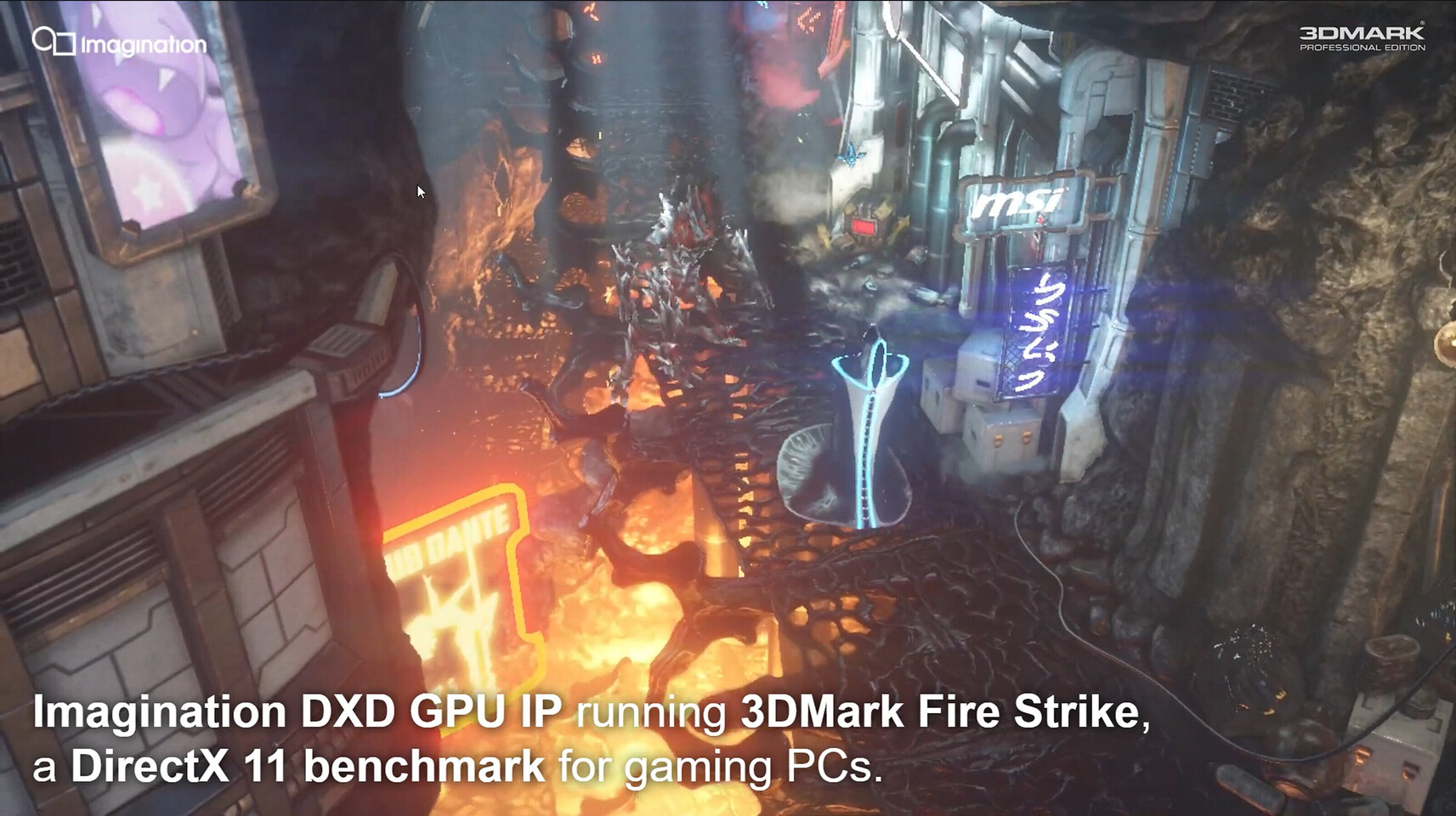
Imagination Technologies has achieved a key milestone with its D-Series GPUs by successfully running a demanding DirectX 11 benchmark. This development suggests that the PowerVR architecture, long associated with mobile and embedded systems, is now being positioned for more demanding desktop and cloud gaming applications.
The company’s DXD product is designed to support not only DirectX 11 but also newer APIs like DirectX 12, Vulkan 1.4, OpenGL 4.6, and OpenCL 3.0. This broad compatibility marks a significant departure from earlier mobile-first GPU designs, which were often limited in their ability to handle complex graphics workloads.
One of the most notable aspects of this advancement is its potential impact on desktop graphics and cloud gaming. Unlike older PowerVR implementations that were optimized for low-power devices, the D-Series appears to target higher-performance scenarios where efficiency and graphics capability are equally important. This could open new possibilities for manufacturers looking to integrate Imagination’s IP into discrete GPUs or workstation applications.
While the PowerVR architecture has historically been used in Apple’s SoCs, its evolution into a more versatile solution suggests that it may soon compete with established desktop GPU architectures like AMD’s GCN and NVIDIA’s CUDA-based designs. The successful demonstration of 3DMark Fire Strike—a benchmark known for stressing modern GPUs—reinforces this shift toward performance-oriented use cases.
Imagination also highlighted its E-Series GPU IP, which includes DirectX 12 Feature Level 11_0 support. This indicates that further advancements in DirectX compatibility are likely on the horizon, potentially extending the architecture’s reach into even more demanding applications.
A notable example of this adaptability is seen in recent implementations by Chinese manufacturers. The DXTP architecture, originally designed for efficiency in smartphones, was later adapted into discrete formats targeting workstation applications. This flexibility demonstrates how PowerVR-based designs can be tailored for different market segments without sacrificing performance.
At the ICCAD 2025 expo, a demo of the Fuxi A0 graphics card showcased a working system with a localized version of Lenovo’s New Vision Z-engine platform. This further underscores the potential for PowerVR-based solutions to integrate seamlessly into existing desktop ecosystems.
- Key Specs:
- Architecture: D-Series GPU based on PowerVR
- API Support: DirectX 11, DirectX 12, Vulkan 1.4, OpenGL 4.6, OpenCL 3.0
- DirectX Feature Level: DXD with hardware-based DirectX 11 Feature Level 11_0 support
- Target Applications: Desktop graphics, cloud gaming, workstation applications
The successful integration of PowerVR into desktop and cloud gaming scenarios represents a significant engineering achievement. By supporting a wide range of modern APIs, the D-Series GPUs are no longer confined to mobile or embedded roles but can now compete in performance-driven markets. This shift could influence how GPU manufacturers approach architecture design, balancing efficiency with the demands of high-end graphics workloads.
For PC builders and developers, this advancement means that PowerVR-based solutions may soon offer an alternative to established players like AMD and NVIDIA. The ability to handle complex DirectX 11 workloads efficiently could make these GPUs attractive for cloud gaming platforms or workstation applications where power consumption is a critical factor.
Looking ahead, the focus will likely shift toward further optimizing the architecture for newer APIs like DirectX 12 and Vulkan. If Imagination can maintain this momentum, PowerVR could carve out a niche in the desktop GPU market, providing a compelling option for manufacturers and developers alike.