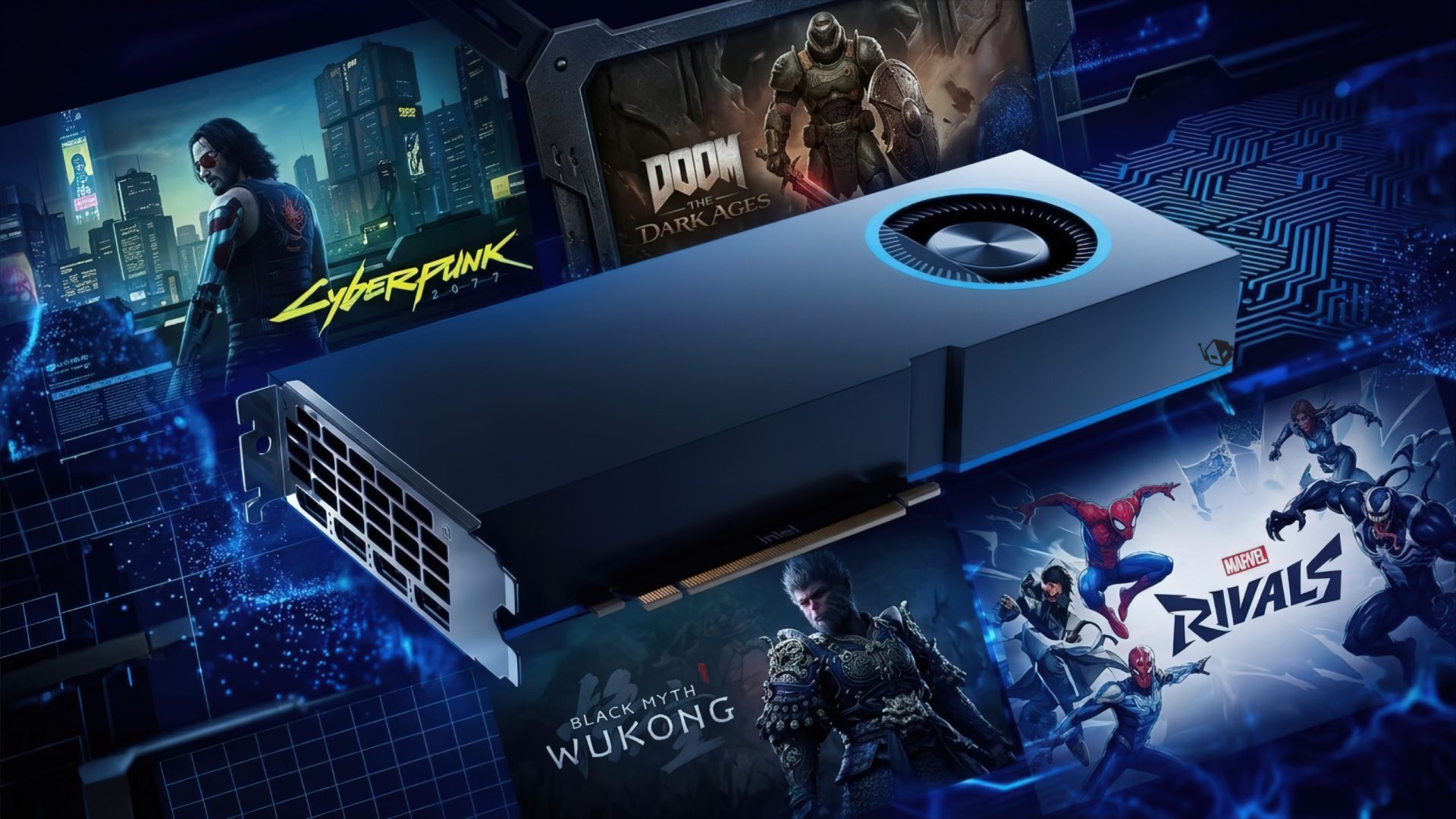
The Intel Arc Pro B70 is not just an incremental upgrade—it’s a calculated move to strengthen Intel’s position in the enterprise graphics market, particularly within the Windows ecosystem. While it competes directly with NVIDIA’s RTX A5000 16GB, its 32 GB GDDR6 memory and 40% faster raster performance signal a broader strategy: to make Intel the default choice for businesses already invested in Windows infrastructure.
This isn’t just about raw numbers. The B70’s support for Windows 11 and Windows Server 2022, combined with Intel’s latest driver optimizations, ensures it fits without disruption into existing enterprise setups. For industries where GPU choice can influence software compatibility—such as CAD design or AI training—the B70 reduces the risk of vendor lock-in while delivering performance on par with NVIDIA’s offerings.
Performance and platform integration
- Memory: 32 GB GDDR6, designed to handle memory-intensive tasks like large-scale rendering or AI workloads without limitations.
- Compute: Xe-architecture core with 40 execution units, boosting clock speeds up to 2.5 GHz for faster processing.
- Ray Tracing: Intel’s XMX architecture provides hardware-accelerated ray tracing, giving it an edge in professional benchmarks.
- Display Outputs: Dual HDMI 2.1 and DisplayPort 1.4a, supporting resolutions up to 8K@60Hz for high-end visual workloads.
The B70’s performance leap—particularly in ray tracing, where it outperforms the B580 by 65%—is a direct response to NVIDIA’s dominance in professional graphics. However, its real advantage lies in its alignment with Windows-based workflows. Businesses that rely on Microsoft’s hardware certification process will find the B70 easier to integrate than alternatives, reducing deployment friction and training overhead.
Who stands to gain—and who might hold back?
The B70 is a strong contender for businesses already using Intel-based servers or workstations. Its 32 GB VRAM future-proofs workloads that would otherwise be constrained by memory limits, while its ray tracing capabilities make it a viable option for real-time rendering tasks.
However, the transition isn’t seamless for all. Companies heavily dependent on CUDA-optimized software may face compatibility challenges, even if Intel continues to close the gap with its oneAPI initiative. For these users, the B70’s benefits are tied to their ability (or willingness) to migrate away from NVIDIA’s ecosystem.
Pricing remains competitive with the RTX A5000 16GB, but the decision to upgrade hinges on more than just performance. Businesses must weigh whether the B70’s features justify moving now or waiting for Intel’s next-generation hardware—especially if their software stack isn’t yet optimized for Xe architecture.
The Arc Pro B70 is a step forward in Intel’s push to dominate enterprise graphics, but its success will depend on how quickly developers adopt its platform. For enterprises already embedded in Windows and Intel infrastructure, it’s a compelling upgrade path. For others, the journey may require patience—and a closer look at whether the ecosystem can keep pace with the hardware.