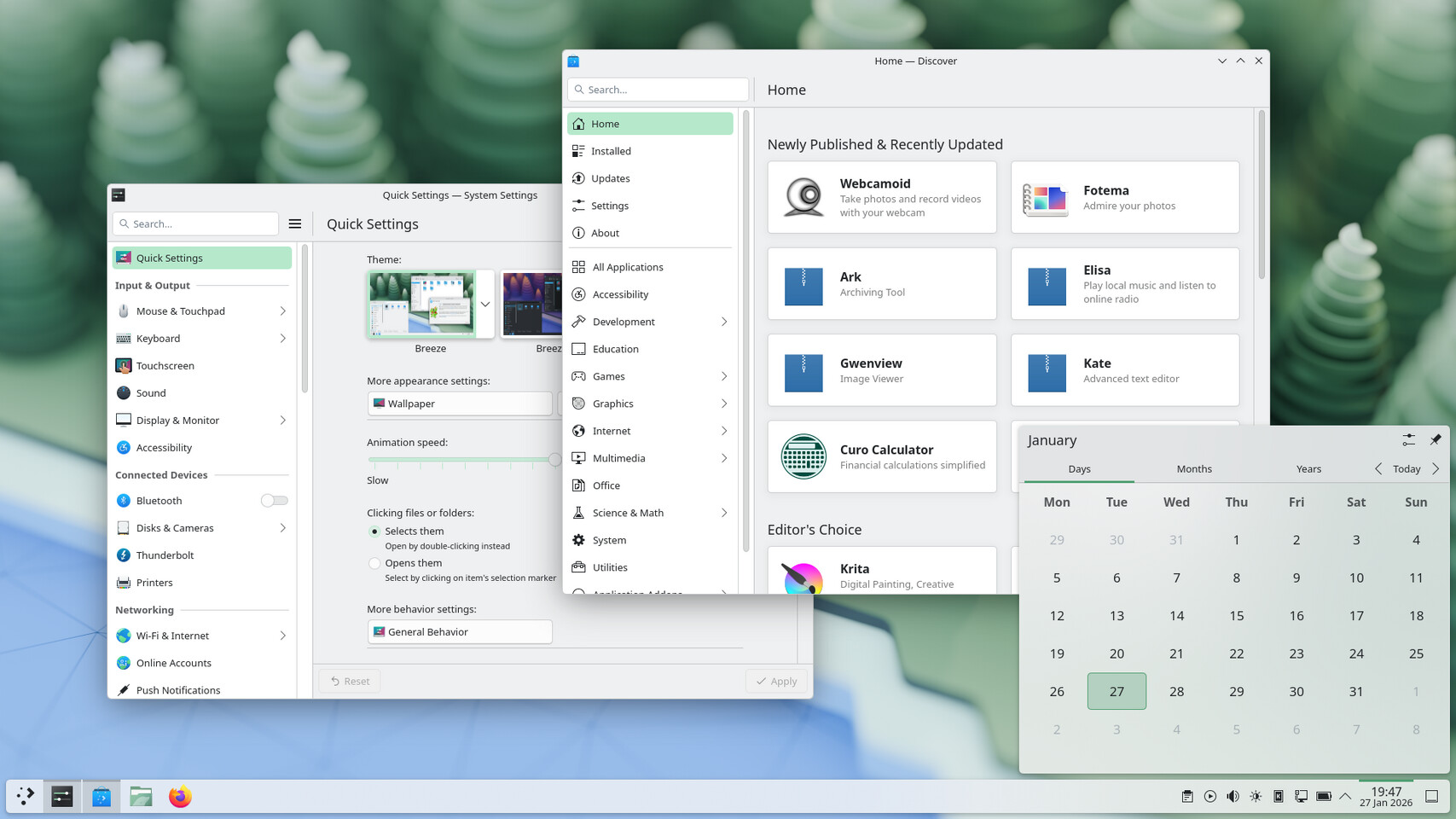
The release of KDE Plasma 6.6.5 marks a significant step forward in addressing one of the most persistent pain points for users running NVIDIA graphics cards. The update, which rolls back changes introduced in previous versions, restores performance levels that were noticeably degraded in earlier iterations. This isn’t just about speed—it’s about stability and responsiveness, particularly in workloads where GPU acceleration plays a critical role.
KDE Plasma has long been a cornerstone of Linux desktop environments, prized for its flexibility and customization options. But with the shift toward more demanding applications—whether it’s AI-driven workflows or high-performance media editing—the demands on both CPU and GPU resources have grown exponentially. NVIDIA users, in particular, found themselves at a disadvantage when Plasma 6.6 introduced optimizations that inadvertently crippled performance for certain tasks. The 6.6.5 update corrects this by reverting those changes while also patching a host of other bugs that had crept into the system.
Key improvements in this release include
- A complete overhaul of how Plasma interacts with NVIDIA drivers, ensuring smoother rendering and reduced latency in graphics-intensive applications.
- Fixes for display scaling issues, which were particularly problematic on high-DPI screens where text and UI elements appeared blurry or misaligned.
- Enhanced stability in Wayland sessions, addressing crashes and artifacts that had plagued some users transitioning from X11.
- Performance tweaks for desktop effects like compositing and animations, making them more fluid without sacrificing visual quality.
The update also introduces a number of under-the-hood optimizations aimed at reducing memory leaks and improving how Plasma manages system resources. For users who rely on KDE’s advanced features—such as virtual desktops, widget customization, or integrated system monitoring—the experience should feel more polished and reliable.
That said, the changes aren’t without trade-offs. The rollback of certain optimizations means that some users may notice slightly higher power consumption in certain scenarios, though this is a small price to pay for the stability gains. Additionally, while NVIDIA performance is now closer to parity with AMD and Intel systems, there’s still room for further refinement as KDE continues to refine its driver interactions.
For everyday users, the most immediate benefit will be in tasks that push hardware limits—whether it’s running complex simulations, editing 4K video, or working with AI tools. The fix ensures that Plasma doesn’t become a bottleneck when performance matters most. Looking ahead, KDE’s focus on refining its ecosystem suggests this is just the beginning of broader improvements for NVIDIA users, though the pace will depend on how quickly driver compatibility evolves.
In the grand scheme of Linux desktop evolution, this update is a quiet but important milestone. It reflects a growing awareness that performance isn’t just about raw hardware specs—it’s about how software and drivers work together to deliver a seamless experience. For those who’ve been frustrated by regressions in Plasma 6.6, 6.6.5 offers a promising reset, though the real test will be whether these fixes hold up under sustained use.