The M5 Max chip in the latest MacBook Pro represents a significant leap forward in mobile computing power, capable of handling workloads that push up against its maximum thermal design power of 140 watts. This level of performance is unmatched in Apple's lineup, but it comes with inherent trade-offs that engineers have had to address proactively.
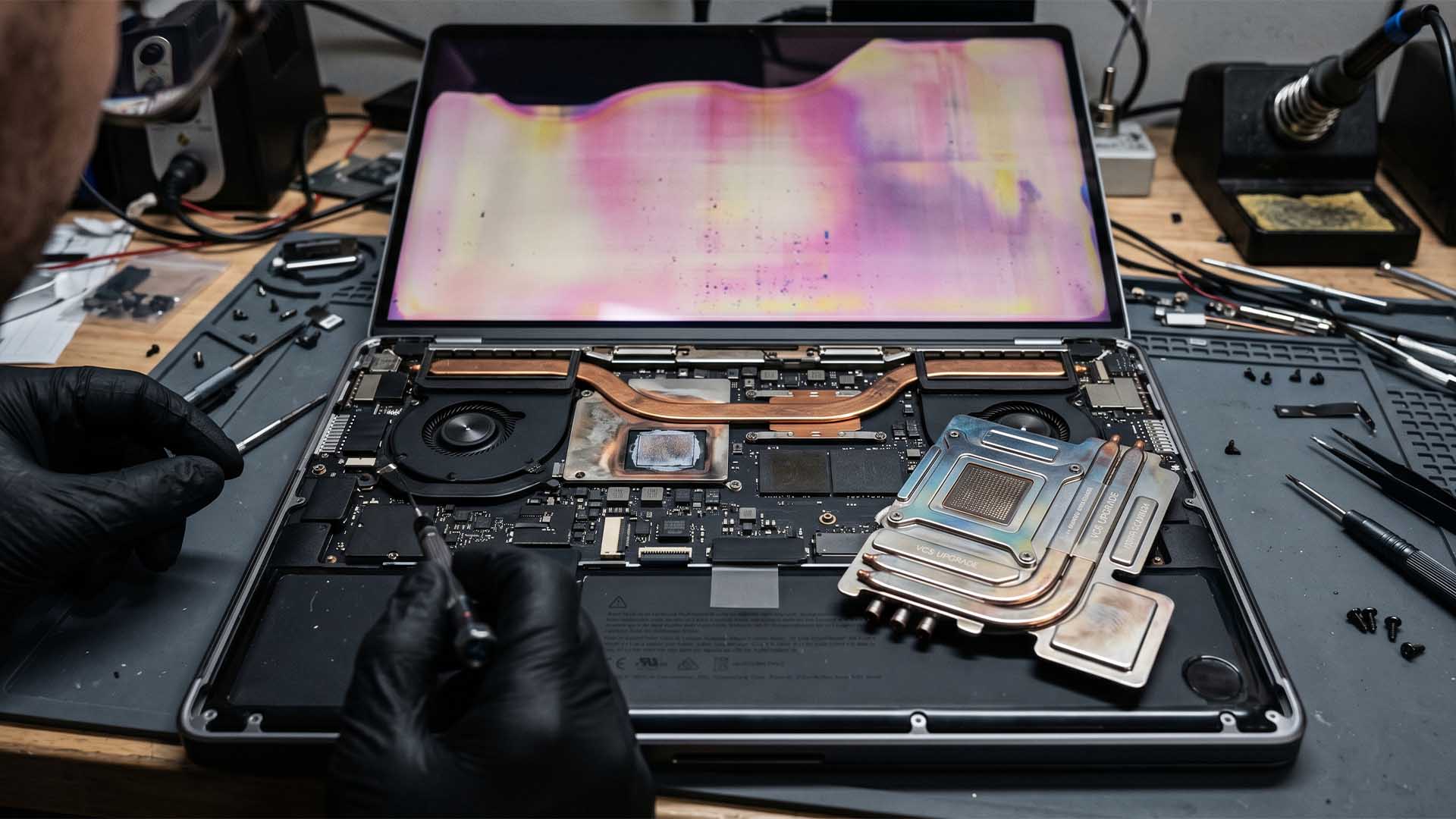
One such challenge is the potential for localized heat buildup during sustained high-intensity tasks, such as video rendering or complex simulations. While Apple has long been adept at balancing thermal performance, the M5 Max's increased power output required a more sophisticated cooling solution than previous generations. The result is an upgraded vapor chamber that serves dual purposes: not only does it dissipate heat more efficiently, but it also helps shield sensitive components like the display from thermal stress.
Refining the Cooling Equation
The vapor chamber upgrade is a subtle yet critical evolution in Apple's thermal management strategy. Unlike traditional cooling solutions that rely solely on passive dissipation, this system actively redistributes heat across a larger surface area of the device's chassis. The effect is most noticeable under extreme workloads, where the chip operates at its peak capacity for extended periods.
For everyday users, the difference may be negligible—most tasks will not stress the system enough to trigger any visible or functional issues. However, those engaged in professional-grade workflows, such as 4K video editing or 3D modeling, will benefit from the improved thermal distribution. This ensures that even during marathon sessions, the display remains free of discoloration and the system maintains stable performance.
A Reminder for Power Users
Despite these advancements, the M5 Max's thermal characteristics serve as a reminder that no system is entirely immune to the laws of physics. While Apple has mitigated the worst-case scenarios with hardware refinements, users who consistently operate at the upper limits of the chip's capabilities should still exercise caution. Simple practices—such as taking periodic breaks or utilizing built-in cooling features—can further extend the lifespan of both the hardware and its components.
- The M5 Max chip delivers up to 140 watts of thermal design power, enabling high-performance workloads.
- An upgraded vapor chamber improves heat distribution, reducing the risk of display discoloration during sustained use.
- Most users will not encounter issues in everyday scenarios, but extreme workloads may still require active thermal management.
The M5 Max's introduction marks a turning point in how Apple approaches thermal engineering. As chips become more powerful and efficient, the battle against heat will continue to shape both hardware design and user expectations. For now, the MacBook Pro with M5 Max stands as a benchmark for what is possible when innovation meets practicality, though it remains a system best appreciated within its operational boundaries.