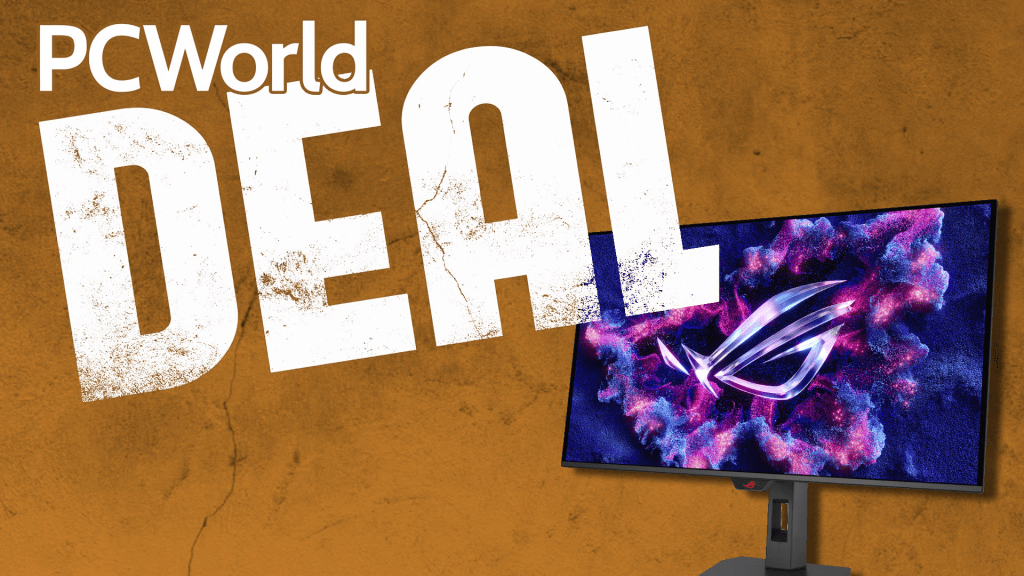
For years, high-refresh monitors have been a gamer’s dream, but the latest wave of 500Hz displays—like the MSI MPG 271QR QD-OLED X50—are redefining what’s possible. While competitors like the Samsung Odyssey OLED G60SD dominate with flashy designs, MSI’s offering takes a different approach: raw performance with a practical twist. The standout feature? A USB-C port delivering up to 98 watts of Power Delivery, a rarity in this class.
Launched at $899 but now available for as low as $650, the MPG 271QR isn’t just a gaming monitor—it’s a hybrid that blends competitive esports-grade motion with productivity-friendly connectivity. But does it deliver enough to justify the price?
The Evolution of High-Refresh OLEDs
Until recently, 240Hz was the gold standard for OLED gaming monitors. Now, brands are racing to 500Hz, with MSI, Samsung, and others competing to see who can offer the smoothest motion. The MPG 271QR joins this arms race with a 26.5-inch QD-OLED panel running at 2560×1440, a resolution that balances sharpness and performance. While 4K at 240Hz remains the premium choice for immersive gaming, 1440p at 500Hz delivers a different kind of thrill—crisp, blur-free action for fast-paced titles like Valorant or Counter-Strike 2.
But here’s the catch: this isn’t just a gaming monitor. MSI’s inclusion of USB-C with full Power Delivery makes it one of the few high-refresh OLEDs that can double as a laptop companion. Most competitors either lack USB-C entirely or offer only minimal power output—15W in MSI’s own MAG 272QP, for example. The MPG 271QR’s 98W port means you can charge a laptop while using the monitor, a feature that could appeal to power users who need both performance and convenience.
Key Specs: What’s Under the Hood?
- Display: 26.5-inch QD-OLED, 2560×1440, up to 500Hz (or 240Hz in 4K)
- Panel: Samsung QD-OLED, VESA DisplayHDR True Black 500
- Brightness: ~300 nits (SDR), up to 895 nits (HDR peak)
- Color: 100% sRGB, 98% DCI-P3, 95% AdobeRGB
- Connectivity: 2x HDMI 2.1, 1x DisplayPort 2.1, 1x USB-C (DP + 98W PD), 2x USB-A (5Gbps), 3.5mm audio out
- Features: Adaptive Sync (G-Sync Compatible), KVM switch, proximity sensor, MSI Gaming Intelligence (Windows only)
- Price: $899 MSRP, now ~$650–$700
The specs tell a clear story: this is a monitor built for performance. The QD-OLED panel delivers deep blacks and vibrant colors, while the 500Hz refresh rate ensures motion is smoother than ever. However, the glossy finish—while enhancing contrast—means glare will be an issue in bright rooms. For those who prioritize sharpness, the 110 PPI resolution is adequate but not as refined as 4K alternatives.
HDR performance is strong, with peak brightness reaching 895 nits in EOTF Boost mode, but the lack of user-adjustable HDR brightness is a notable omission. Competitors like Asus allow tweaks to prevent overly bright static images, a feature that would have been welcome here.
Design: Function Over Form
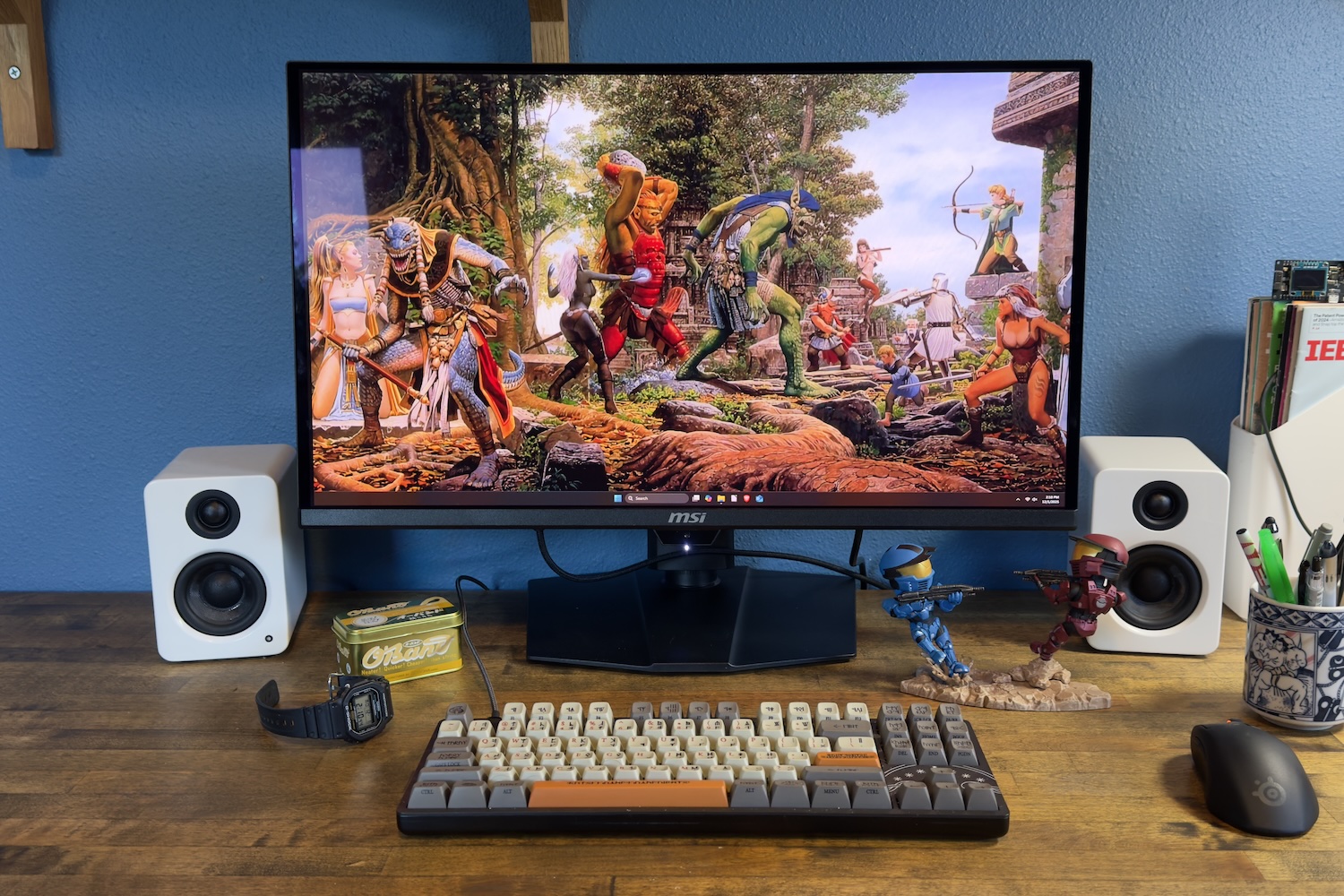
MSI’s design philosophy for the MPG 271QR is straightforward: no frills, just performance. The all-black chassis and deep bezels give it a sleek, understated look, but it doesn’t match the premium feel of Samsung’s Odyssey series or Asus’ ROG monitors. The stand is ergonomic, offering height, tilt, swivel, and even portrait mode, but the RGB lighting—while customizable via MSI’s Mystic Light software—is so faint it’s barely noticeable.
The real standout is the connectivity. The USB-C port isn’t just for charging; it supports the full 1440p/500Hz resolution and even includes KVM switch functionality. This means you can connect two devices (like a laptop and desktop) and switch between them without unplugging peripherals—a productivity boon for multi-taskers.
Motion and Gaming Features
For gamers, the 500Hz refresh rate is the headline act. Objects in motion—whether it’s a bullet in Call of Duty or a fast-paced UI in League of Legends—appear razor-sharp, with minimal blur. OLED’s inherent low response time means it outperforms LCDs at lower refresh rates, but 500Hz takes that advantage to another level.
MSI’s MPRT (Motion Picture Refresh Technology) aims to reduce motion blur by inserting black frames, but it’s not as effective as Asus’ ELMB (Enhanced Low Motion Blur). Still, the improvement is noticeable, especially in fast-paced scenes. Adaptive Sync and G-Sync Compatible support ensure smooth frame pacing, though AMD FreeSync isn’t officially listed—though it works in testing.
The MPG 271QR is a compelling choice for competitive gamers who want the absolute smoothest motion available, as well as power users who need USB-C connectivity. Its color accuracy and HDR performance are excellent, making it a strong candidate for content creators who also game. However, those who prioritize design or need 4K resolution may look elsewhere.
If you’re torn between this and a 4K/240Hz OLED, consider your needs: 500Hz at 1440p is ideal for fast-paced esports, while 4K offers more screen real estate for immersive single-player experiences. The MPG 271QR’s USB-C port gives it an edge for hybrid use, but it’s not a replacement for a dedicated 4K monitor.
The MSI MPG 271QR QD-OLED X50 is a technical marvel, pushing the boundaries of refresh rates while offering practical features like USB-C Power Delivery. It’s not the most stylish monitor on the market, and its HDR controls could use improvement, but for gamers and productivity users who demand the best of both worlds, it’s a standout performer. With prices dropping below $700, it’s now one of the most accessible 500Hz OLEDs available—making it a tempting option for those who refuse to compromise on performance.
Availability and Pricing
Currently priced around $650–$700, the MSI MPG 271QR QD-OLED X50 is available through major retailers. While the MSRP was $899, holiday discounts have made it significantly more affordable, though competitors like the Samsung Odyssey OLED G60SD have matched the drop.