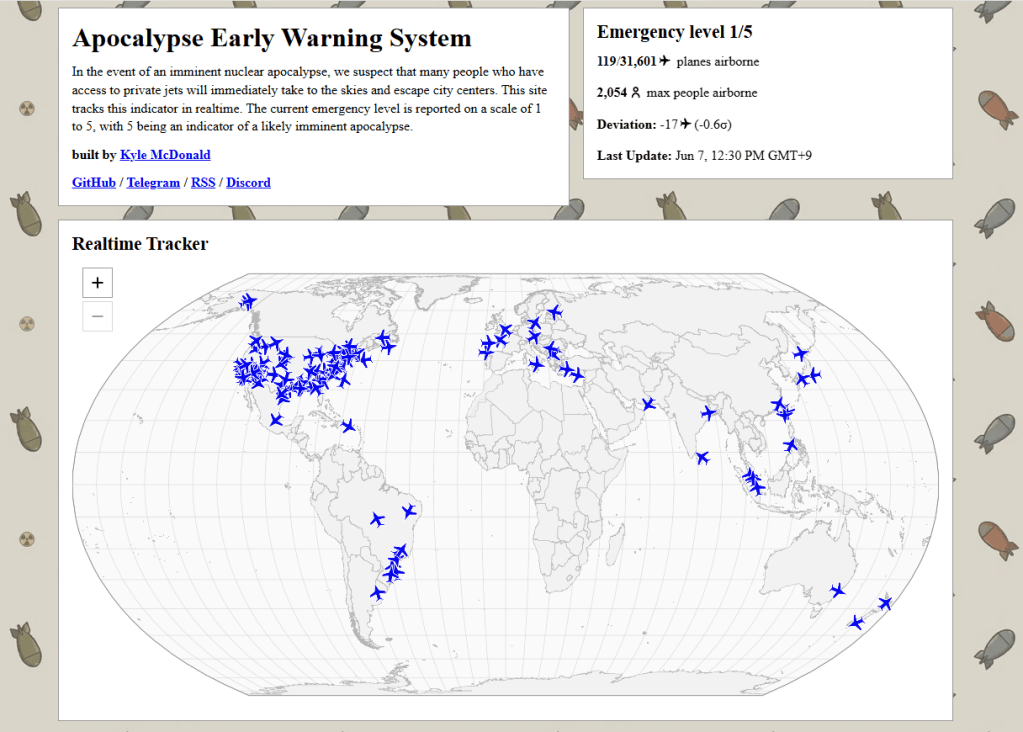
A new artificial intelligence model has demonstrated an ability to forecast apocalyptic scenarios with striking accuracy, according to a recent analysis. The system, which evaluates factors such as private jet activity and other indicators, claims a 92% success rate in identifying potential global catastrophes—though its methodology remains shrouded in uncertainty.
The model, developed by an anonymous research team, appears to rely on unconventional data sources, including patterns observed in high-end aviation. While the exact algorithm is not disclosed, the findings suggest that certain behaviors or trends could serve as early warning signs for existential risks. This raises intriguing questions about how such systems might be used—or misused—in the future.
How It Works
The model’s approach differs from traditional risk assessment methods by incorporating less conventional datasets, such as private jet movements and other high-value asset behaviors. The analysis claims that these indicators can signal impending crises with remarkable precision. However, without transparency into the underlying methodology, experts remain skeptical about its practical applicability.
Implications
The potential implications of this model extend beyond theoretical research. If validated, it could revolutionize how organizations monitor and respond to existential threats. But for now, its accuracy remains a subject of debate, particularly given the lack of clear benchmarks or peer-reviewed validation.
What is certain is that this development opens new avenues for discussion about predictive AI, data ethics, and the role of unconventional indicators in risk assessment. The next steps will likely focus on refining the model’s reliability and exploring its potential integration into broader threat detection frameworks.