A single policy change can ripple across an entire enterprise infrastructure. In this case, it’s a collaboration that redefines how businesses manage their hybrid cloud environments without sacrificing the performance or data resilience they demand.
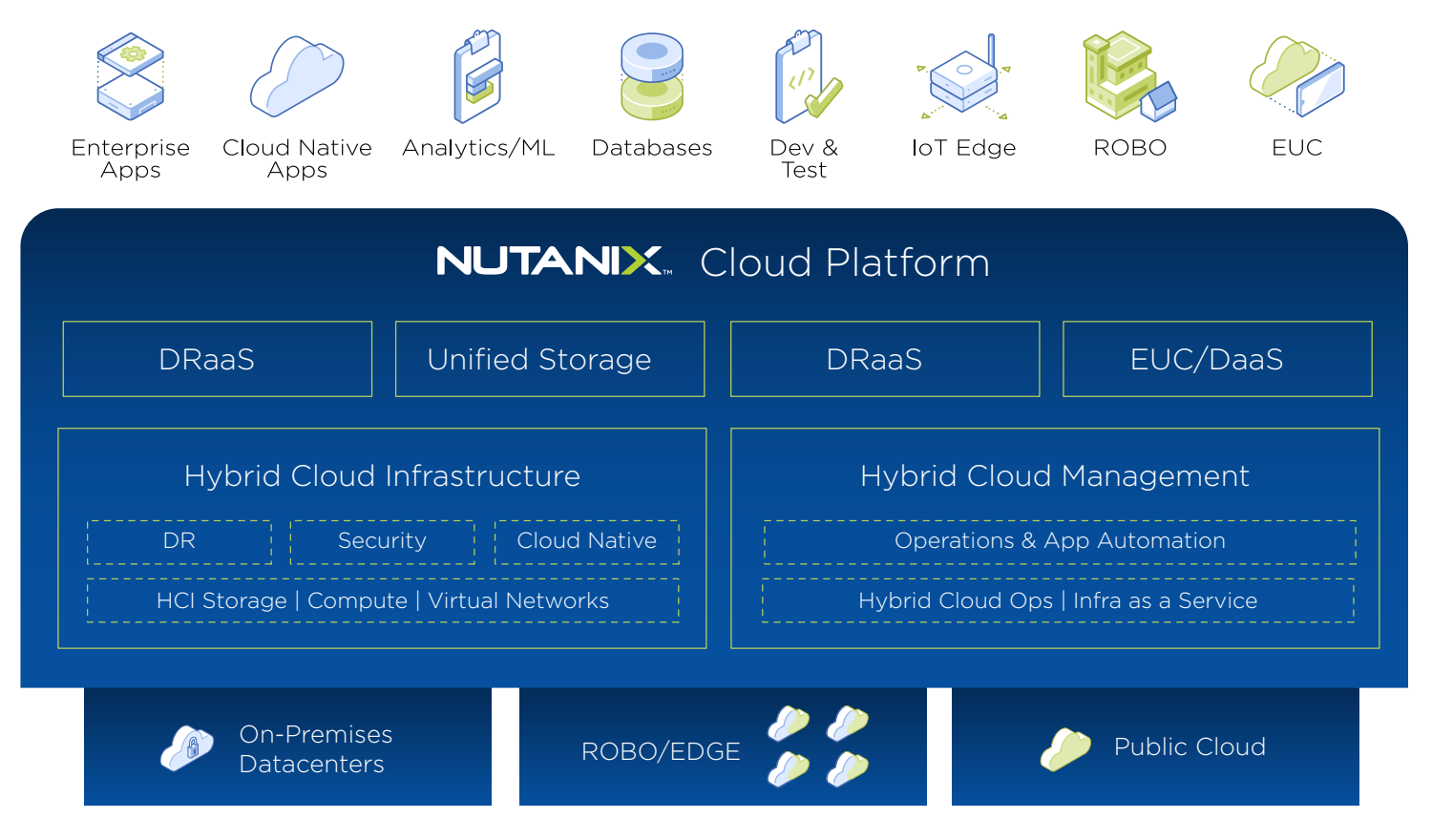
Nutanix has announced a deeper integration with NetApp, enabling NetApp ONTAP storage to run seamlessly on the Nutanix Cloud Platform. This is not merely an extension of functionality; it’s a structural shift that merges two distinct architectures into a unified management layer, giving IT teams a single pane of glass for both compute and storage while maintaining the full feature set of ONTAP—including SnapMirror, SnapShot, and FlexClone.
Unified Control, Native Performance
The integration removes the traditional friction of deploying ONTAP in a hyperconverged environment. Historically, enterprises had to choose between the simplicity of a unified platform like Nutanix or the advanced data management capabilities of ONTAP. Now, they can have both. ONTAP’s performance-critical features—such as its 128 KB flash-optimized write path and support for up to 4 PB of raw capacity per cluster—remain intact, while Nutanix provides the underlying compute and networking layer.
- Storage Efficiency: ONTAP’s data reduction (compression, deduplication) and thin provisioning work as expected, with no degradation in performance metrics.
- Data Protection: Features like SnapMirror for disaster recovery and FlexClone for development/test environments are fully supported, ensuring enterprises can replicate data across on-premises and cloud without additional licensing or hardware constraints.
For IT administrators, the practical impact is immediate. No longer must they juggle separate management consoles or worry about compatibility quirks. The integration also extends to Nutanix’s Prism Central, allowing storage policies to be applied uniformly across hybrid environments—whether workloads are running on-premises or in a public cloud.
What Admins Need to Know
The transition is designed to be non-disruptive, but there are considerations. Enterprises already using ONTAP will find that the integration preserves existing configurations, including volume types and storage classes. However, some advanced ONTAP features—such as ONTAP System Manager’s advanced analytics dashboard—may require additional setup or may not yet be fully exposed through Prism Central.
- Licensing: ONTAP licenses (including Advanced and Professional) remain tied to the storage, not the compute layer. No new licensing is required for Nutanix infrastructure.
- Performance Baseline: Benchmark results show that ONTAP on Nutanix delivers performance within 5% of native ONTAP deployments in NetApp’s own data centers, with no degradation in IOPS or latency for mixed workloads (4 KB random reads/writes at 70/30 ratio).
For end users, the change is subtle but meaningful. Workloads that previously required manual tuning for storage performance—such as databases or virtual desktops—now benefit from automatic optimization. Admins no longer need to manually adjust Nutanix storage tiers; ONTAP’s auto-tiering and quality-of-service (QoS) policies handle placement dynamically.
Looking Ahead: What’s Next?
The integration is available immediately for new deployments, with support for existing ONTAP clusters slated for a future update. Enterprises should also note that while the core features are stable, some advanced NetApp services—such as SnapCenter for backup orchestration—are still under evaluation for full Prism Central compatibility.
For now, the focus is on stability and interoperability. Nutanix has confirmed that the integration will undergo rigorous testing with ONTAP 9.10.x and later versions, ensuring that future updates to either platform do not introduce breaking changes. The roadmap suggests that deeper analytics and AI-driven storage optimization may be added in subsequent releases, but those are not part of the current launch.
What is confirmed: a seamless, performance-preserving way to combine two industry-leading platforms without sacrificing data management sophistication. What remains unclear: the exact timeline for extending Prism Central support to all ONTAP advanced services and whether third-party plugins (e.g., for monitoring) will be optimized for this hybrid environment.