NVIDIA has set an April release date for its most advanced frame generation technologies yet: Dynamic Multi-Frame Generation (MFG) and MFG 6x mode. These features, part of DLSS 4.5, will transform how games run on the company’s newest GPUs, leveraging AI to render additional frames beyond the traditionally rendered ones—effectively multiplying performance without sacrificing visual quality.
The MFG 6x mode, in particular, promises a dramatic leap in frame rates. A game that would normally hit 60 frames per second could theoretically reach 360 FPS under optimal conditions. However, such extreme performance may be overkill for most setups, especially those capped by monitors with 144 Hz or 240 Hz refresh rates. That’s where Dynamic MFG comes in.
Unlike fixed multipliers, Dynamic MFG automatically adjusts the frame generation ratio based on real-time needs. For instance, during fast-paced action sequences, it might activate a 4x, 5x, or even 6x multiplier to maintain smooth gameplay. In less demanding scenarios—like loading screens or menus—it scales back to a 2x multiplier, ensuring efficiency without wasted resources. The result is a system NVIDIA compares to an 'automatic transmission,' seamlessly shifting gears to match the game’s demands.
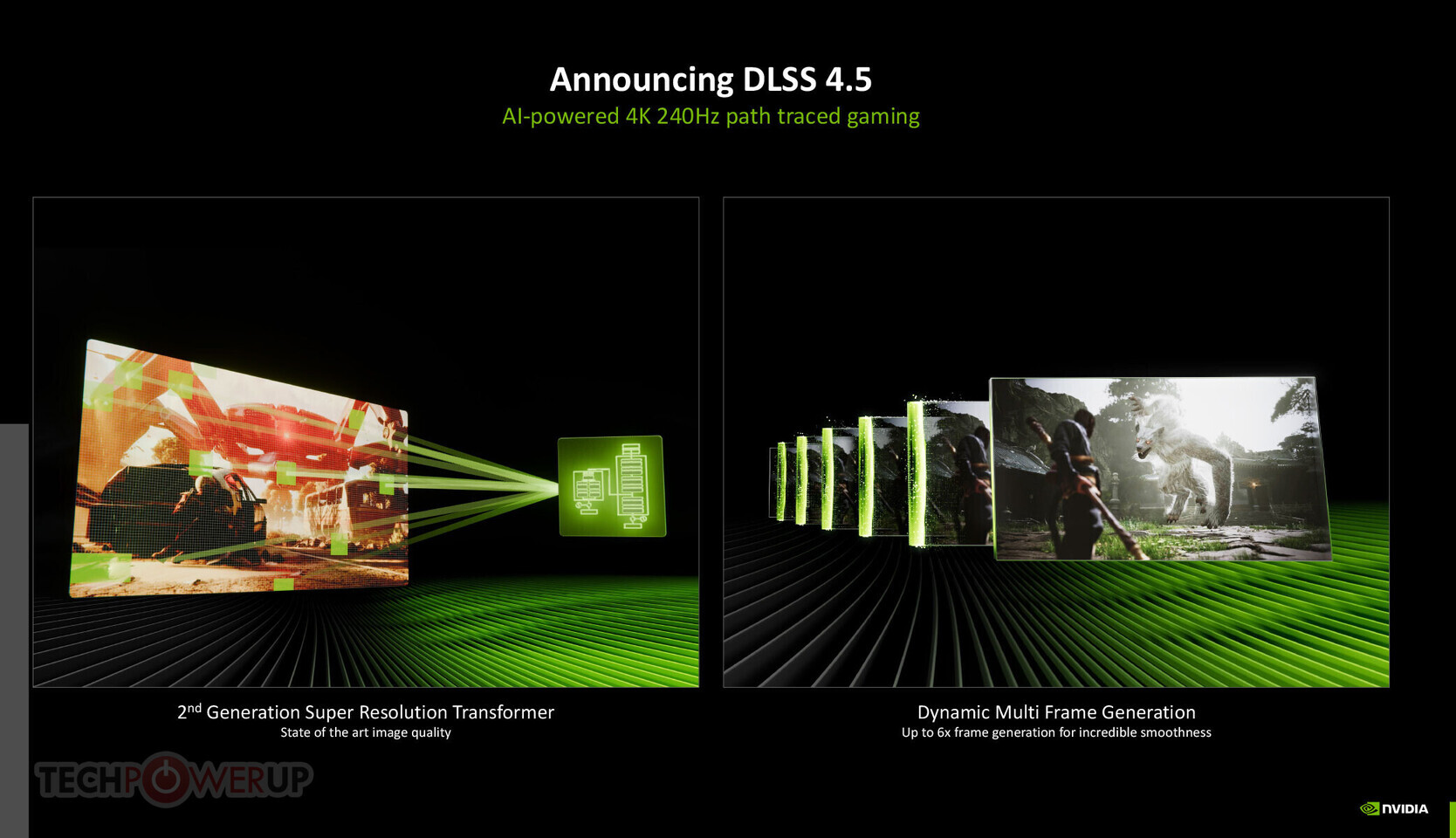
This technology is exclusive to NVIDIA’s RTX 50-series 'Blackwell' GPUs, which feature hardware flip-metering—a capability absent in previous generations. While DLSS 4.5’s super-resolution upscaling (powered by a second-generation Transformer architecture) is already available in over 400 titles, the performance-boosting frame generation features will remain locked behind Blackwell until April.
The arrival of these technologies underscores NVIDIA’s push to dominate the AI-driven rendering space. Competitors like Intel’s XeSS 3, which maxes out at a 3-frame multiplier (or 4x performance), and AMD’s lack of a comparable solution, further highlight the gap in the market. For gamers, this means a significant leap in fluidity—especially for high-refresh-rate displays—though the full impact will depend on game developer adoption.
Pricing for Blackwell GPUs remains speculative, with leaks suggesting a flagship RTX 5090 could reach $5,000 by mid-2026 due to surging demand from AI workloads. Meanwhile, NVIDIA’s SUPER lineup—potentially unveiled at CES 2026—may offer more accessible options, though exact models and timelines are still unconfirmed.