NVIDIA has quietly achieved a breakthrough in AI efficiency, reducing the cost of generating tokens—the fundamental building blocks of AI responses—by up to ten times compared to its previous generation. The Blackwell platform, designed from the ground up for large-scale inference workloads, leverages what the company calls extreme co-design, blending hardware and software optimization in ways that redefine how AI models process data.
For businesses deploying frontier AI models, this translates to a potential 10x reduction in per-token expenses. Providers like Baseten, DeepInfra, and Together AI are already migrating to Blackwell, citing lower latency, improved cost efficiency, and more reliable performance for open-source models pushing the boundaries of intelligence.
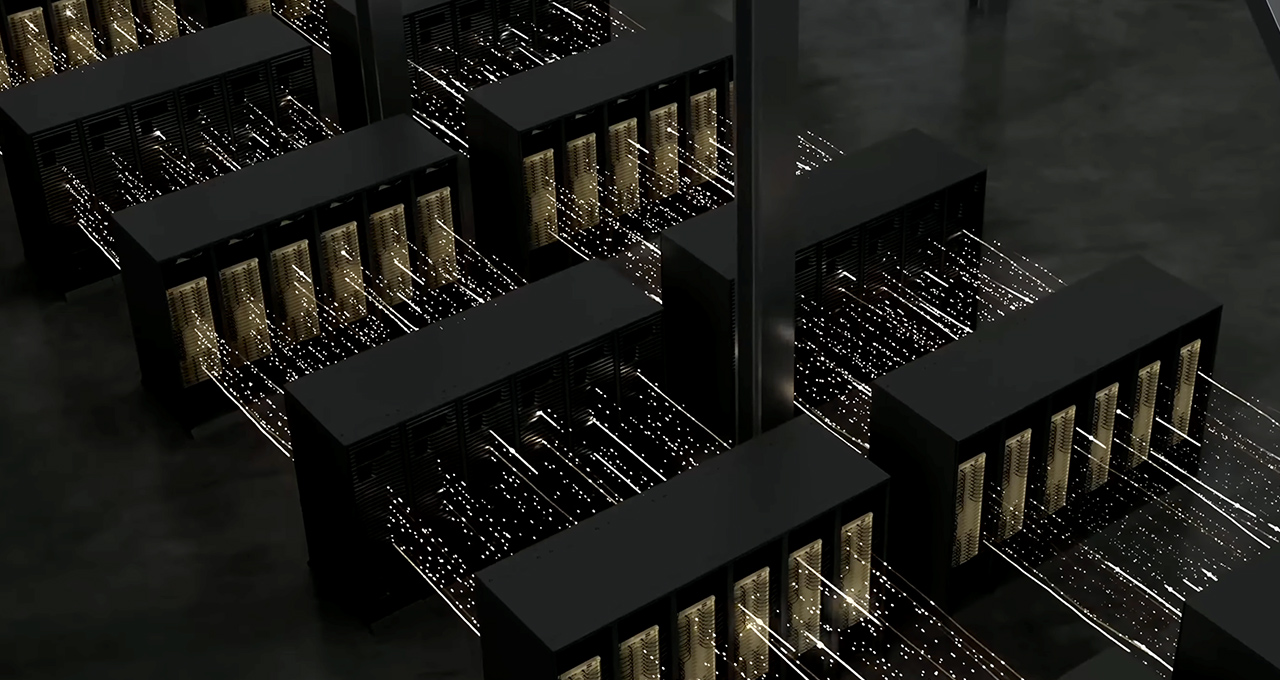
The shift is particularly notable in multi-agent workflows, where companies like Sentient Labs report 25–50% better cost efficiency compared to Hopper-based systems. This efficiency isn’t just theoretical—it’s the result of a 72-chip configuration in NVIDIA’s GB200 NVL72, paired with a massive 30TB of shared memory, which allows tokens to be distributed and processed in parallel at unprecedented scales.
A New Era of Parallelism
At the heart of Blackwell’s efficiency is its ability to handle expert parallelism—a technique that splits token batches across GPUs dynamically, minimizing communication overhead. Unlike traditional architectures, where scaling performance often leads to linear increases in latency, Blackwell’s design ensures that communication volume grows at a non-linear rate, further improving throughput.
NVIDIA’s Vera Rubin architecture, set to follow Blackwell, promises even greater efficiency gains. Features like CPX (Compute Partitioning eXchange) for prefill operations and specialized hardware mechanisms are expected to push the boundaries of what’s possible in AI inference.
Who Benefits?
The impact of these advancements is already being felt across industries. Leading inference providers are adopting Blackwell to host advanced open-source models, reducing costs for businesses that rely on AI for everything from customer service to scientific research. The platform’s ability to handle specialized workloads—such as those requiring low-latency responses or high-throughput processing—makes it a critical tool for enterprises looking to scale AI without proportional cost increases.
For developers and businesses, this means lower operational expenses, faster model iteration, and the ability to deploy more complex AI systems without sacrificing performance. The tradeoff? The hardware itself is not cheap—NVIDIA’s Blackwell-based GPUs start at $660 for the entry-level model, with enterprise configurations reaching into the tens of thousands. However, the long-term savings in token costs may justify the investment for large-scale deployments.
Beyond the Numbers
NVIDIA’s focus on tokenomics—the economics of token generation—highlights a broader trend in AI hardware development: efficiency is becoming just as important as raw performance. While competitors may focus on raw compute power, Blackwell’s design prioritizes smart resource allocation, ensuring that every cycle of processing delivers maximum value.
The platform’s success also underscores the growing importance of co-design—a collaborative approach where hardware and software are developed in tandem. This strategy allows NVIDIA to optimize every layer of the stack, from memory bandwidth to network communication, for the specific needs of AI workloads.
Key Specifications
- Architecture: Blackwell (GB200 NVL72)
- Memory: 30TB shared memory (GDDR7)
- Chip Configuration: 72-chip setup
- Token Efficiency: Up to 10x improvement over Hopper
- Cost Savings: 25–50% in multi-agent workflows
- Pricing: Entry-level GPU: $660; Enterprise configurations: $100+ billion in industry deals
The platform’s efficiency isn’t just about raw numbers—it’s about redefining how AI models are deployed and scaled. For businesses, this means lower costs per inference, faster response times, and the ability to experiment with more complex models without breaking the bank.
As AI adoption continues to grow, the ability to process tokens efficiently will become a defining factor in who can afford to build and deploy advanced systems. NVIDIA’s Blackwell platform may well set the standard for the next generation of AI infrastructure.