Tarsier Studios, the developers behind the atmospheric Little Nightmares* series, has partnered with THQ Nordic to release Reanimal—a survival horror game that trades the whimsy of its predecessors for a bleak, visually stunning descent into ambiguity. Set to launch on February 13, 2026, the title leans into a fixed 3D perspective reminiscent of classic survival horror, while retaining the series' signature blend of environmental storytelling and tense, large-scale creature encounters.
The game follows two unnamed siblings—one controlled by the player, the other by a second player in cooperative mode—on a mission to rescue three missing friends from a ruined, fog-shrouded island. The island itself is a fragmented landscape, shifting from drowned towns to industrial ruins and sunlit meadows, all permeated by an eerie, post-apocalyptic decay. Unlike many horror games that rely on explicit exposition, Reanimal withholds context, leaving the origins of the island’s destruction and the nature of its monstrous inhabitants deliberately unclear.
Visually, the game is a triumph. The fixed camera angle enhances the scale of the environment, making the island feel vast and unyielding, while the color palette—often muted and near-grayscale—contrasts sharply with bursts of neon or the occasional pastoral scene. The dinghy sections, in particular, offer restricted exploration, with players navigating harpoon-equipped boats through rivers and harbors, though camera control in these moments can feel unnecessarily constrained.
Gameplay: Familiar Yet Unsettling
For players familiar with Little Nightmares, Reanimal will feel like a darker, more methodical cousin. The core mechanics remain intact: stealth, light combat, and puzzles that prioritize environmental interaction over complexity. Chase sequences against towering, grotesque creatures are a recurring highlight, though they rely heavily on trial-and-error rather than innovative design. Puzzles, when they appear, are often straightforward—cranks to turn, beams to balance—but the game’s true strength lies in its atmosphere rather than its mechanics.
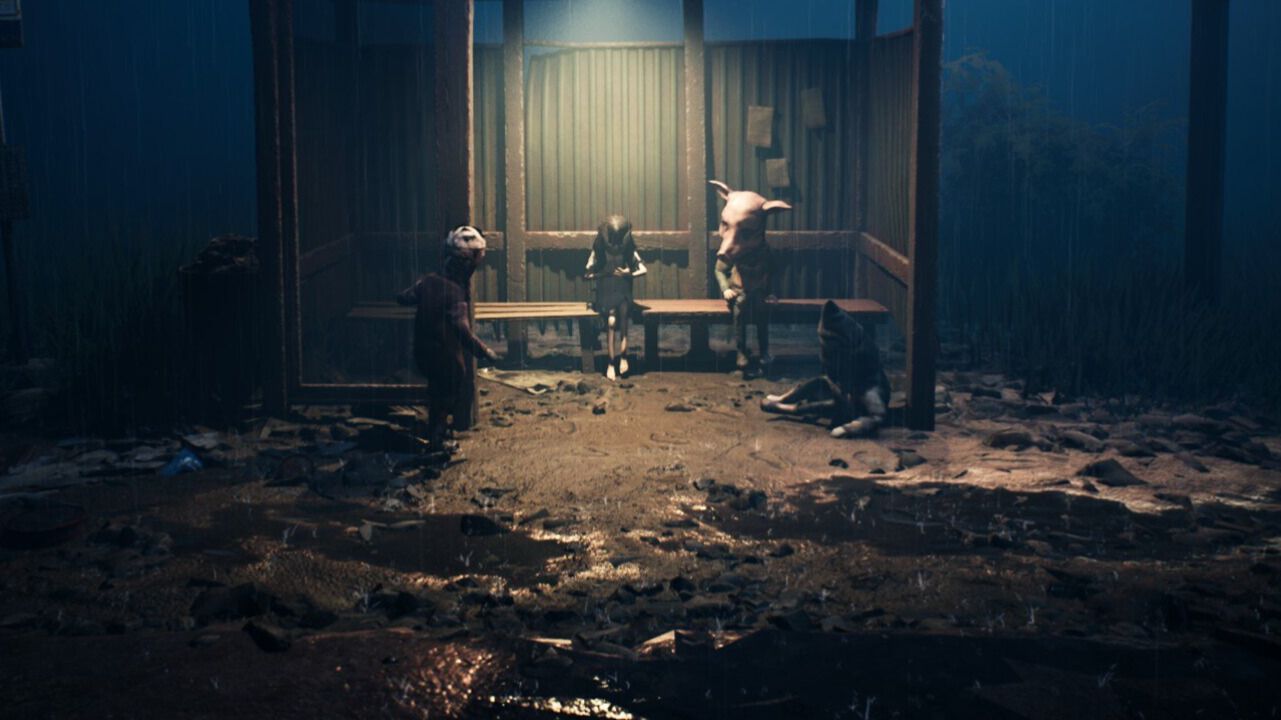
The island’s layout is deliberately disorienting, with traversal often limited by impenetrable darkness or bottomless chasms. The game’s tone is consistently bleak, with the siblings’ deadpan dialogue reinforcing a world where trauma and violence are so pervasive that they’ve become mundane. At one point, a character asks, Do you know why we’re here? The response—No idea—captures the game’s refusal to provide easy answers.
A Game More Film Than Interactive Experience?
There are moments when Reanimal feels less like a game and more like an interactive art installation. The fixed camera and deliberate pacing prioritize composition over gameplay fluidity, making some sections feel more like a cinematic experience than a traditional horror title. Yet, despite these limitations, the game retains a compelling tension, particularly in cooperative play, where the shared dread of navigating a broken world with a partner heightens the experience.
What Reanimal lacks in mechanical innovation, it makes up for in sheer visual and emotional impact. The game’s refusal to explain its world forces players to engage with its mystery rather than its plot, creating a haunting, impressionistic journey. Whether this approach will satisfy players seeking deeper gameplay remains to be seen—but as a study in atmosphere and unsettling beauty, it succeeds brilliantly.
Technical Considerations
- Launching on Ryzen 5 5600H and RTX 3060 configurations with 16GB RAM—performance metrics are not yet disclosed.
- Steam Deck support is unconfirmed.
- Expected retail price: $40.
The partnership between Tarsier Studios and THQ Nordic positions Reanimal* as a bold, if polarizing, entry in the survival horror genre. It’s a game that demands patience, rewards observation, and leaves players questioning not just the world they’ve explored, but the nature of horror itself.