USB-C monitors are no longer just screens—they’re the backbone of modern workspaces. The latest generation delivers Thunderbolt-level connectivity, ultra-fast refresh rates, and even portable OLED brilliance, all while cutting cable clutter. For professionals, creatives, and power users, these four monitors redefine what’s possible when a single cable handles video, data, and power.
From a 31.5-inch 4K Thunderbolt 4 hub to a budget-friendly 1080p companion with built-in speakers, here’s how today’s USB-C displays transform productivity—and which one fits your needs.
Key specs at a glance
- Dell Ultrasharp U3225QE: 31.5-inch 4K IPS Black, 120Hz, 140W Power Delivery, Thunderbolt 4, 2.5Gbps Ethernet, $949.99
- BenQ GW2786TC: 27-inch 1080p IPS, 100Hz, 65W Power Delivery, built-in speakers/microphone, $199.99
- Viewsonic VP16-OLED: 15.6-inch 1080p OLED, 500Hz (gaming), 30Hz–165Hz adaptive, 90W Power Delivery, $399.99
- LG DualUp 28MQ780-B: 28-inch 2560×2880 IPS, 16:18 aspect ratio, 90W Power Delivery, $696.99
What these specs mean in real use
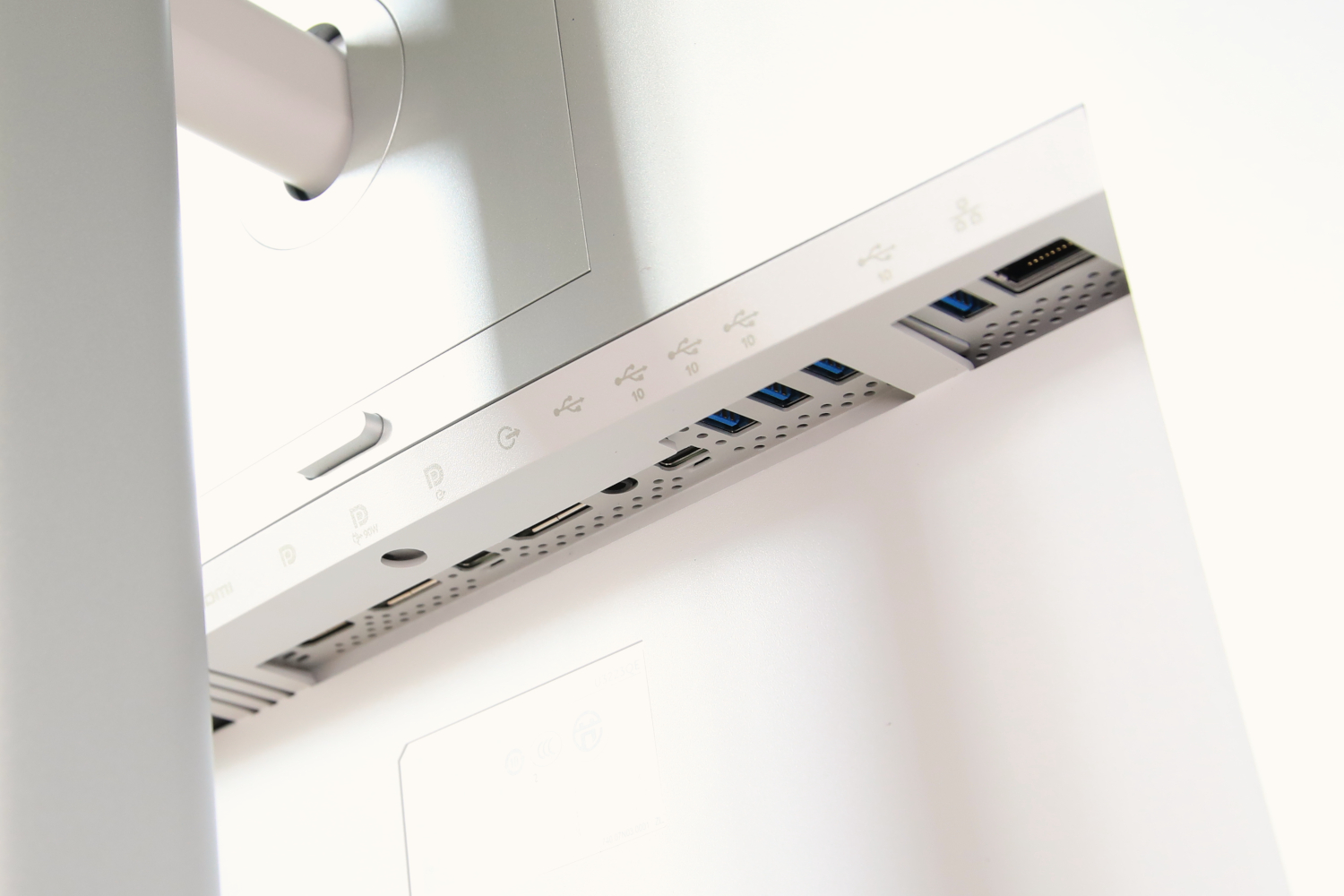
The gap between a standard monitor and a USB-C powerhouse is stark. Take the **Dell Ultrasharp U3225QE**, for example: its **140W Thunderbolt 4 port** isn’t just for charging—it’s a full desktop replacement. Plug in a MacBook Pro or Windows ultrabook, and you get **4K at 120Hz** with VRR, **2.5Gbps Ethernet** for lag-free video calls, and **six USB-A ports** via a pop-out hub. No dongles, no adapters. The trade-off? A **$949.99** price tag that’s justified by its professional-grade color accuracy and contrast—though OLED and VA panels still edge it out in deep blacks.
For those on a tighter budget, the **BenQ GW2786TC** proves USB-C doesn’t require sacrifice. At **$199.99**, it delivers **100Hz** smoothness (ideal for spreadsheets and light multitasking), **65W Power Delivery** to juice a MacBook Air, and **DisplayPort-out**—a rare feature at this price—for daisy-chaining a second monitor. The built-in **ambient light sensor** and **noise-canceling mic** make it a surprisingly capable home-office companion, though gamers will miss **Adaptive Sync**.
The **Viewsonic VP16-OLED** flips the script with **portability**. Its **500Hz** panel isn’t just for esports—it’s a **gaming and productivity hybrid**, with **30Hz to 165Hz** adaptive refresh rates to reduce eye strain. The **OLED panel** delivers **near-perfect blacks** and **100% DCI-P3**, making it a favorite for photo editing. The **dual USB-C stands** (one as a kickstand, another for upright use) turn it into a **laptop accessory that doubles as a premium display**. The catch? **$399.99** is steep for a 15.6-inch screen, but for road warriors, it’s worth it.
Finally, the **LG DualUp 28MQ780-B** is for those who **hate compromise**. Its **16:18 aspect ratio** (or rotated 18:16) is a **designer’s dream**—perfect for **portrait photos, vertical video, or side-by-side coding**. The **2560×2880 resolution** sharpens text and details, while the **90W Power Delivery** keeps your laptop running. The **$696.99** price is high, but the **adjustable clamp stand** (no desktop footprint) and **vibrant color accuracy** make it a **productivity powerhouse**—if you can stomach its **non-standard shape** for movies or games.
Who should buy which?
- Professionals needing a Thunderbolt 4 hub: **Dell U3225QE**. Its **Ethernet, 140W PD, and KVM switch** turn it into a **desktop replacement**—ideal for developers, designers, and remote workers.
- Budget buyers who want USB-C basics: **BenQ GW2786TC**. The **$200 price**, **speakers, and mic** make it the **best value** for home offices or MacBook users.
- Portable power users: **Viewsonic VP16-OLED**. The **OLED screen, 500Hz panel, and dual stands** redefine **on-the-go productivity**—though the cost is high.
- Creatives editing vertical content: **LG DualUp**. The **unique aspect ratio and clamp stand** are **game-changers for photographers and videographers**—if you can adapt to its quirks.
The future of USB-C monitors
These four models highlight a trend: **USB-C is becoming the default for high-end displays**. Thunderbolt 4’s **140W power delivery**, **4K/120Hz video**, and **Ethernet** are now standard in premium models, while **OLED portability** and **adaptive refresh rates** are filtering down to mid-range prices. The only question left is whether you’ll upgrade your workspace—or wait for the next evolution.