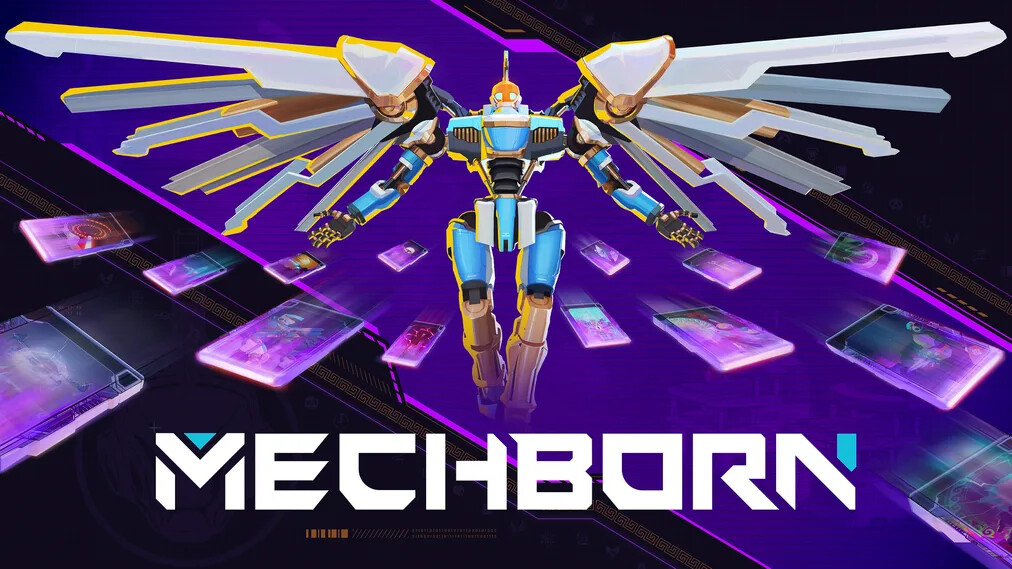
Turtle Juice, an indie studio nestled in Brazil's interior, has unveiled Mechborn, a roguelike deckbuilder that merges classic '90s mech anime aesthetics with Greek mythology. This ambitious project, developed by a team of 23, aims to redefine the deckbuilding genre through its innovative combat system and adaptive exploration mechanics.
Mechborn's core mechanic revolves around the concept of your mech being your deck. Each mech is composed of four parts: Head, Torso, Arms, and Legs. These components not only influence stats but also shape the starting deck, introducing a layer of strategic depth before combat even begins. Players can choose from three distinct models for each mech—Original, Spartan, and Olympian—each offering unique mechanical identities that cater to different playstyles.
A standout feature is the Conveyor Belt combat system. Unlike traditional deckbuilders where players draw a hand of cards each turn, Mechborn starts combat with seven cards laid out in a belt. Playing a card triggers a new one to enter from the left, pushing the rest along. This system transforms combat into a game of positioning and timing, where the placement of cards on the belt can significantly impact the outcome of battles. Some cards activate stronger effects when adjacent to specific types, while others gain power the longer they remain unplayed.
Pilots add another layer of strategy. Each pilot comes with four unique skills that charge as players play cards. These abilities are not passive bonuses but powerful, active tools that can alter the course of a fight when used at the right moment. Some pilots specialize in repositioning cards on the Conveyor Belt, while others manipulate costs or freeze enemies, turning defensive setups into offensive opportunities.
Exploration in Mechborn is designed to be adaptive and dynamic. There are no fixed paths; players can move freely across continents, choosing how aggressively they push forward or when to retreat. Encounters, events, vendors, and factions shift between runs, ensuring that the same route can play out very differently depending on player decisions. Clearing territories helps push back the Kaiju advance, but every move costs fuel. Running out of fuel could leave players stranded in hostile territory, adding a layer of risk and reward to exploration.
Designed with replayability in mind, Mechborn features dynamic maps, multiple mechs and pilots, hundreds of cards, and ever-changing encounters. No two runs are meant to feel the same, encouraging players to experiment and adapt their strategies rather than memorize them.
The game is set to launch on Steam, Xbox Series X|S, PlayStation 5, and Nintendo Switch 1 & 2 in late 2026. A pre-alpha demo is available for download on itch.io, offering a glimpse into the innovative mechanics that define Mechborn.