A new ultra-compact board is redefining what can be done in a Pico-ITX form factor. The PICO570 crams an 11 TOPS neural processing unit (NPU) into a 100 × 72 mm footprint, eliminating the need for separate AI accelerators while keeping power draw low enough to run on a 300 W budget.
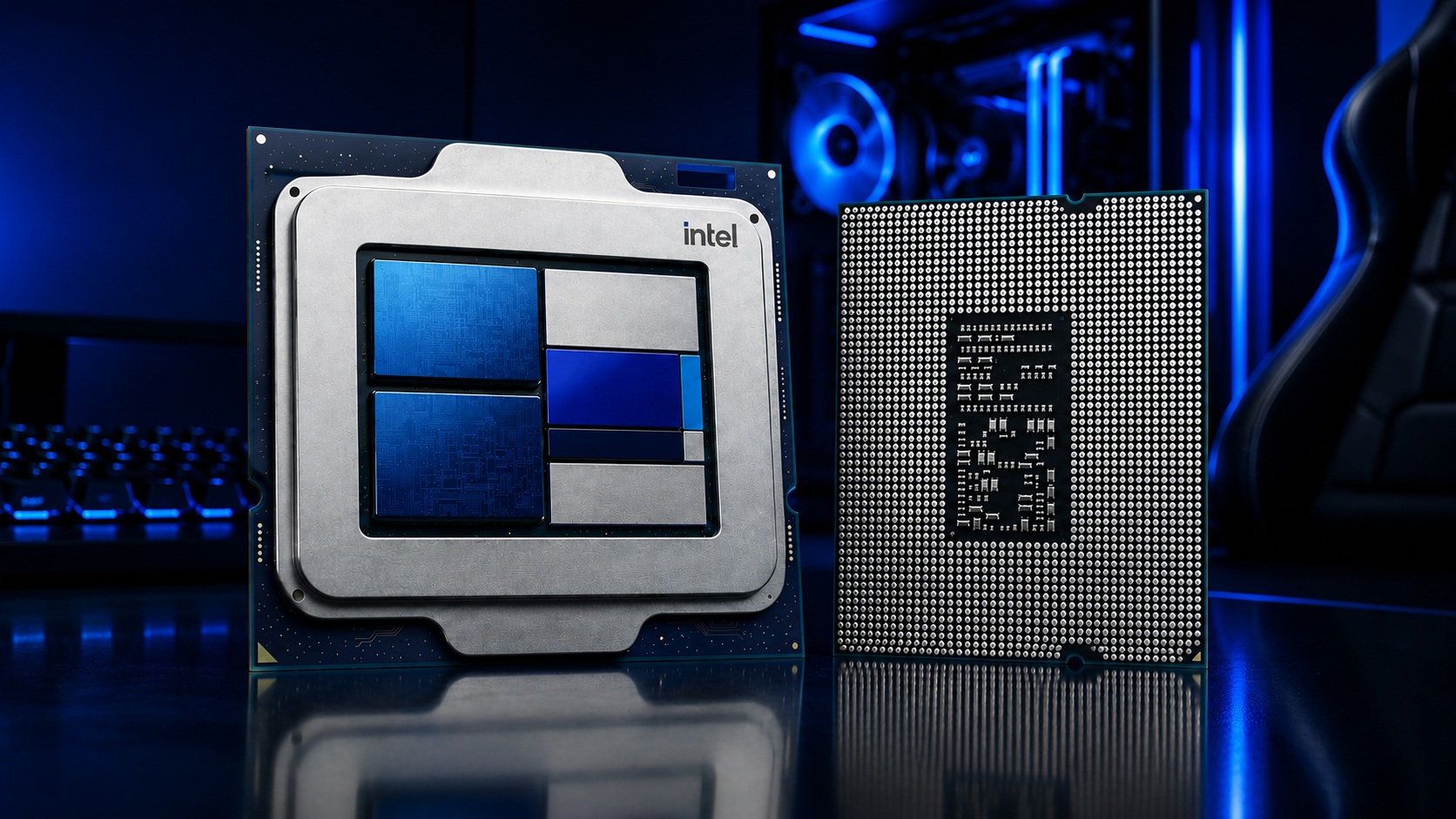
Built around Intel Core Ultra Series 1 processors, the board is aimed at edge AI gateways and inference nodes where space is tight but performance demands are growing. Its integrated NPU handles real-time data processing, while high-speed NVMe storage ensures rapid model loading—critical for applications in smart automation, robotics, and intelligent retail systems.
Despite its small size, the PICO570 does not compromise on connectivity or expandability. It supports a full-length M.2 Key M 2280 NVMe SSD over PCIe ×4, dual Ethernet (one 2.5 GbE and one GbE), and even includes an M.2 Key E 2230 slot for wireless modules. This setup allows for high-bandwidth data transmission alongside a dedicated management channel.
The board’s power efficiency is another standout feature, reducing overall energy consumption—a key consideration in edge deployments where sustainability matters as much as performance. While the PICO570 is positioned as an industrial solution, its compact design and integrated AI capabilities suggest it could influence broader trends in how embedded systems handle increasingly complex workloads.
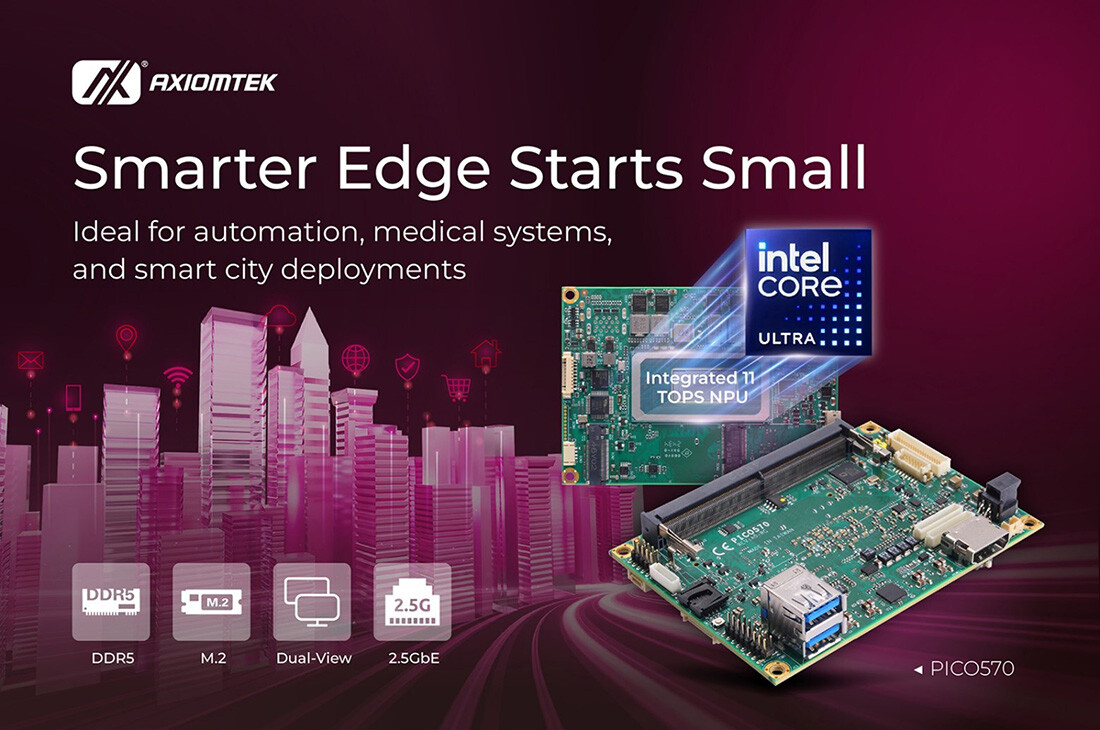
Key Specifications
- Processor: Intel Core Ultra Series 1 (exact model not specified)
- Memory: 1 × DDR5-5600 SO-DIMM, up to 64 GB
- Storage: 1 × M.2 Key M 2280 for NVMe SSD (PCIe ×4)
- Connectivity: Dual Ethernet (2.5 GbE + 1 GbE), 1 × M.2 Key E 2230 for wireless
- AI Acceleration: Integrated 11 TOPS NPU
- Power Budget: Up to 300 W (exact TDP not specified)
The combination of DDR5-5600 SO-DIMM and a high-performance NPU is notable, especially in an industrial context where reliability and thermal efficiency are critical. The board’s support for full-length NVMe storage prevents bottlenecks that can occur with slower eMMC or SATA-based solutions.
For developers, the PICO570 simplifies system architecture by removing the need for discrete AI accelerators—a common requirement in edge deployments. This could speed up time-to-market for space-constrained projects while maintaining power efficiency. However, its focus on industrial applications means it may not appeal to hobbyists or consumer-grade use cases.
Availability is confirmed, though pricing details have not been released. The board’s positioning as an AI-ready platform suggests it will compete with other Pico-ITX solutions targeting edge inference, including those from Advantech and SECO. Whether it can carve out a significant share remains to be seen, but its integration of advanced features in a compact form is undeniably impressive.
For now, the PICO570 stands as a benchmark for what’s possible in ultra-compact edge AI computing—powerful enough for industrial workloads, efficient enough to run on limited power, and flexible enough to handle diverse connectivity needs. It’s a reminder that even in constrained spaces, performance and innovation don’t have to be mutually exclusive.