Intel is preparing to redefine its desktop platform with the 900-series chipsets, designed specifically for the Nova Lake-S CPU family. This transition marks a shift from the current 800-series lineup, which has underpinned Arrow Lake and its refresh, to a new architecture built around the LGA 1954 socket. The move comes as Intel refines its approach to performance, connectivity, and overclocking, catering to everything from enthusiast builds to business-class workstations.
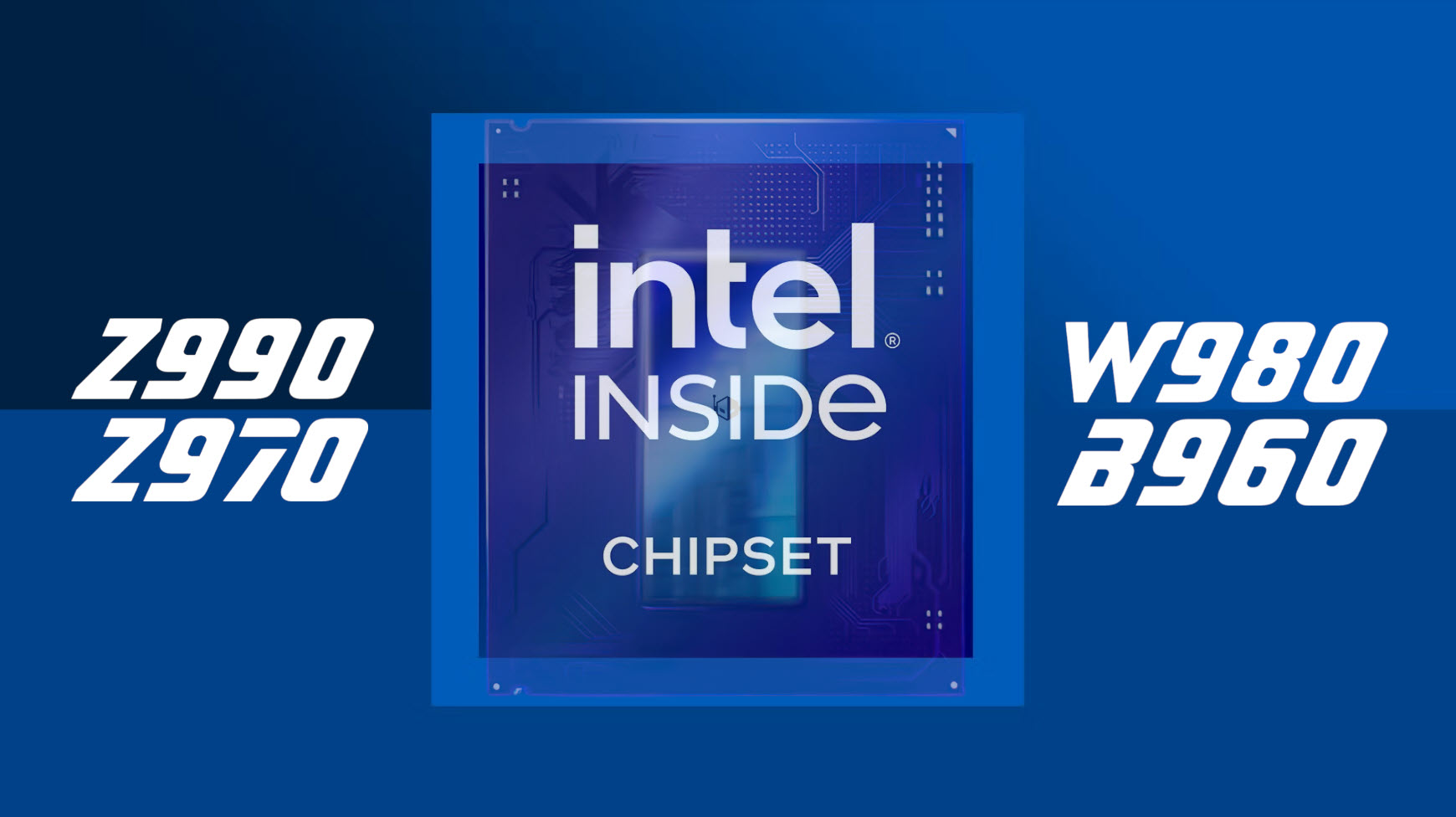
The 900-series family introduces five distinct chipsets—Z990, Z970, W980, Q970, and B960—each tailored to different market segments. The Z990 and Z970 stand out as the premium options, offering features that go beyond standard I/O capabilities, while the W980 targets workstation users, and the Q970 and B960 focus on business and mainstream desktops, respectively.
At the heart of this platform is a significant upgrade in connectivity and expandability. The Z990, for instance, delivers a total of 48 PCIe lanes, with 12 dedicated to PCIe 5.0 and another 12 to PCIe 4.0, ensuring compatibility with high-speed storage and graphics cards. It also includes two USB4/TB4 ports, 8 SATA 3.0 ports, and up to five USB 3.2 20 Gbps ports. Overclocking enthusiasts will appreciate the inclusion of IA OC, BCLK OC, and memory overclocking support.
The Z970, while slightly scaled back, still provides robust performance with 34 PCIe lanes (all PCIe 4.0), a single USB4/TB4 port, and four SATA 3.0 ports. It retains IA OC and memory overclocking but omits BCLK OC, a feature reserved for the Z990. The W980 mirrors the Z990’s hardware specifications but removes overclocking capabilities entirely, positioning it as a workstation-focused alternative.
For business and mainstream users, the Q970 and B960 chipsets offer a more streamlined experience. The Q970 includes 22 PCIe lanes and two USB4/TB4 ports, while the B960 aligns closely with the Z970’s baseline I/O but lacks overclocking features beyond memory adjustments.
Key Specs: Intel 900-Series ChipsetsZ990:48 PCIe lanes (12 PCIe 5.0, 12 PCIe 4.0)2 USB4/TB4 ports8 SATA 3.0 portsUp to 5 USB 3.2 20 Gbps portsIA OC, BCLK OC, Memory OC supportZ970:34 PCIe lanes (14 PCIe 4.0)1 USB4/TB4 port4 SATA 3.0 portsUp to 2 USB 3.2 20 Gbps portsIA OC, Memory OC support (BCLK OC excluded)W980:48 PCIe lanes (12 PCIe 5.0, 12 PCIe 4.0)2 USB4/TB4 ports8 SATA 3.0 portsUp to 5 USB 3.2 20 Gbps portsMemory OC support (no CPU overclocking)Q970:22 PCIe lanes (all PCIe 4.0)2 USB4/TB4 ports4 SATA 3.0 portsNo overclocking supportB960:34 PCIe lanes (14 PCIe 4.0)1 USB4/TB4 port4 SATA 3.0 portsUp to 2 USB 3.2 20 Gbps portsMemory OC support (no CPU overclocking)
The 900-series chipsets are designed to accommodate Intel’s upcoming Nova Lake-S CPUs, which are expected to debut later this year. While the exact launch timeline remains unconfirmed, leaks suggest these components may make their first public appearance at Computex 2026. The platform’s emphasis on PCIe 5.0 and USB4 connectivity positions it as a forward-looking solution, particularly for users investing in high-performance storage, GPUs, and next-gen peripherals.
For overclocking enthusiasts, the Z990’s inclusion of BCLK OC is a notable addition, potentially allowing non-K CPUs to unlock additional performance—though the practicality of this for mainstream users remains debatable. Meanwhile, workstation and business users will find value in the W980 and Q970, which balance connectivity with stability and reliability.
The B960, while stripped of advanced overclocking features, retains memory overclocking capabilities, making it a viable option for users seeking cost-effective upgrades without sacrificing flexibility. Overall, the 900-series chipsets reflect Intel’s strategy to cater to diverse user needs, from high-end gaming and content creation to professional workflows.