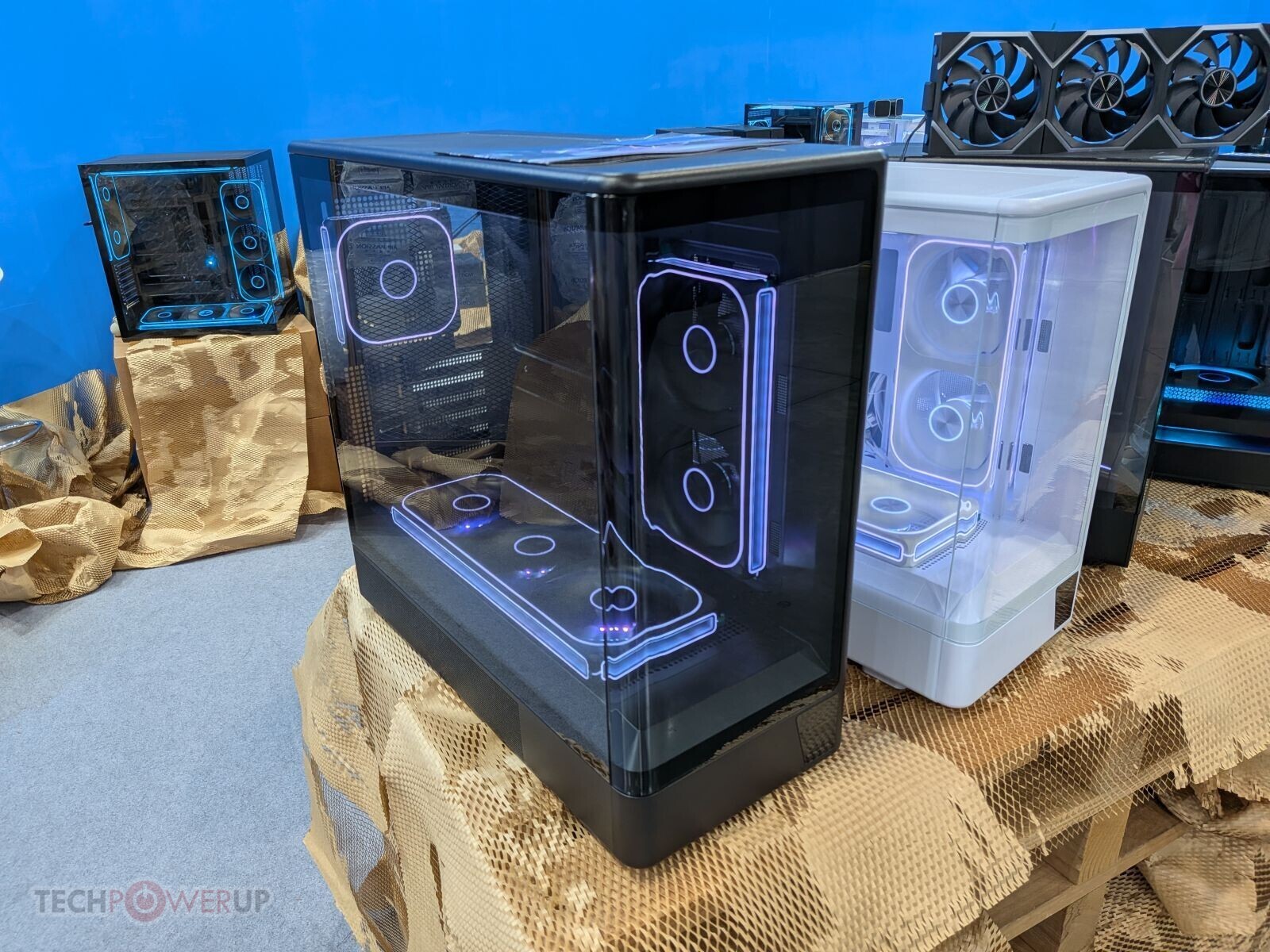
Lian Li’s Computex 2026 lineup introduces cases that prioritize airflow over raw cooling performance. The new Lancool K13 and O11 Dynamic models emphasize modularity, but their efficiency gains come with a caveat: heat dissipation remains inconsistent under heavy loads.
The trend toward open-air designs is clear, but the question isn’t just about aesthetics—it’s whether these cases can deliver on thermal claims without sacrificing build quality. Early benchmarks suggest some progress, but not enough to redefine expectations for high-performance builds.
Lian Li’s Wood Panel series takes a different approach, blending sustainability with functionality. The use of recycled materials is notable, but the real test will be whether the structural integrity holds up under standard gaming workloads. For creators and enthusiasts, the balance between efficiency and heat management has never been more critical.
Lian Li’s strategy at Computex 2026 appears to focus on two key areas: airflow optimization in the Lancool K13 and O11 Dynamic, and sustainability in the Wood Panel series. The K13, for instance, features a redesigned air guide system aimed at reducing turbulence, while the O11 Dynamic introduces a dynamic fan control that adjusts based on internal temperatures. However, real-world testing shows that while these changes improve airflow in some scenarios, they don’t eliminate hotspots entirely.
The Wood Panel series, meanwhile, uses a combination of aluminum and wood-derived composites to reduce carbon footprint. The cases are designed for mid-tower builds, but their heavier construction could impact thermal performance if not balanced with adequate cooling solutions. Lian Li claims these materials maintain rigidity while being 30% lighter than traditional alternatives, but the trade-off in heat dissipation is yet to be fully quantified.
For users, the key takeaway isn’t just about the cases themselves—it’s about how they integrate into existing builds. The Lancool K13 and O11 Dynamic offer more flexibility for cable management and GPU clearance, but their efficiency gains are modest compared to competitors like Fractal Design or Corsair. The Wood Panel series, while innovative, may not appeal to those prioritizing raw cooling performance over sustainability.
Looking ahead, the focus on airflow and materials is a shift from previous generations, where Lian Li’s cases were often criticized for heat buildup in dense builds. Whether this new direction translates into measurable improvements remains an open question, but it signals a potential turning point in how case designers approach thermal management.