The RTX 50 series doesn’t just push the boundaries of raw performance—it redefines what’s possible in terms of efficiency. With up to 80 teraflops of AI performance, these GPUs can process vast amounts of data with minimal power consumption, a critical advantage for large-scale AI training and inference tasks. This focus on efficiency isn’t just about reducing costs; it’s about enabling more sustainable computing at scale.
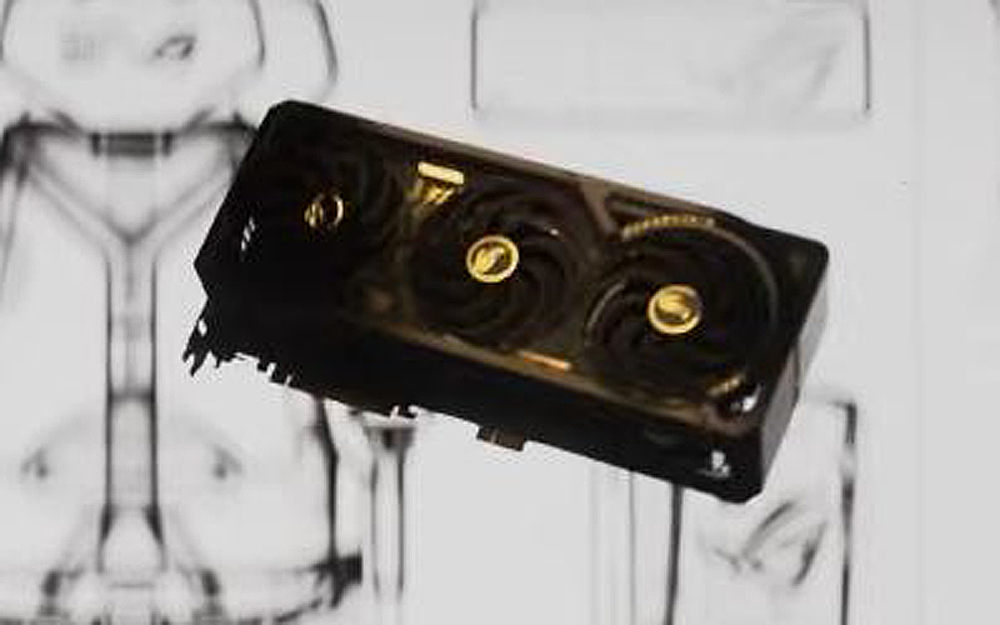
Two models form the core of this lineup: the RTX 50 and the RTX 50 Pro. Both leverage an updated architecture that delivers up to 40% better performance per watt compared to the previous generation. This improvement is particularly meaningful for data centers, where power consumption can quickly become a limiting factor as workloads grow.
- Display: 12GB GDDR7 memory (RTX 50), 16GB GDDR7 memory (RTX 50 Pro)
- Performance: Up to 80 teraflops AI, 4th-gen Tensor Cores for AI acceleration
- Power Efficiency: 40% improvement in performance per watt over RTX 40 series
- Ray Tracing: 5th-gen RT Cores for enhanced real-time rendering capabilities
The shift to GDDR7 memory is a notable upgrade, offering higher bandwidth and lower latency than previous generations. This translates directly to faster data processing in AI workloads, where memory speed can be a bottleneck. For example, tasks like neural network training will see quicker iteration times without the need for additional power draw.

While the RTX 50 series promises significant advancements, its success will depend on software compatibility. Some enterprise applications may require updates to fully utilize the new features, particularly those related to AI acceleration and ray tracing. NVIDIA is likely to push for rapid adoption by developers, but the transition won’t be instantaneous.
Looking ahead, the RTX 50 series positions itself as a bridge between current AI demands and future requirements. With its focus on efficiency and performance, it could set a new standard for GPU design in both enterprise and consumer markets. The challenge now is whether this leap forward can be matched by widespread software optimization.